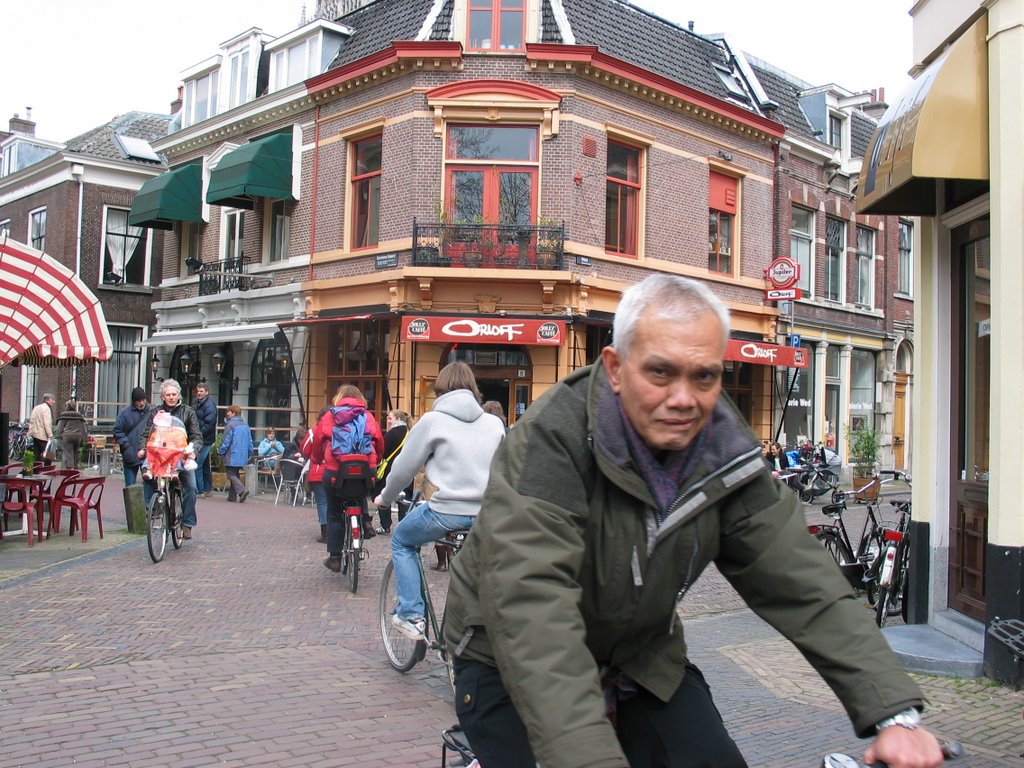
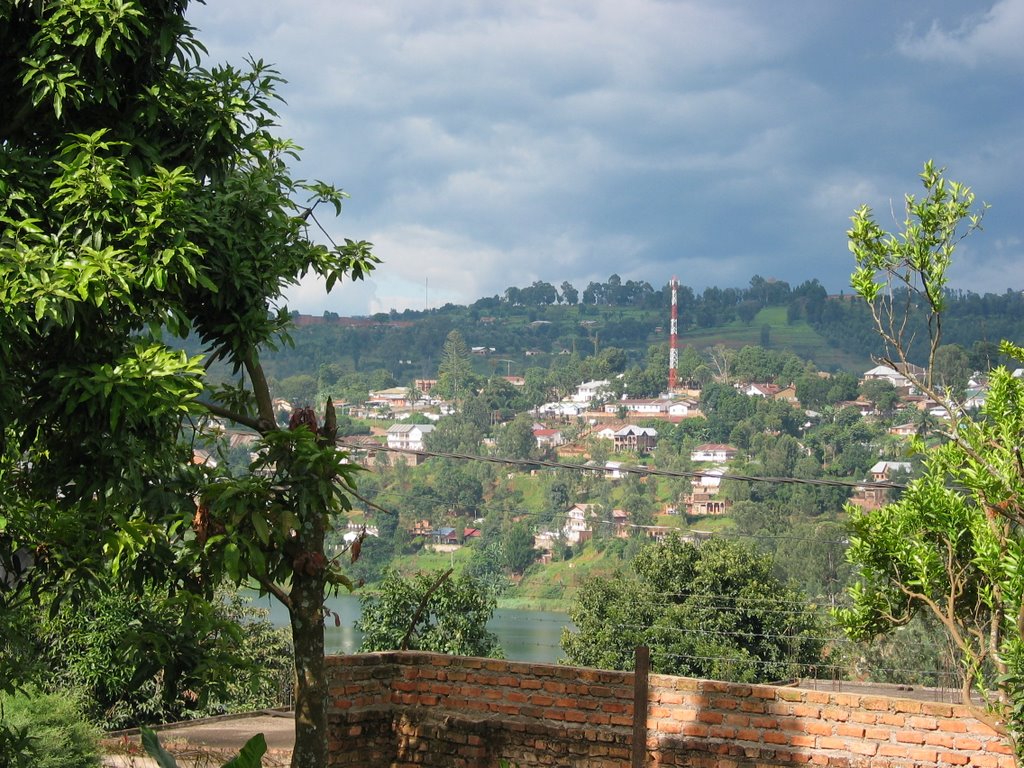
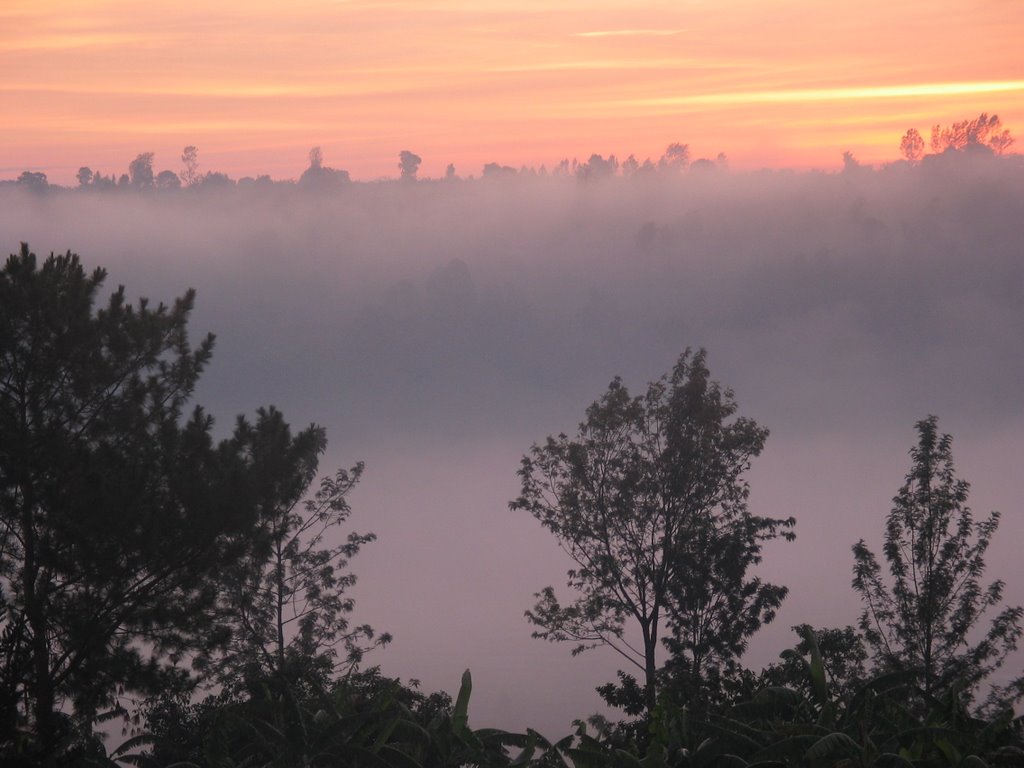
The narrow inlet of Lake Kivu around which most of Bukavu's expat community live; patrolled by MONUC - the UN mission in DR Congo.









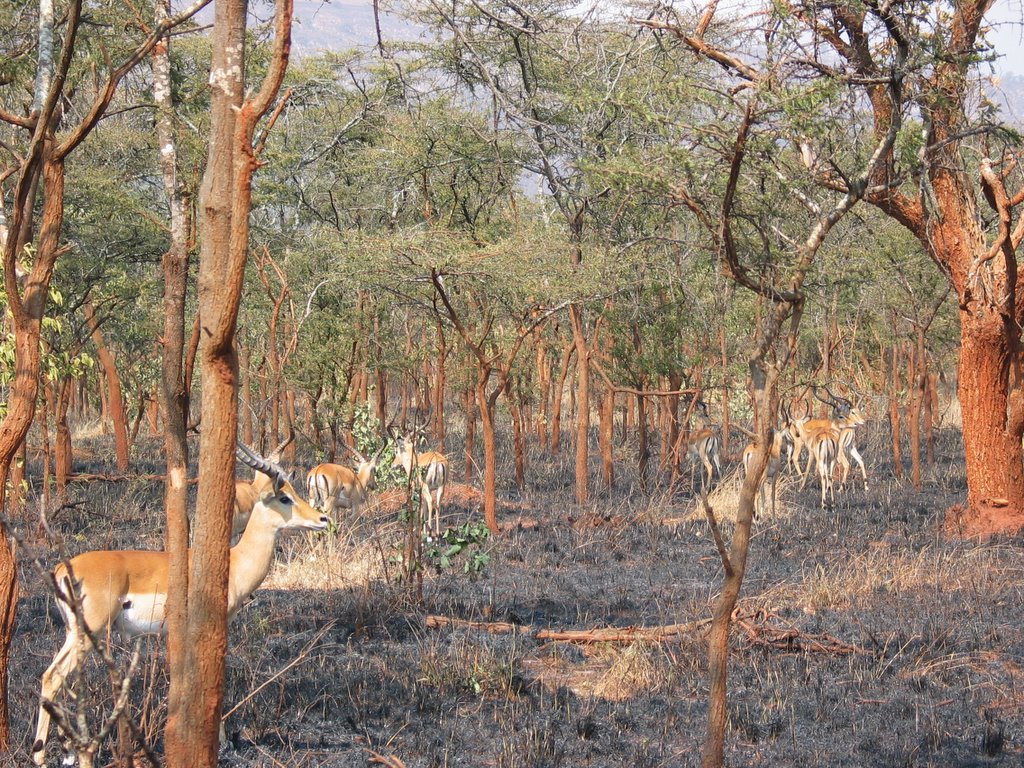 These are impala in Akagera Park, in the eastern side of Rwanda on the border with Tanzania. The burnt grass is due to a large fire that burned for a couple of days the weekend I was there together with a group of colleagues last July (more details below). It's worth clicking on all the photos to get a better view! In the park we saw a good variety of animals, including hippopotamus, african buffalo, baboons, vervet monkeys, zebra, topi (aka tsessebe), and eland. There are three national parks in Rwanda, the other two being Volcanoes National Park (known for the gorillas) and Nyungwe Forest (known for Colobus monkeys and many other animals and birds).
 Some zebra in Akagera Park. The blackened ground is from the fire that was raging the weekend we were there (back in July). It came fairly close to our tents during the night, but the park rangers stayed up and kept an eye on things in order to warn us if it got too close. The fire provided quite a spectacular back drop, and reminded me of watching the hillsides burning in East Timor.
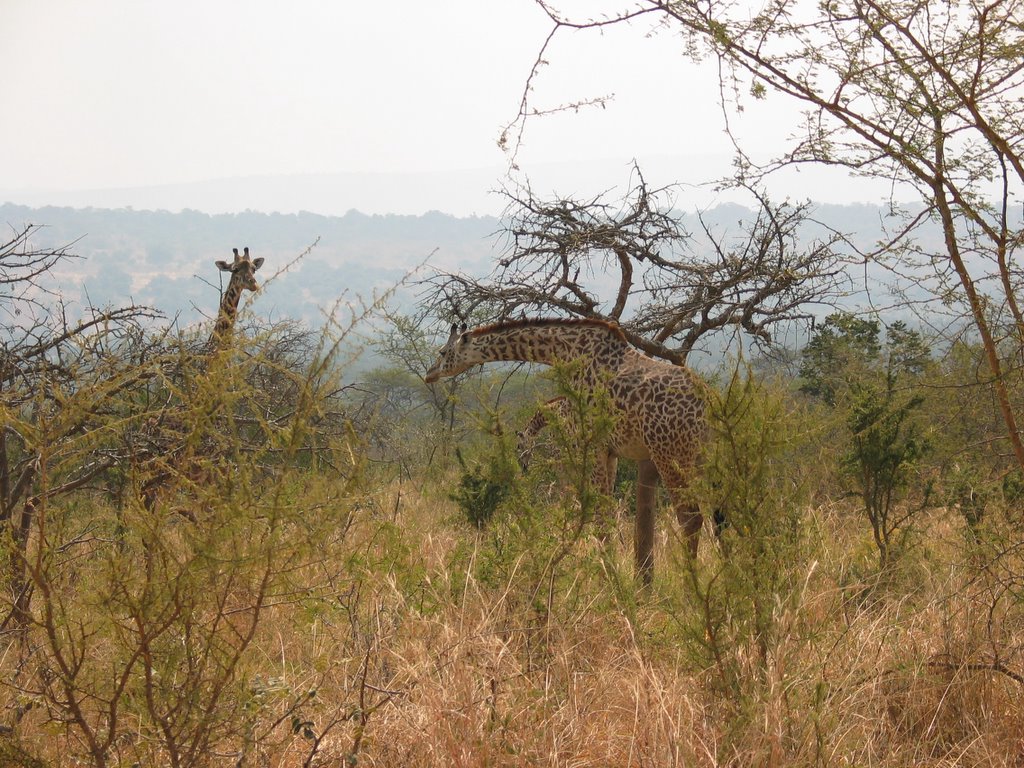 Some giraffe - taken in Akagera Park, one of Rwanda's three national parks, back in July this year (the dry season). A large group of us from work spent a weekend in the park, which was great fun. We camped on a hilltop with spectacular views of the lakes bordering Tanzania. The eastern side of Rwanda is more or less flat and dry, more similar to areas of Kenya and Tanzania than the rest of Rwanda with all its hills and mountains.
 Butare province, Rwanda. Photo taken in early December. If you click on the photo to enlarge it, you'll get a better view of the typical pattern of housing in this area of Rwanda, i.e. individual houses on patches of land. In this hilly country, land is at a premium - this is the most densely populated country in Africa. Traditionally people feel most comfortable living on the patch of land that they farm. This is unlike many other countries where living in villages is more common. Noticable in this photograph is how dry it is, given that we are well into the rainy season. Rain has been sparse and sporadic since the season began in September, and in many places the beans (the staple food) are drying up and people expect to go hungry. Fortunately, the situation here is still far better than in other areas of southern Africa (notably Malawi and Zimbabwe) where there is now famine. For detailed information regarding the food situation in Africa, take a look at www.fews.net (famine early warning system), where there are details of rainfall and harvests. On the narrow valley floor in this photo are the rice fields. Valley floors are valuable land in the land of hills, and often stay wet and productive all year round (hence are known as 'marais' locally). Rice is not a traditional food here, but the government is encouraging production. The employment offered by the rice fields tempts some children to leave primary school.
 This is a typical primary school in a rural area. At the far end you can see some new classrooms under construction. Population growth is high, so there are always more children to be accommodated in school; now that primary school fees have been abolished and the government is pushing to achieve the millenium development goal of getting all children into primary school, there are even more children to find places for. The teacher: pupil ratio is well over 50:1, which greatly impacts the quality of education. Noticable features of the school include the few windows - windows are on one side of the building only, with wooden shutters, no glass (far too expensive, and gets broken quickly), making the classrooms dark; and lack of water, either for drinking or for use in the toilets. There are no pictures on the walls, few books, no other teaching materials, no electricity. And it is up to the parents to build new classrooms, even though the majority have no income, surviving on subsistence farming.
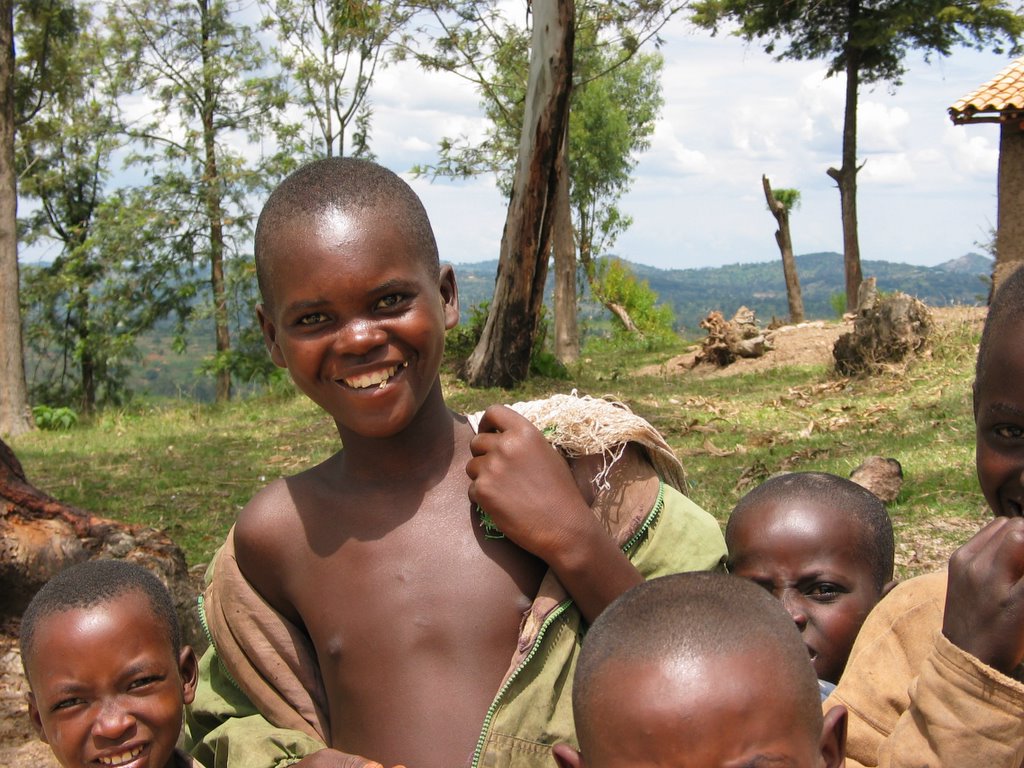 This young man was delighted to have his picture taken. I took several shots of him and the other boys with him, and then showed them the pictures on the small screen of my digital camera. That's one huge advantage of the digital - being able to show people the results immediately. Everyone gets a kick out of seeing their picture on that tiny screen, the children pointing, saying the names of their friends as they recognize their faces.
 "Follow the leader!" Children in Africa, although often leading extremely harsh lives, also can have an enviable freedom in rural areas to play outside and roam at will. I've noticed here in rural areas that no matter how poor the children, there's strict gender division in clothing: girls wear dresses or skirts, boys wear shorts or trousers. Among better-off families in the towns the clothing divide is less strict.
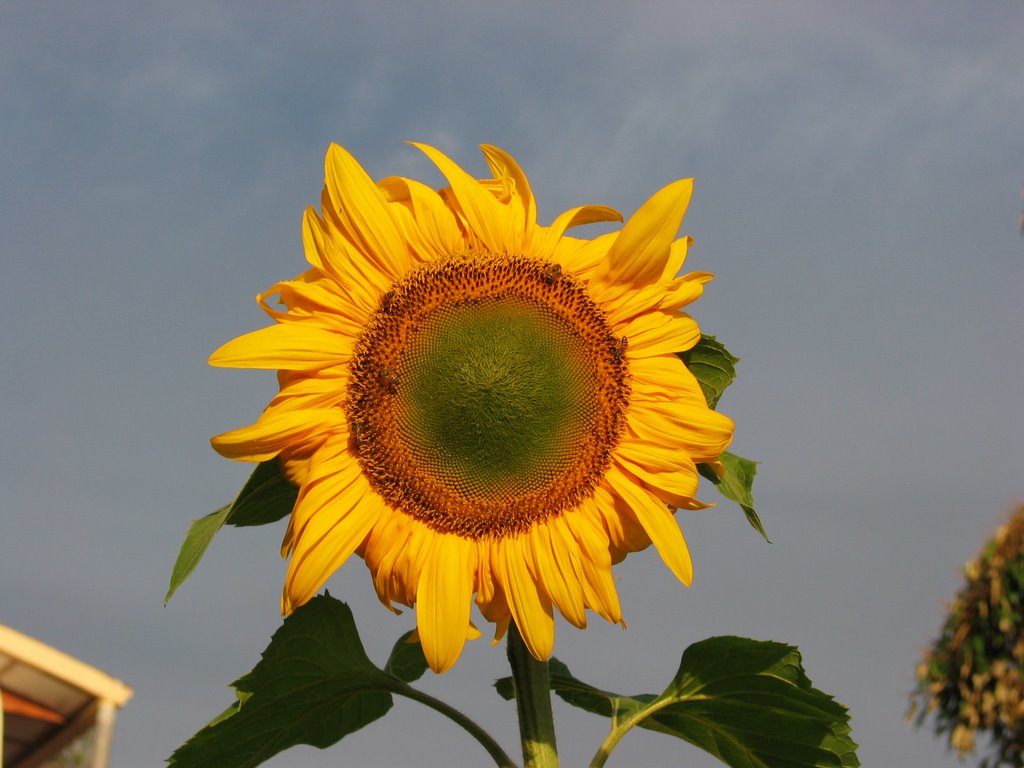
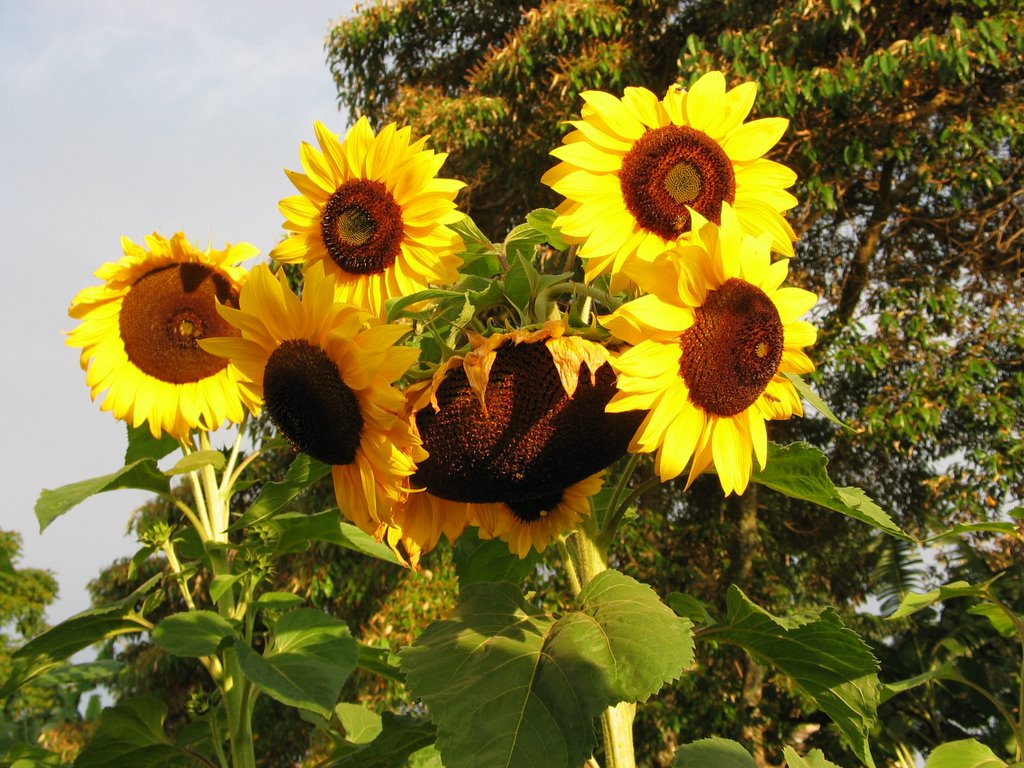 Sunflowers
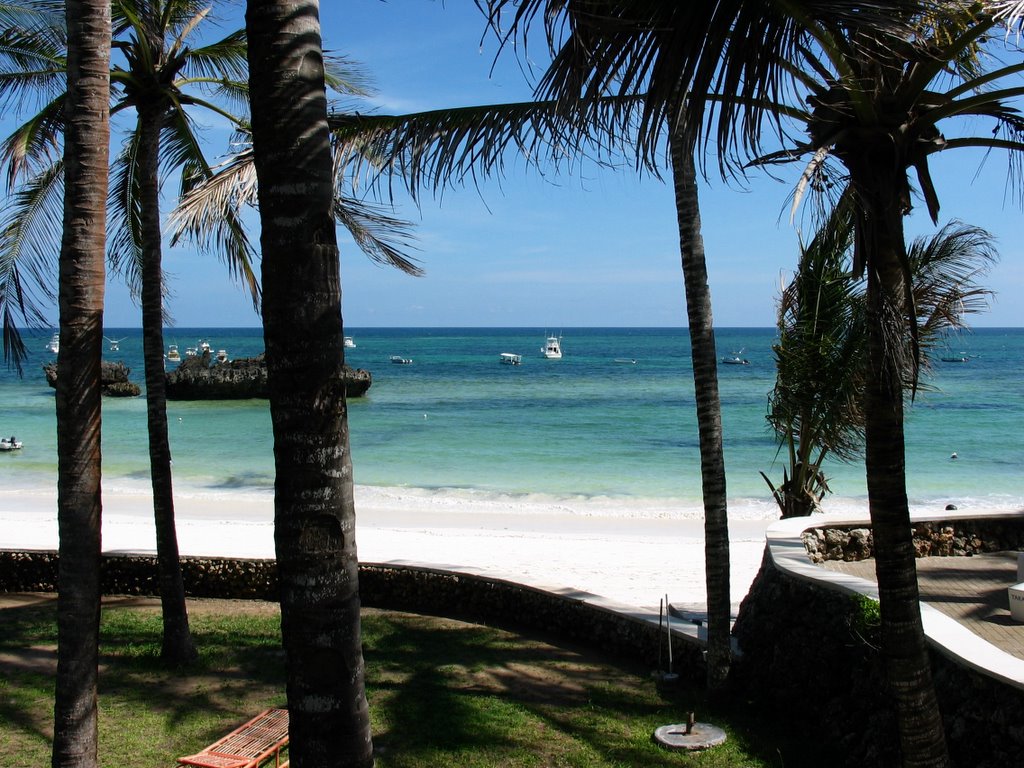
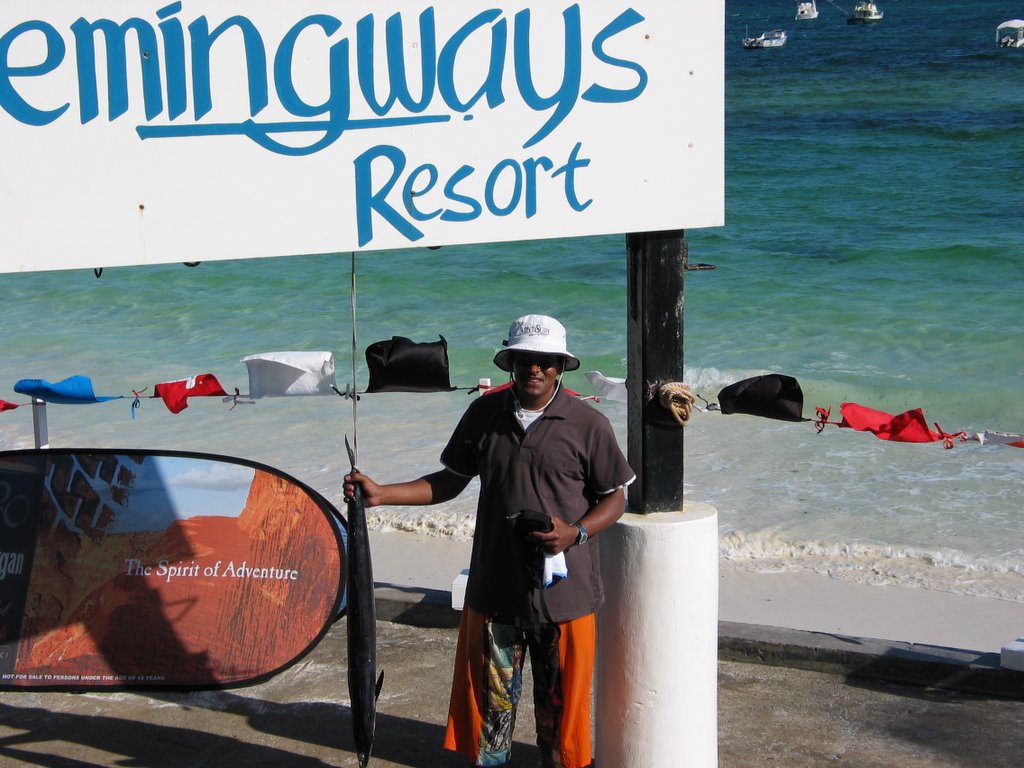
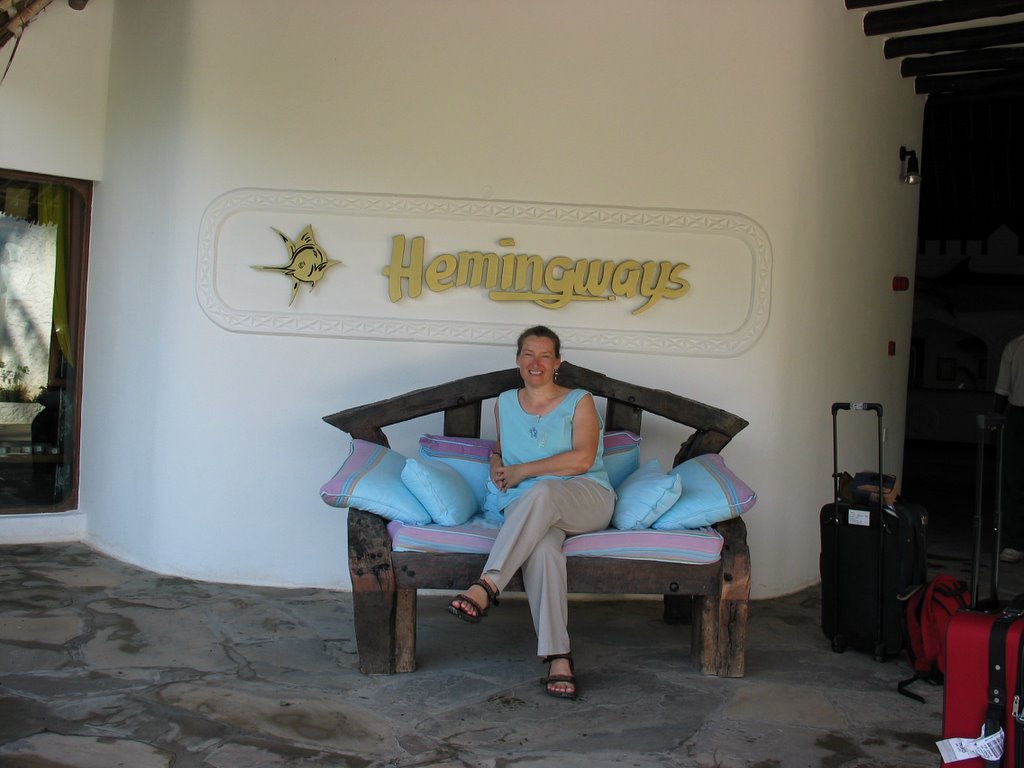
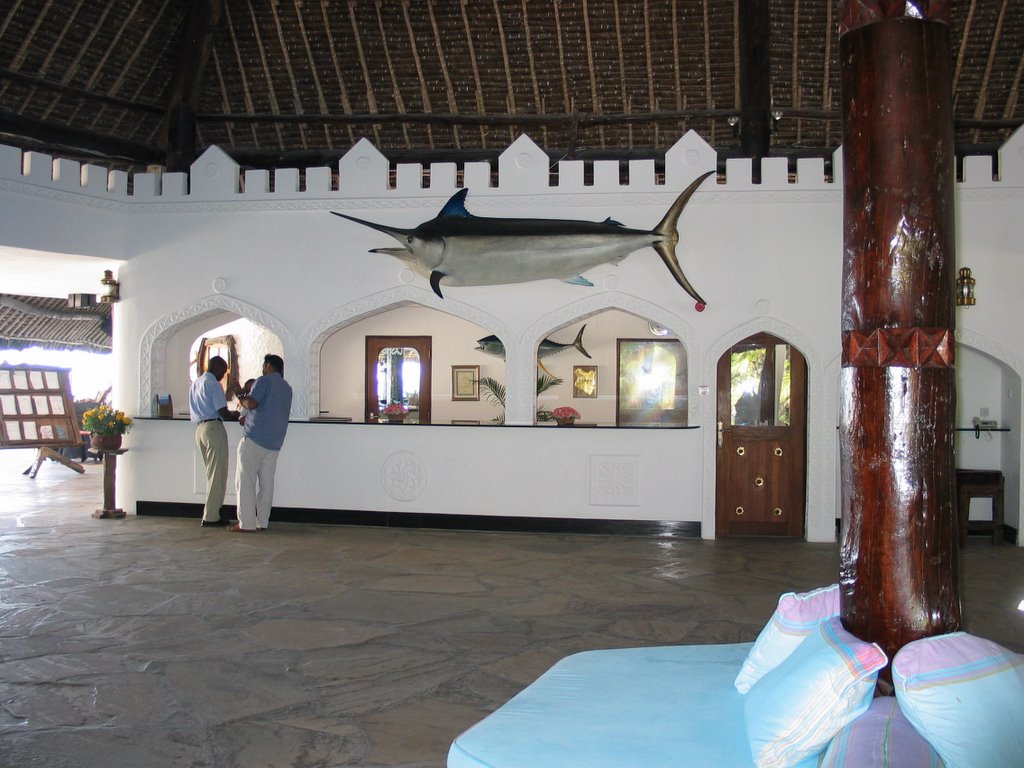 This is the reception area at Hemingways. On entry, this is one's first view of the hotel, and to the left of the reception desk the opening looks directly out across the terrace to the ocean - it's a delightful sight on arrival. The hotel staff are wonderfully friendly and relaxed, while maintaining high standards of service - a pleasant change from Rwanda, where staff training is still lacking. Note the Arabic influence in architectural style, and use of natural materials in the roof.
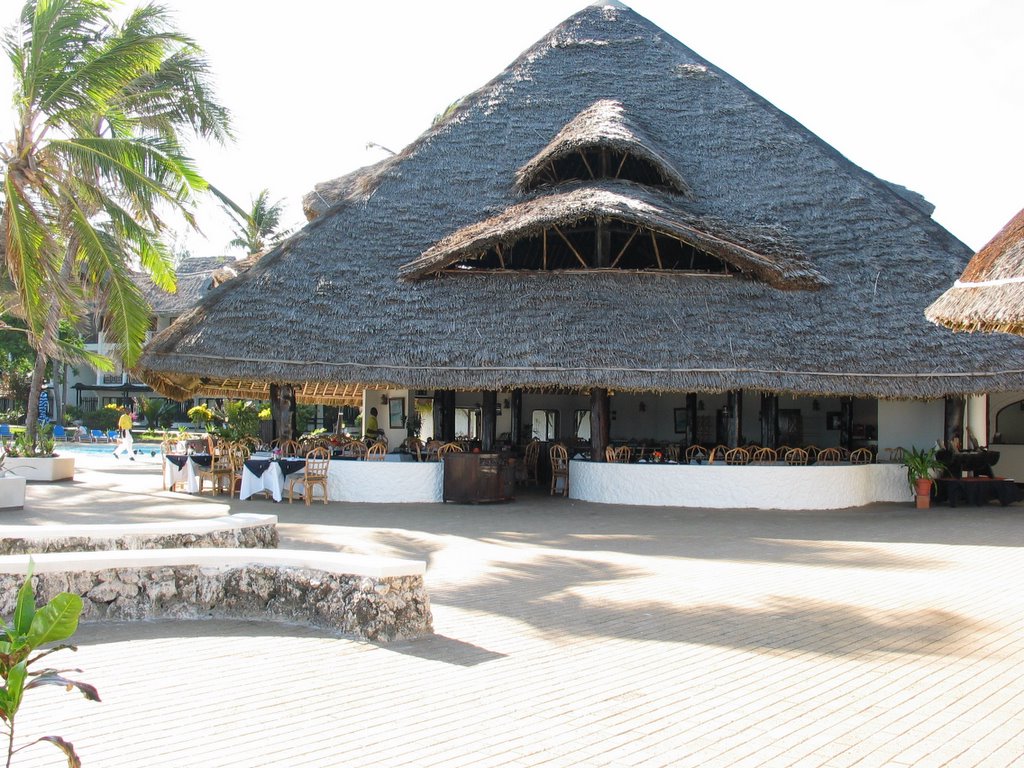 This is the hotel restaurant. During the winter months (May - October) there are walls (with windows) made from natural local materials, as the wind and high tides can bring water right up to this point. The walls were taken down the day after I arrived, marking the beginning of the high season. At night all the dining tables were set out on the terrace you see in front of the restaurant, and we dined by candle- and moon-light in the warm evening breeze. The food is excellent, with a speciality being the fresh ocean fish caught daily - I watched the boats coming in to shore and the fish being carried into the restaurant each afternoon.
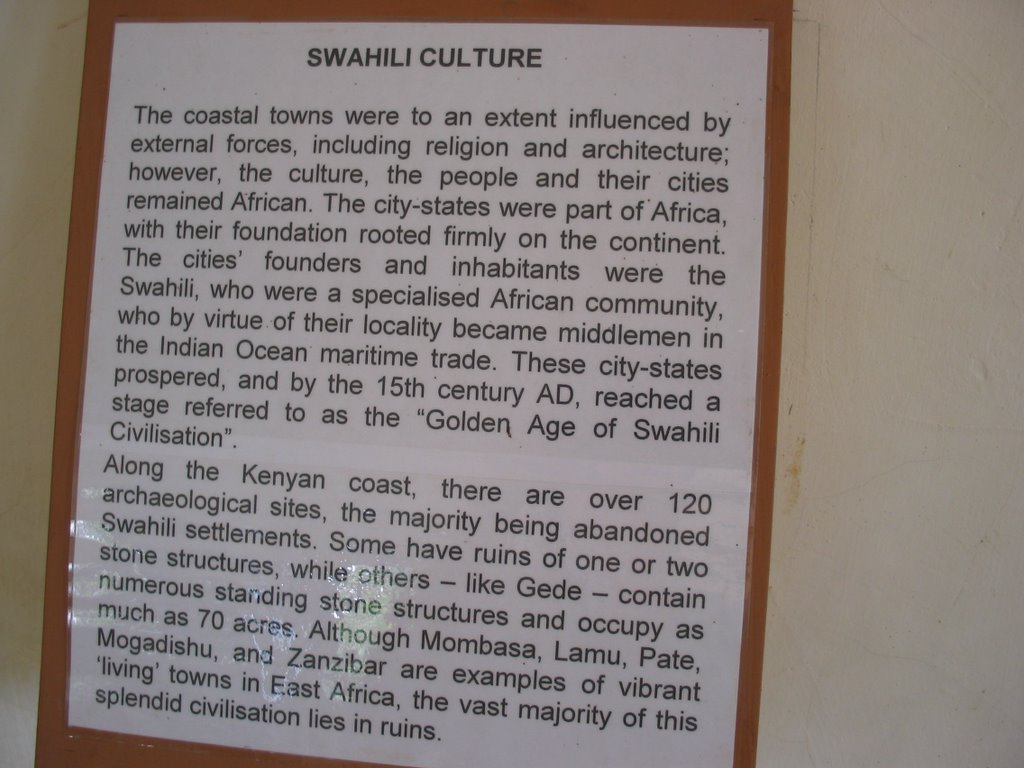
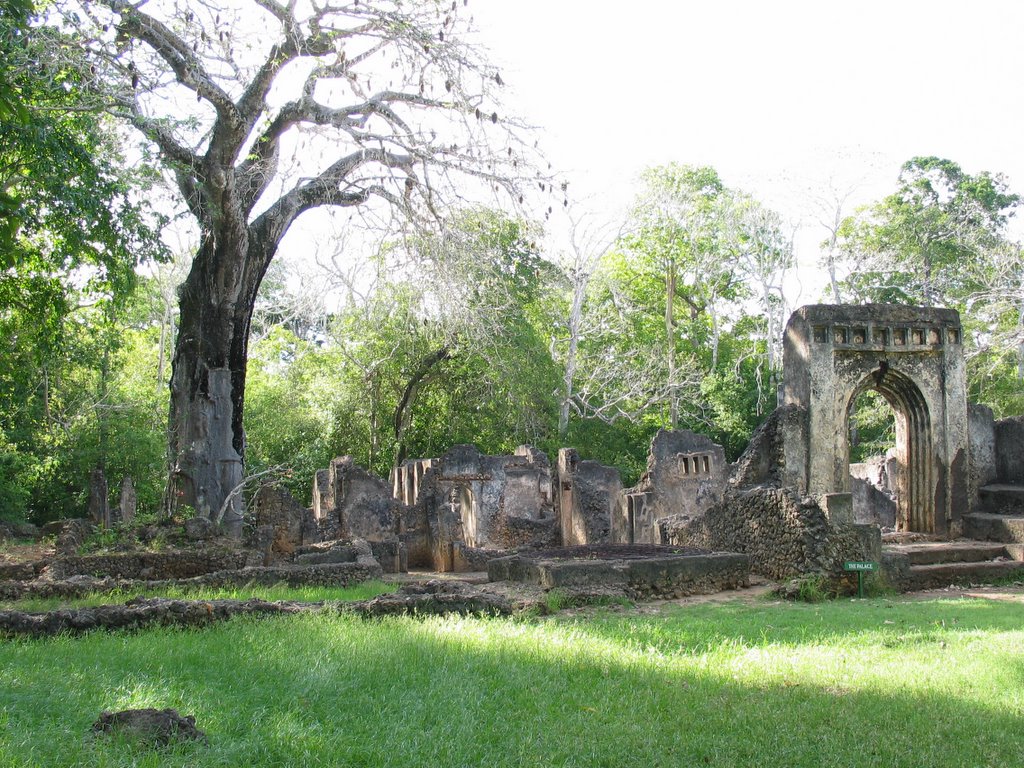 The town of Gede (aka Gedi), a few kilometres inland from Watamu, was inhabited from around the 12th or 13th century until approximately 600 years ago. The reason for abandonment is unknown, although speculation is either that the sea receded, or that a local river changed course, leaving the town (which has many deep wells) without water. Information on the 'net is hard to find, but the guidebooks to the area have more details. It's a beautiful site, and well worth visiting.
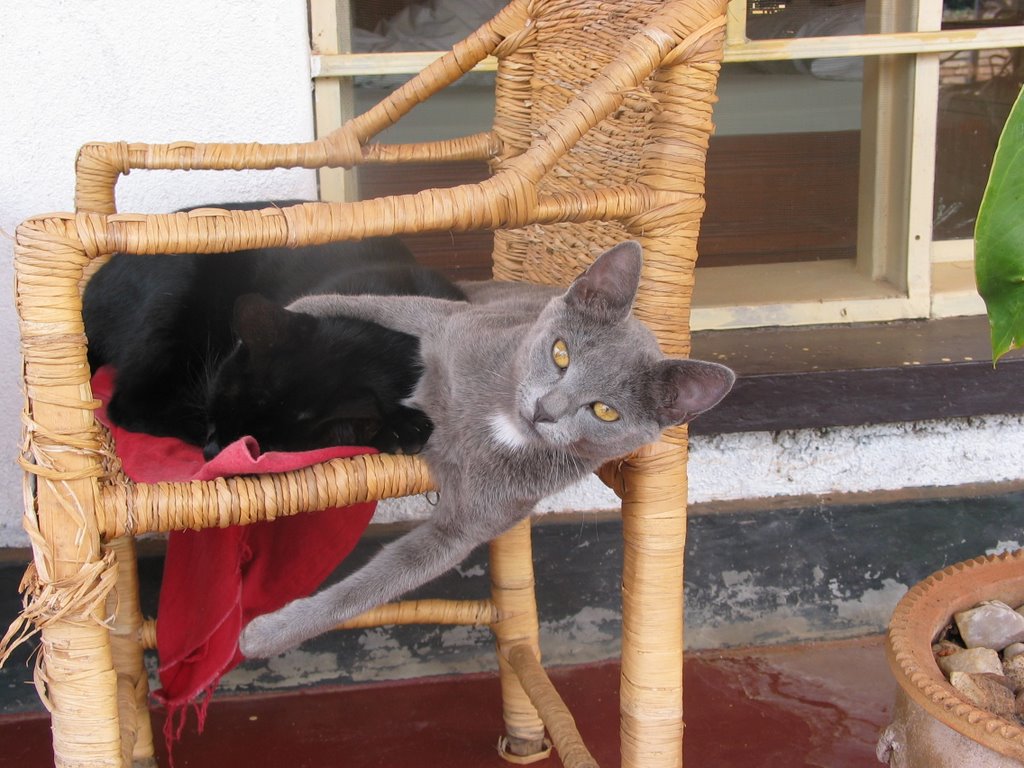
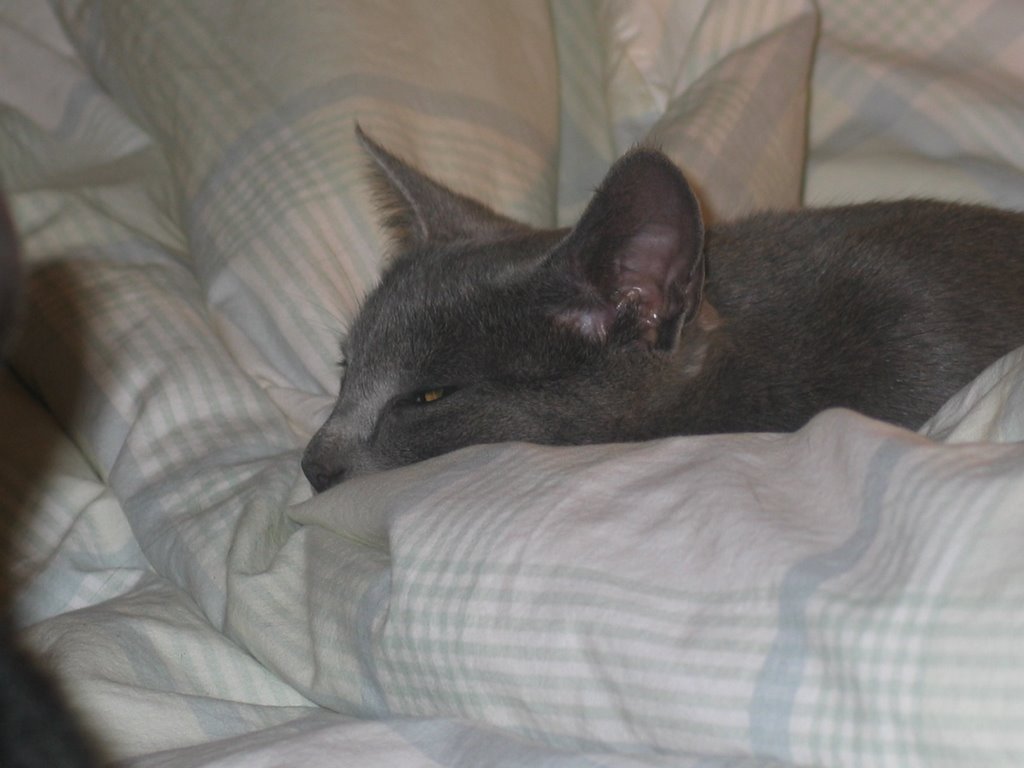
 Cat lovers only!