Wednesday, June 14, 2006


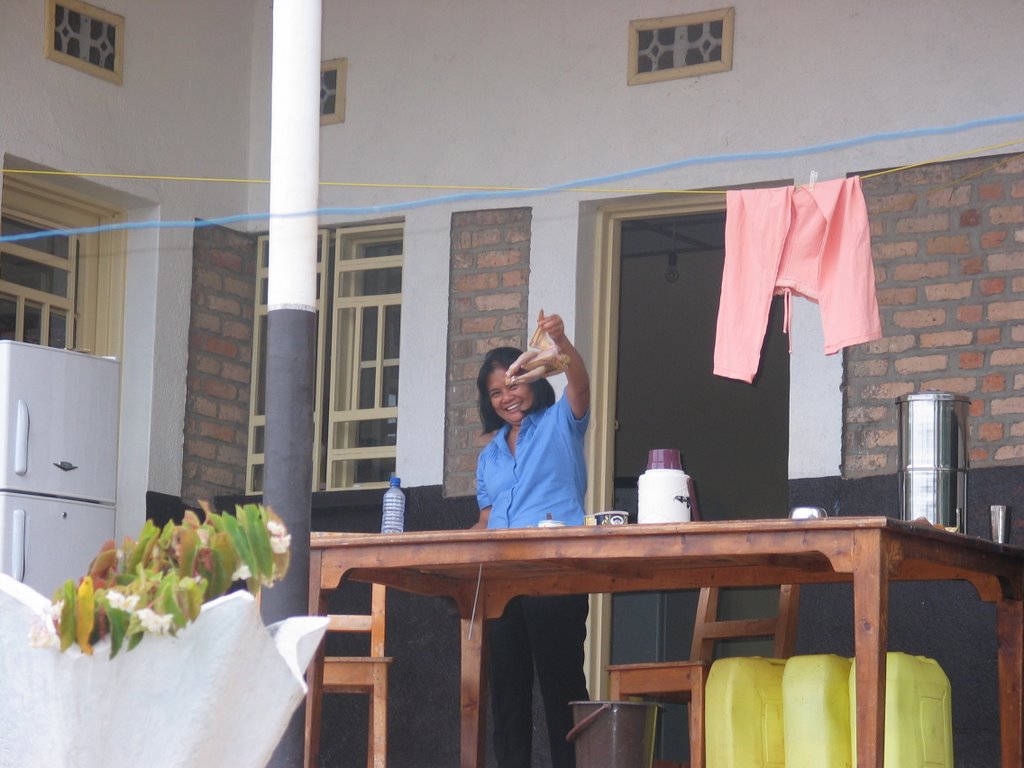
A former child soldier learns wood working skills.

Monday, June 12, 2006

Weekend Adventure

The Rwandan border is a 30 minute walk from our office/home, but our driver gave me a ride down at 13:30 on Friday afternoon last week. I had been planning to take the 15:00h (3 o'clock) bus from Kamembe in Rwanda to Butare. At about 13:20 our driver, Emmanuel, came and said "I thought you were going to Butare". It turned out there was no 3 o'clock bus, but if I were lucky I might just get the last one at 2 o'clock. I shut down my computer, grabbed my back pack and jumped into the car. I tried my best not to look impatient while the DRC immigration officer took forever to write down my passport details by hand in his blue note book as he kept a running conversation going with other staff at the same time. As he finished, I grabbed my passport, walked down the hill between the DRC side and the bridge over the river that marks the Rwandan border. A form to fill on the Rwandan side, and then a quick look for transport for the 10 minute drive up the hill from Cyangugu to Kamembe. Nothing, not a mini-bus in sight. I tried asking an NGO car for a ride, but they were headed towards Burundi - wrong direction. I began walking up the hill, and realised I'd never make it in time. Finally I just decided to enjoy the scenery and the sudden peacefulness of the Rwandan countryside that constrasted so unexpectedly with the hustle and bustle just over the border in Congo. I walked up the hill to the Presbytarian Peace Guesthouse to see about getting a room for the night - full! I was ready to walk back down the hill and return to the office: it wouldn't take too long. Just before I headed back down, it occurred to me to call a former colleague, Samuel, who lives in Kamembe, not really expecting to find him home as I knew he was going for a working visit to Bangladesh. Miraculously he was just back, and immediately invited me to stay the night with his family. He came to find me. First we went to the hospital where his 7-month old son was recovering from pneumonia, and to meet his wife and eldest daughter who were there taking care of the baby. Then we slowly walked to his home, accompanied by his 7-year old twins, a boy and a girl, stopping to visit some neighbours on the way.

In the morning I was up at six, and caught the 7 am mini-bus headed for Kigali (via Butare). One of the things I like about Rwanda is that a 7 am bus pretty much leaves on time: we left at 7:10. When people don't arrive on time others don't have a lot of sympathy. So when, about ten minutes into our trip, the driver gets a call from the office saying that a passenger with a pre-paid ticket had showed up for the bus and we should stop and wait for him to catch up with us on a motorbike, the other passengers started mumbling and making comments among themselves. As we waited, the chorus of "tugende" ("let's go") got more insistent. About a second before the driver would have been persuaded to start off again, the missing passenger arrived on a motorbike and clambered aboard. I don't think he apologised.

Another good thing about the Rwandan buses is that 15-seater buses only carry 15 passengers - not the 25 or so that you'd find squeezed onto a bus across the border. For mini-buses that go directly between towns, the drivers are not obliged to pick up passengers en route, and usually (at least between Butare and Kigali) they won't. Cyangugu to Butare is another matter, as transport is far less frequent, and undoubtedly the drivers have some sympathy for people needing a ride along the way. On that morning we had a couple of seats to spare and the driver stopped at the start of Nyungwe forest to pick up two women with three small children between them. The 90-minute drive through the forest is marked by nasty twists and turns in the road, and Rwandans, not being good travellers on such roads, are frequently sick along the way. I prayed that the two young men on either side of me would not succumb, and I was lucky. The row immediately in front of me was another matter. The youngest baby of about eight or nine months was probably ill to begin with - he had a wizened face and screamed as loud as he was capable, while violently throwing his body around, sometimes hitting the other young boy with his hand or head. The boy of about six years bore it quietly, but also kept throwing up, a tear running down one cheek the only indication of his own misery as he was made to stand, no seat space being available for him. The other baby, a girl of maybe 12 months dressed in a frilly pink dress, was soon, thankfully, fast asleep. As the situation became more difficult, the thoughtful young man next to me offered to hold the baby girl, allowing her mother to help the other woman. The mother of the sick baby looked exhausted, thin, and probably very sick herself. I hoped they were headed for a hospital. The driver, in the meantime, was clearly regretting his decision to pick up the passengers, and kept looking back at them saying angry sounding things. Mercifully, as we left the forest, the sick baby and young boy both fell asleep, and the rest of the way to Butare was uneventful.

I arrived in Butare at 10:15 am, jumped out of the mini-bus, and headed for my former colleague's new house. It turned out she was at the office, so I stopped off and enjoyed tea and peanut butter cookies with Jessica and Antonia. It was such a pleasure to be back with good friends in Butare! But all too short. A whirl-wind 24 hours in which I met up with a friend from Kigali, had lunch with a friend from Niger - and enjoyed listening to the fascinating story of his childhood as the first person from his village to complete secondary school and then university - went to a small party, saw a couple more friends and former colleagues, and then at 11 am on Sunday morning hopped back onto the mini-bus to Kamembe/Cyangugu. The bus stops at Kamembe, and from there I took a "taxi velo" (bike taxi) down the hill to the border. There is something delightful about silently whizzing down a hill surrounded by the fresh scent of eucalyptus and a view of lake Kivu and the town of Bukavu in the not so far distance. Crossing back over the border on a Sunday afternoon was a relaxed affair. The same man wrote down my passport details all over again in his blue book. No one tried to ask for a bribe. And my colleague was able to come and meet me with the car, saving me the 30 minute walk.

It was wonderful to be back in Butare, but the lack of frequent transport, and the three+ hour drive really makes it just a bit too far to go for the weekend.

Thursday, June 01, 2006


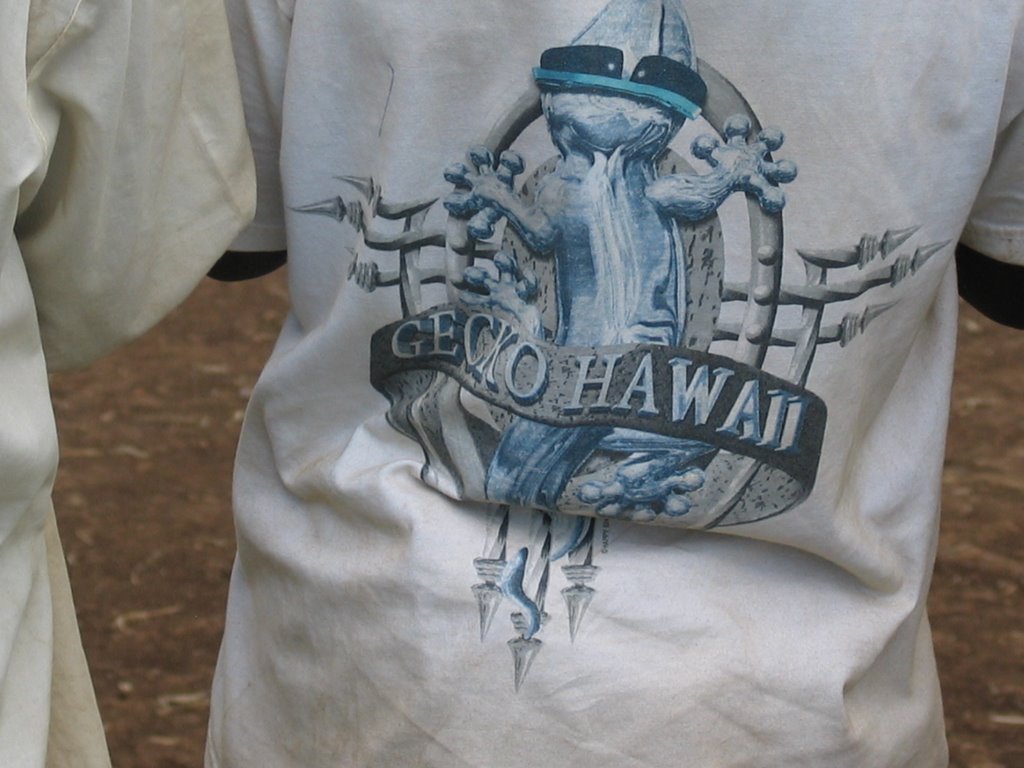
Thinking of Hawaii: spotted this t-shirt on one of the children this week. Probably donated to a Goodwill store by someone in Hawaii, and then sent over to East Africa, where the second hand clothes are sold (not given away!) in the markets. The large amount of second hand clothing that floods the market in East Africa has undermined local clothing manufacturers.

Sunday, May 28, 2006

Links

I'm having difficulty figuring out how to make the links on this page work. Until I do, I'd like to recommend the web sites of my friends, Katy and Bryan: katyincongo.blogspot.com and bgindrc.blogspot.com. I'd also like to recommend the "Women in Congo" photo gallery of the Malteser International organization, which is a branch of the Order of the Knights of St John of Malta - in existence since around 1050AD.
http://www.malteser.de/61.Malteser_International/en/default_en.htm

Saturday, May 27, 2006


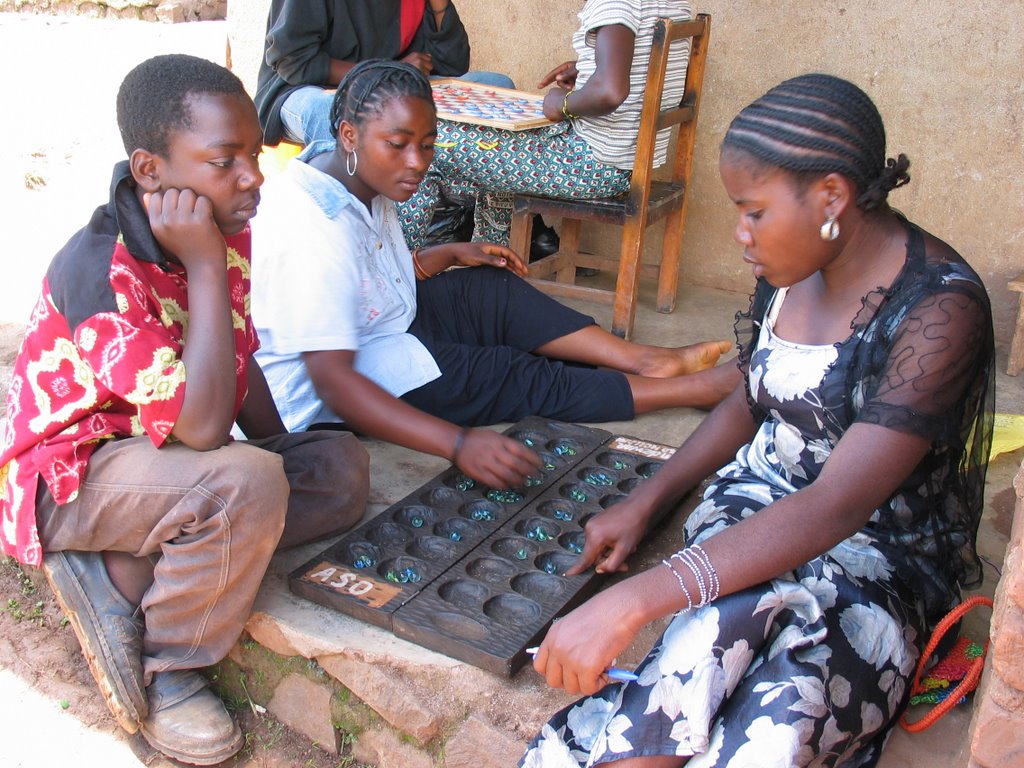
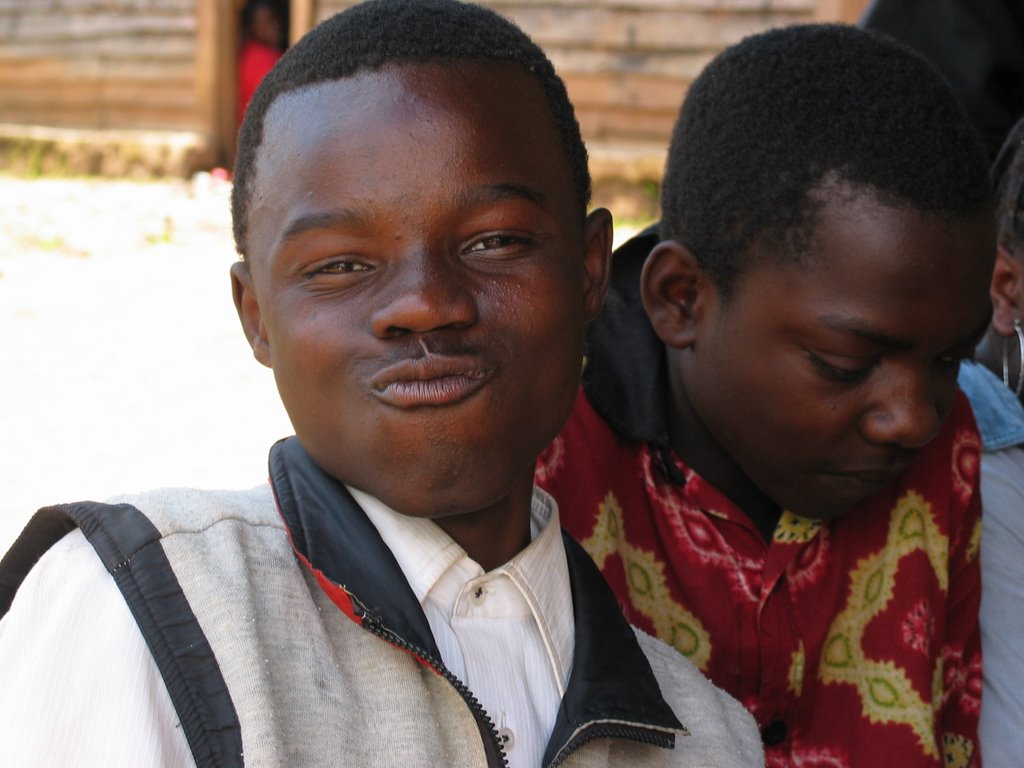
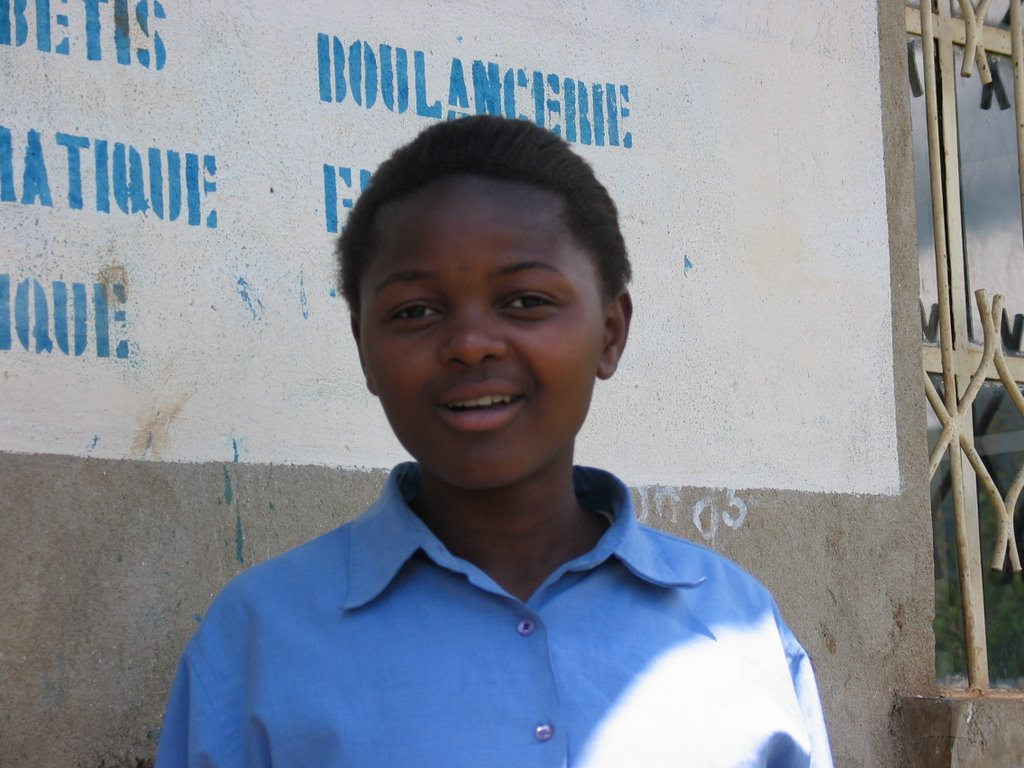
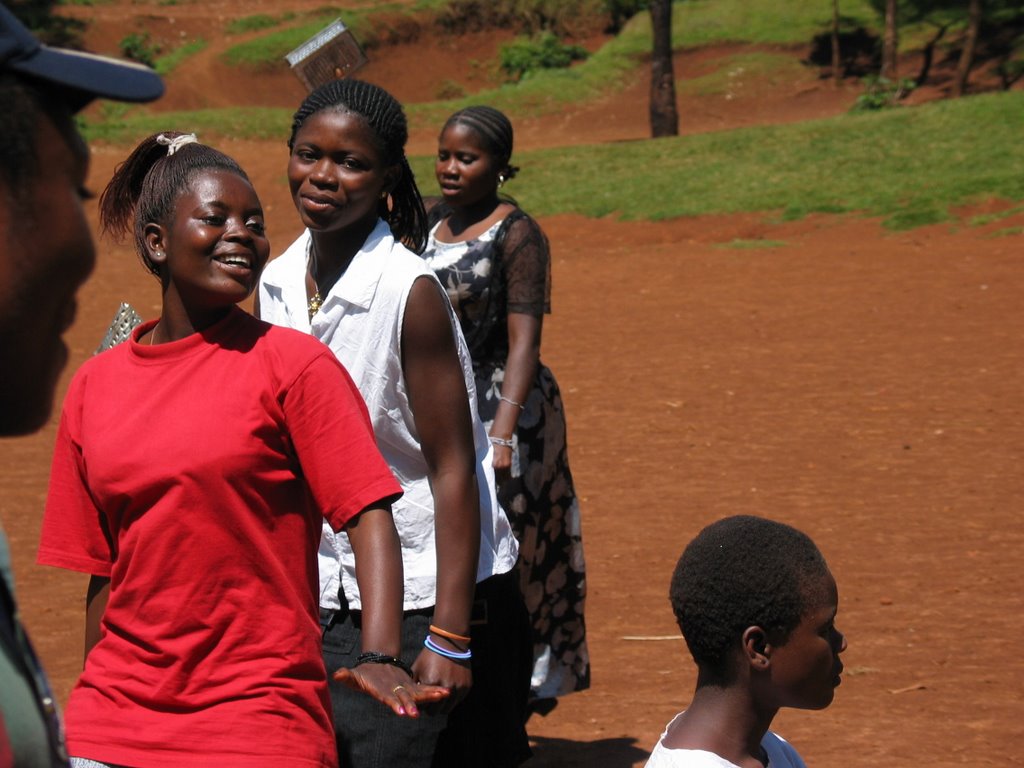
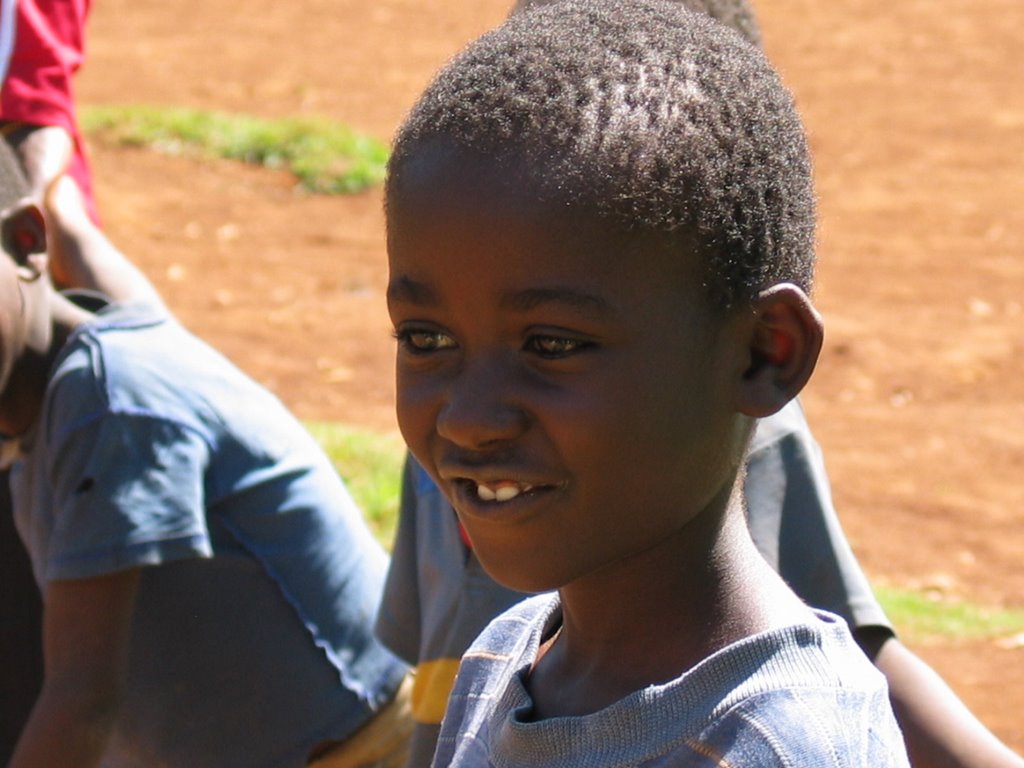
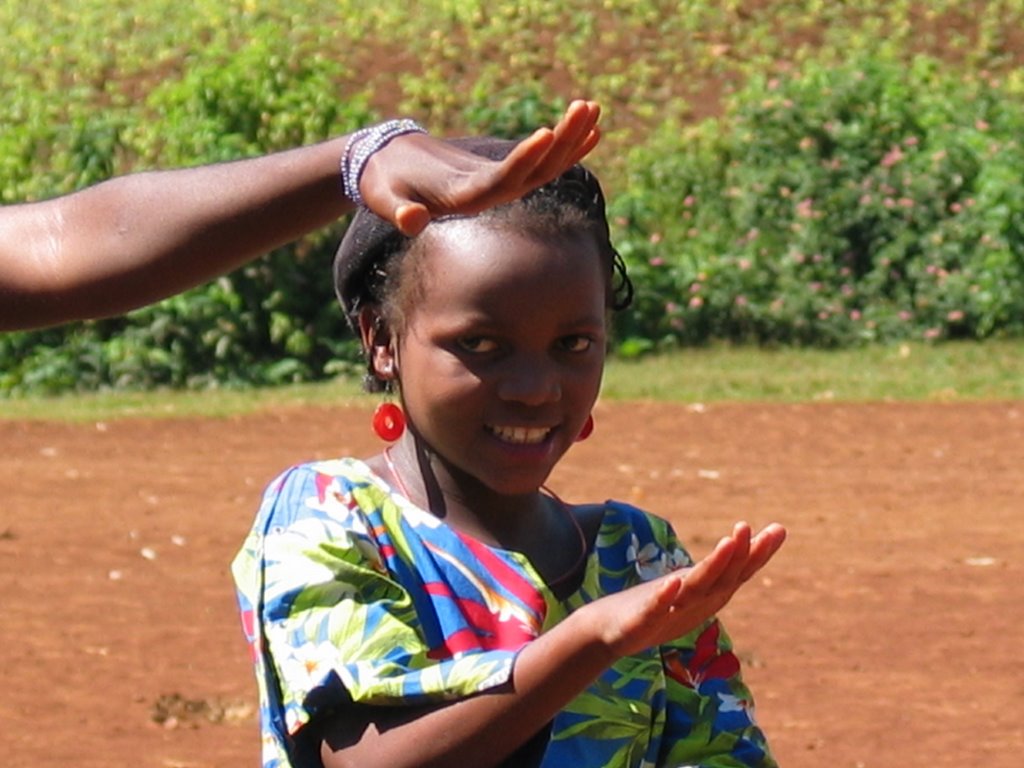
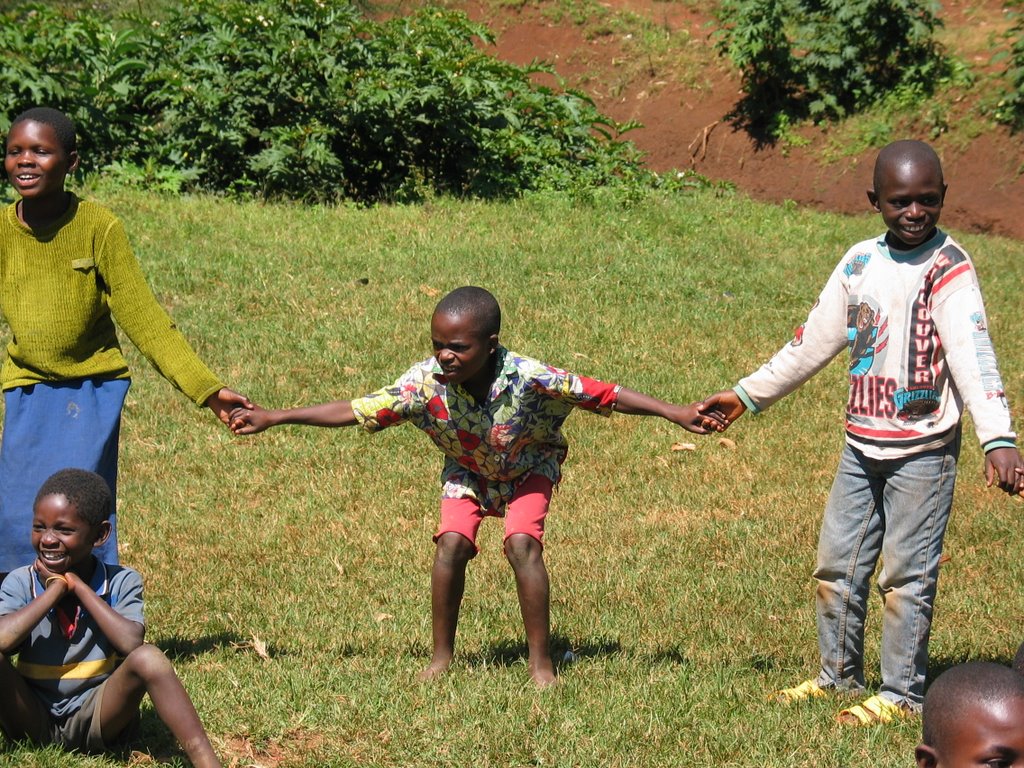
The photos above are of some young people who come to one of the centers where we provide training to the staff. They have all been victimized first by poverty and then by the war. They have very little education and speak almost no French, so it's difficult for me to communicate with them. I haven't yet (in spite of my over-ambitious good intentions) learnt any Swahili. At first they didn't want to be photographed, but after one young woman asked me to take her photo, the others were keen for their pictures to be taken too. The center provides them with skills in trades such as soap-making, tailoring, and wood work. The majority of people here in town are unemployed, so learning skills is essential in order to have a chance of making a living in the future.

Two support staff from a local NGO participate in a creative arts training session. We provide paints, brushes, and training to local associations who work with orphans and marginalised children. Creative activities help the children to express themselves and gain confidence.

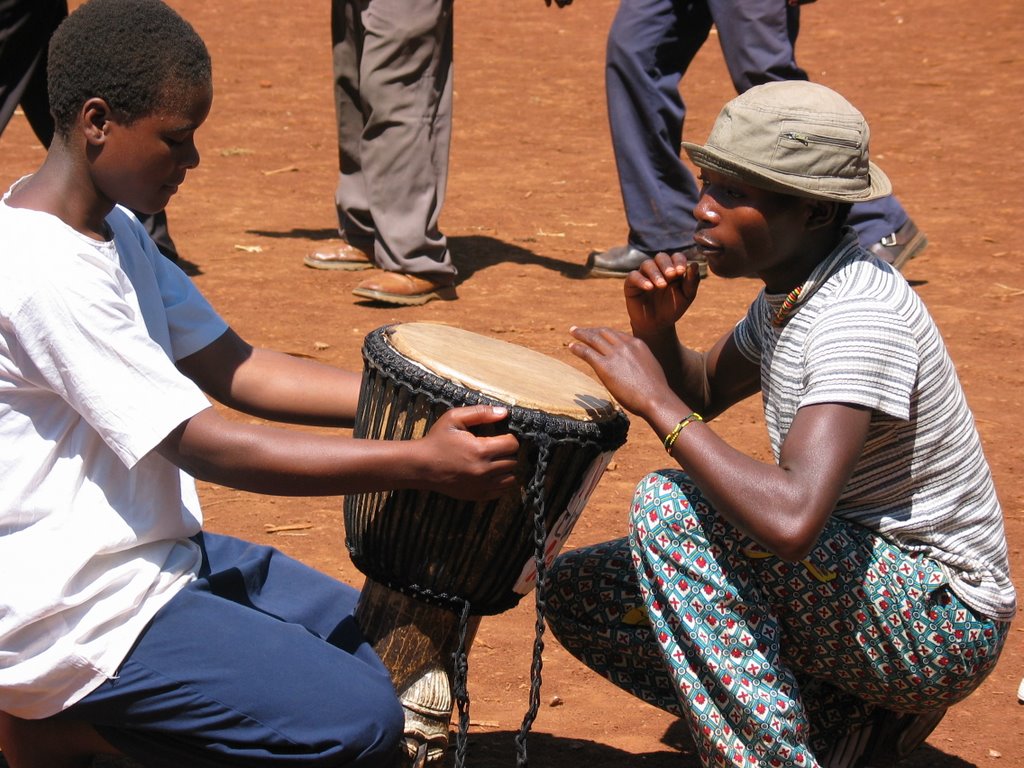
Music is a powerful tool in psychosocial support for young people. It helps them to feel good about themselves and each other. The young women here are dancing to the beat of a drum and music from shakers, or rattles, made locally from tin and filled with dried beans.

Young people on a hillside on the edge of town.

Tuesday, May 23, 2006

Shukuru

Today I visited a small private primary school in a relatively pleasant neighbourhood on the outskirts of town. The school building is a partially completed house that is provided to the community by the owner (I'm not sure if rent is paid, but likely it is). The walls are bare bricks, the floor is packed dirt which probably turns to mud in the rain. The windows have wooden slats nailed across them, with barely any light coming through. Small classrooms are separated from each other with plastic sheeting. There is no electricity, no running water, and the latrines are indescribable, and certainly not suitable for girls reaching the age where they need a bit more privacy. Many young girls in Africa drop out of school simply because there are no suitable toilets for them to use.

The young head teacher told me that they began the school year with 300 pupils, but were now down to 250; the others had been sent away for non-payment of fees. Pupils pay $2.50 a month. That is an enormous sum for a parent who has several children and may only earn a dollar a day. Those who do earn a dollar a day are actually pretty lucky - the vast majority are unemployed and earn nothing. They barely scrape by, and many children die before the age of five. School fees go towards paying the teachers, paying various taxes, and mandatory insurance. And you can be certain that it's all a scam - they receive nothing in return for the taxes, and no insurance monies are ever paid out. It's a parody of what an education system should be: where the state should be paying teachers' salaries and building schools, not stealing from them.

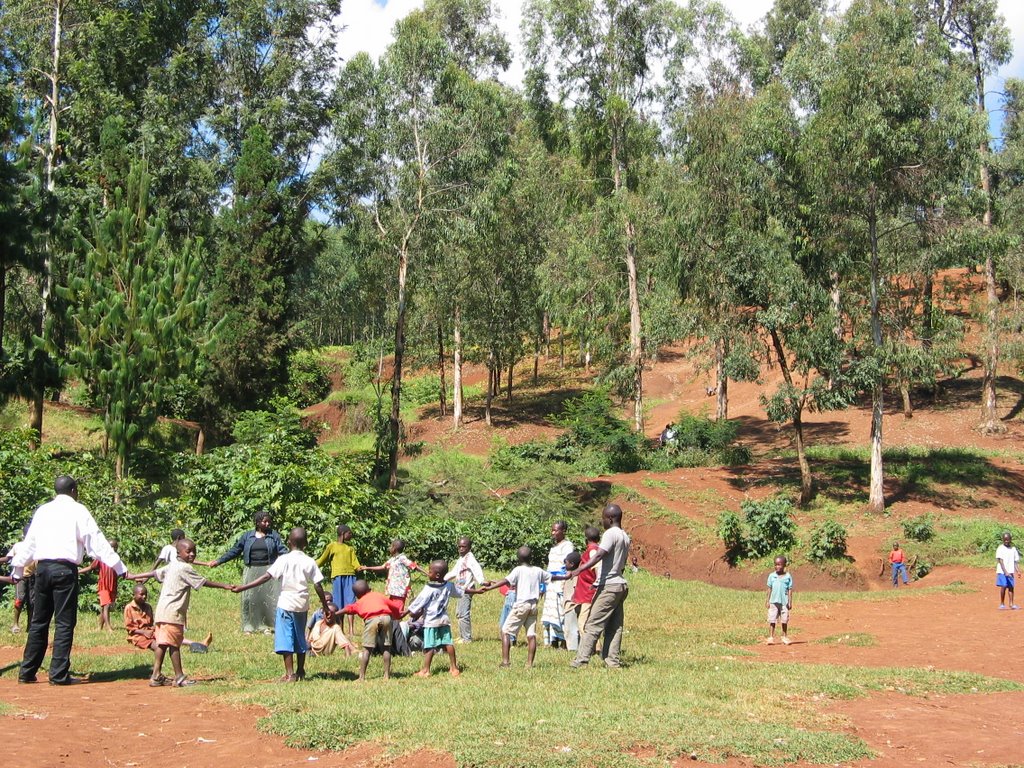
Our session at the school began outside in the sun, with our trainers coaching the teachers in four large circles of young pupils playing games that are designed to improve their concentration, coordination skills, and mutual acceptance of each other. While I watched, a few neighbourhood kids, no more than 3 or 4 years old, sidled up to me. After a while, one slid his tiny hand into mine. I wondered how much affection some of these children get at home, where there are usually too many children, and parents too hassled with the struggle just to feed them to give them individual attention. Is that just a western concept? Don't all children need attention and affection? And while I was watching and thinking about these things, a young boy was suddenly in front of me. "I've been chased out", he told me, looking like his world was coming to an end. He's 11 years old, with worn clothing and inappropriate badly fitting boots, but clean and bright looking. His name is Shukuru; he wants to study. And today his dream just came to an end because his father doesn't have work and there's just no way he can pay his school fees.

Sunday, May 21, 2006

Contrasts

Last night I sat down and uploaded several photos and wrote some text, and then when I hit the "publish" button it all disappeared into that black internet hole. A bit frustrating! There are so many photos already that I'd like to post.

I spent yesterday afternoon drinking tea, reading a book, and chatting with other expat workers on the terrace of a lovely small hotel/restaurant located 20 minutes walk from our office. The terrace has a spectacular view over the lake, nearby islands and the hotel's garden which is a cascade of bamboo, lime trees, torch ginger, bougainvillea, and many other tropcial flowers sloping down to the lake shore. It is beautiful, serene, peaceful; the lake tranquil. The calm belies the terror hidden in the surrounding countryside, where ordinary people and their children are suffering violence and dying at an astounding rate, all but ignored by the international community.

I work with a team of eight local staff. They go out every day and train primary school teachers and staff at orphanages and transition centres for marginalised children. Young women and children are the sorriest victims in this unseen and incomprehenisble war - a mishmash of soldiers, military groups, rebels, armed gangs, all fighting over land, minerals, resources, power. The children have been orphaned by the fighting, some seeing parents murdered before their eyes; they are orphaned by HIV/AIDS; they are dragged into the conflict as child soldiers (both girls and boys) or join willingly on the promise of food; they are raped and then shunned by society; they are accused of witch craft and expelled from families that cannot feed them. But they are still children and young people with the same rights, feelings, and hopes for the future as young people everywhere.


The narrow inlet of Lake Kivu around which most of Bukavu's expat community live; patrolled by MONUC - the UN mission in DR Congo.

Monday, May 01, 2006

First pictures from Bukavu

I arrived in Bukavu on Monday afternoon, after a 3 hour drive from Butare. We drove through Nyungwe Forest and saw a few black and white Colobus monkeys on the way. There are many differences here from my life in Butare. To begin with, this is a much larger town with many more people, and much more going on in the way of general commerce, markets, restaurants, and various offices and institutions. There's also a UN mission (MONUC) based here, with various MONUC buildings and other UN agencies around town. MONUC vehicles with armed soldiers regularly patrol the streets. A variety of police and other military groups are also frequently in evidence. The general population seem pretty relaxed about it all. The INGO expat staff are all linked into a security network with frequent radio checks (I have the two-way radio with me when at home, and carry it if I go out in the evening). All the INGOs are located in one small area of town close to the border with Rwanda, and the area is regularly patrolled by MONUC. I'm glad I had the security training while in Holland.

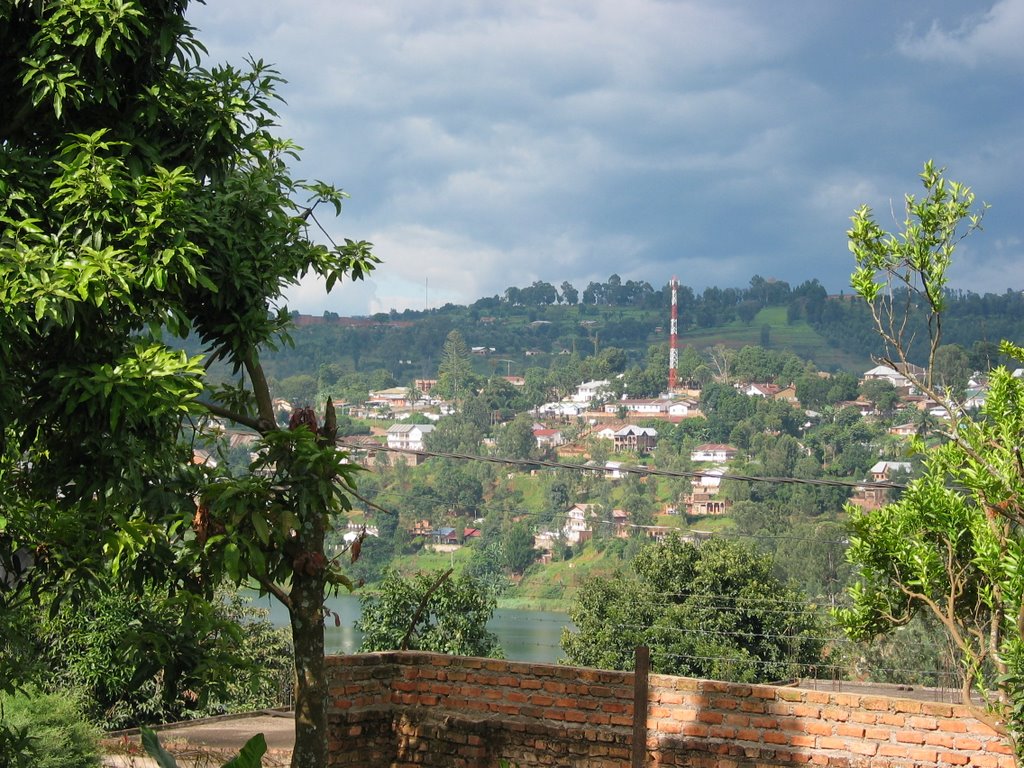
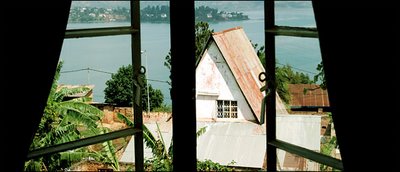
Work is very different from before. I'm with a much smaller organisation, with only two expats here. Some things are much more efficient: I had a new laptop immediately, and business cards within two days (they took almost two years on my last job - I received them just a few weeks before leaving!). On the other hand the office and living quarters are combined in a small house, and I find this a little strange. Our living room doubles as a meeting room, with my desk in a corner. The advantage is that I have internet access most of the time (unless it's down). Once we move to separate house and office (as planned, when we can find something suitable), then there'll be no internet access at home. For the time being my personal space consists of one bedroom, so I have yet to unpack most of my things. I had a large portion of a six-bedroom house to myself before, so this requires some adjustment! At least I still have a view, and from my desk I can gaze out the window and look across at the hillside which is Rwanda, just across the narrow inlet of lake that lies between our hillside and the opposite one.

A few other differences: people here are generally much friendlier and more easy-going than in Rwanda. Social events are far less formal, as evidenced by the leaving party held for a colleague here compared with the one held for me when I left Butare. And even though everyone in Butare seemed convinced that prices in Bukavu would be cheaper, everything here is much more expensive than in Rwanda - except, for some inexplicable reason, powdered milk, which is considerably cheaper. So far I've already been out to four different restaurants in town, out of which three were pretty good and one was just average. Service is faster than in Rwanda - thank goodness! Gerda's place (the subject of the New York Times travel article, posted earlier) is very good, with a modern, bright decor - all exotic flowers and plenty of the local carved figures which Congo is famous for.


The office/house with a volleyball net on the front lawn - a rare small piece of flat land on the slopes surrounding Lake Kivu.


Looking across the inlet to Rwanda - the red and white antenna tower marks the border between Rwanda and DRC.

Monday, April 24, 2006

Back in Butare

I'm back in my old house in Butare before heading off to Bukavu in the morning. I've been gone three weeks. I had a wonderful Easter weekend in Utrecht and Amsterdam with friends Sophie (from Belgium) and Shirini (England) who drove up and flew over to join me. We all met at Schipol airport and then drove to Utrecht.


Nicky, Sophie, and Shirini at Schipol

From there I went over to England for a few days, first to Devon, to a rather remote cottage somewhere between South Molton and Barnstaple. The sun shone the afternoon we arrived, and after that it was nothing but cold rain for the next three days. Thank goodness the house had central heating!

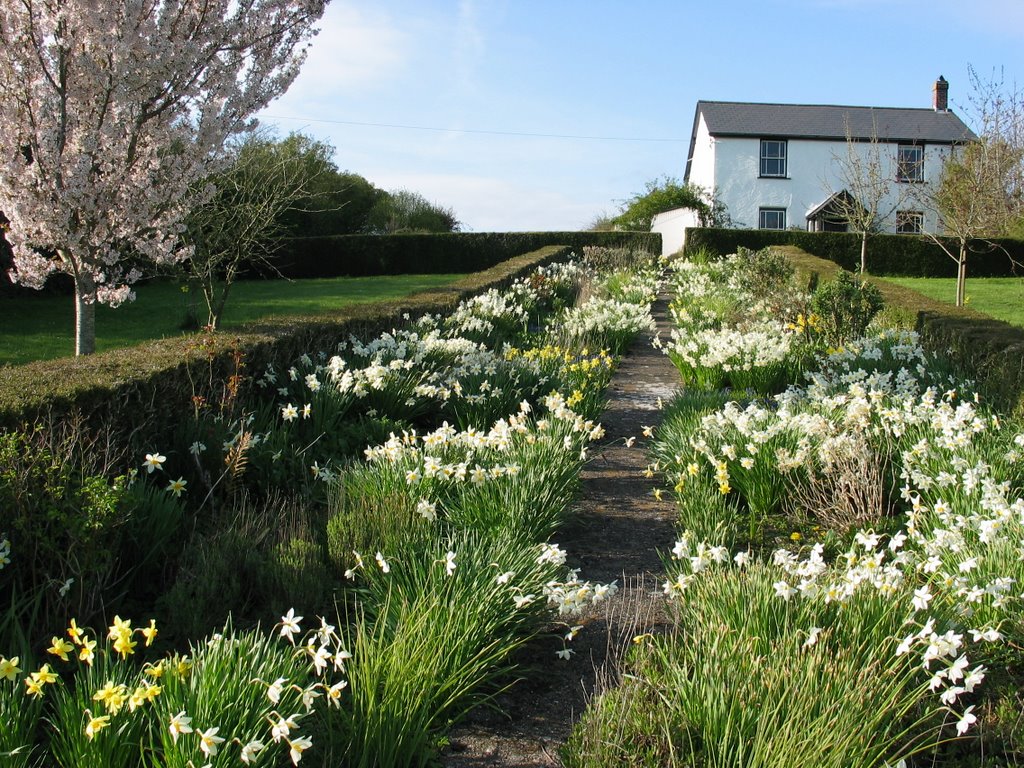
Remote cottage in Devon

Friday was a successful shopping day at Selfridges and John Lewis in central London thanks to my determined cousin Julia, and Saturday it was suddenly a warm sunny spring day with blossoms in abundance, and I enjoyed wandering around the shops in Muswell Hill basking in anonymity before catching the evening flight to Nairobi. On to Kigali this morning, and down to Butare this afternoon. My old rooms are very bare, and without the cats I feel very sad.

Internet access in Bukavu will be far less frequent, and apparently the gmail address is difficult to access - much better to use Yahoo. It looks like I won't be able to post photos very often - we shall see! I shall have to see about changing the name of the blog now, too.

Sunday, April 16, 2006

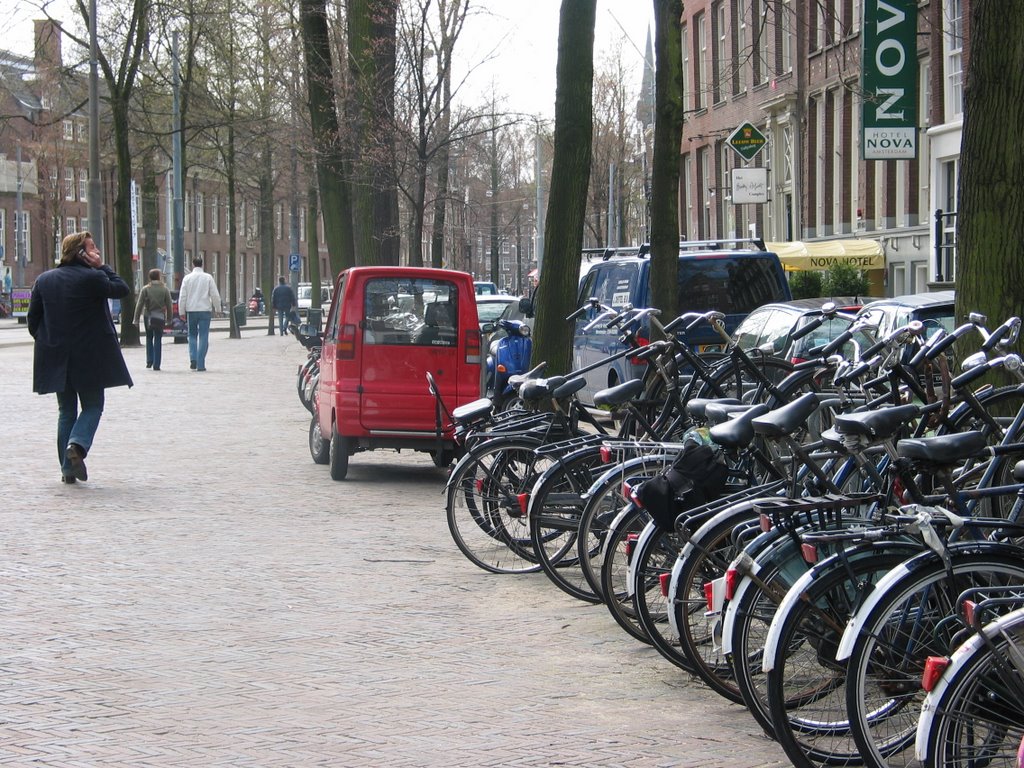
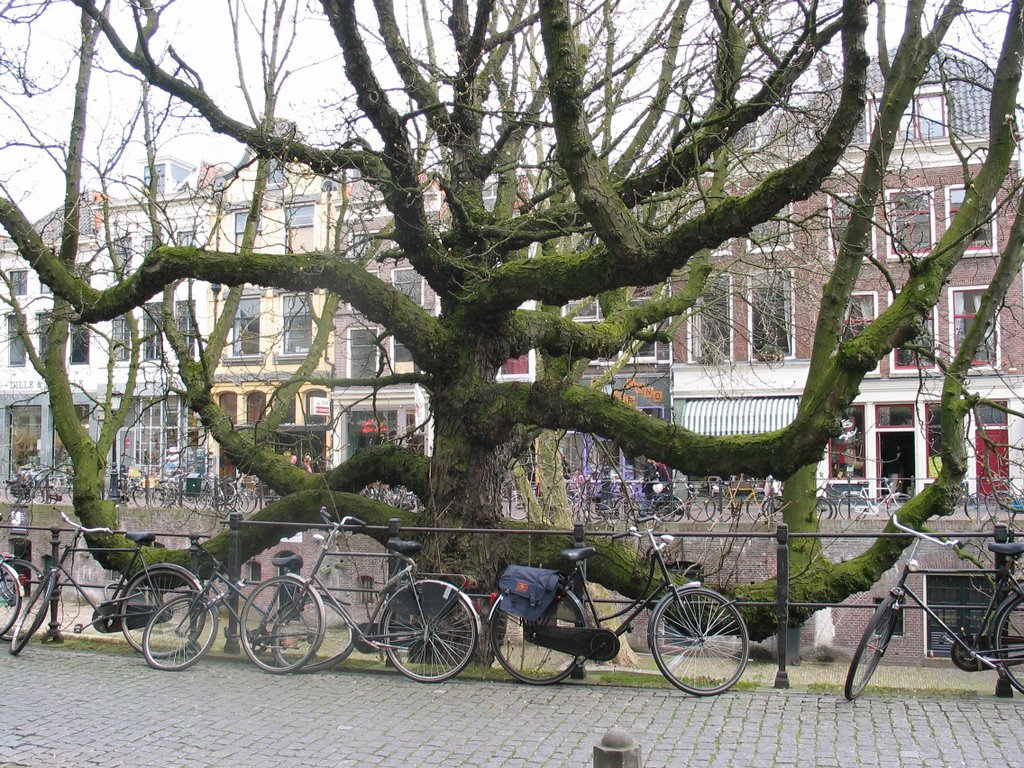
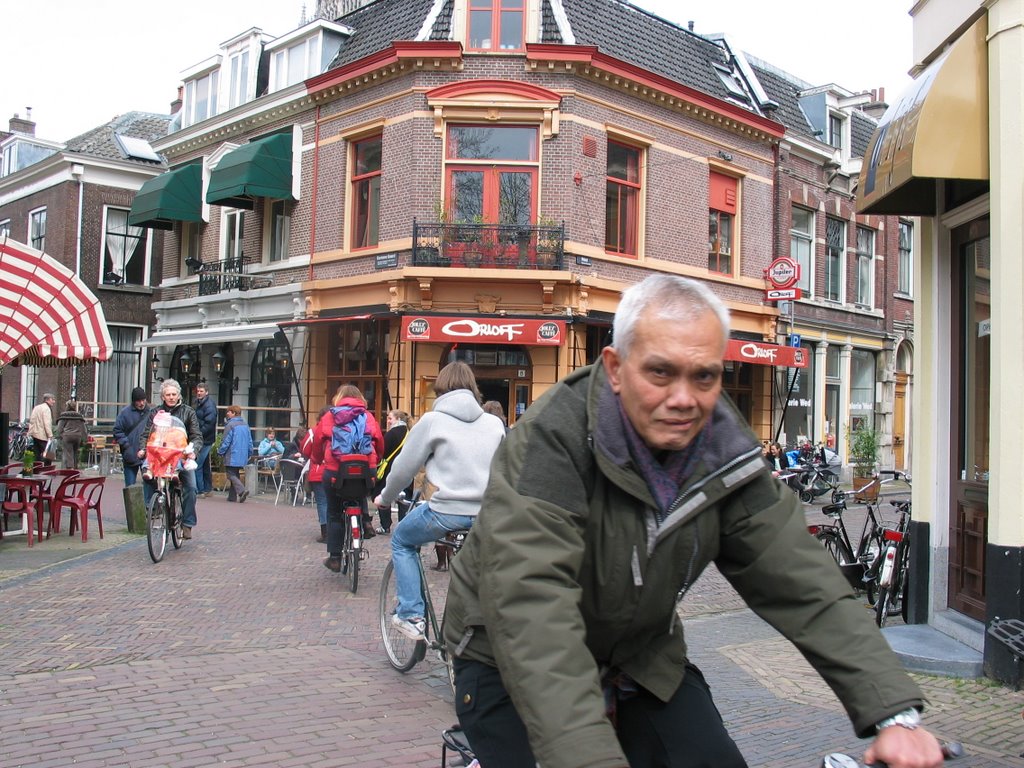
Bicycles (and a very small red car) in Amsterdam


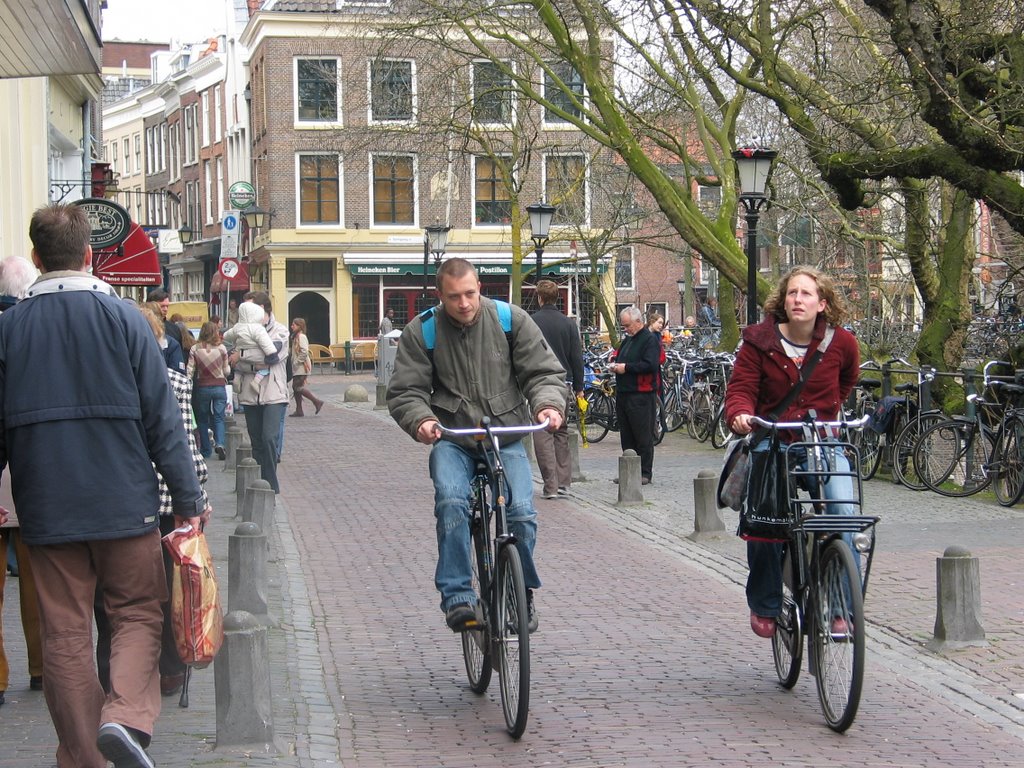
Bicycles in Utrecht


Tuesday, April 11, 2006

Enschede

Yesterday I took the train to the eastern side of the Netherlands, to Enschede, near the border with Germany, to visit my friends Rini and Walter - my former neighbours in Butare. Rini cooked some great Indonesian food, and we spent the afternoon catching up on stories about Rwanda. Their house is close to the centre of the town, and as we walked from the station I took photos of a couple of churches and other interesting items.


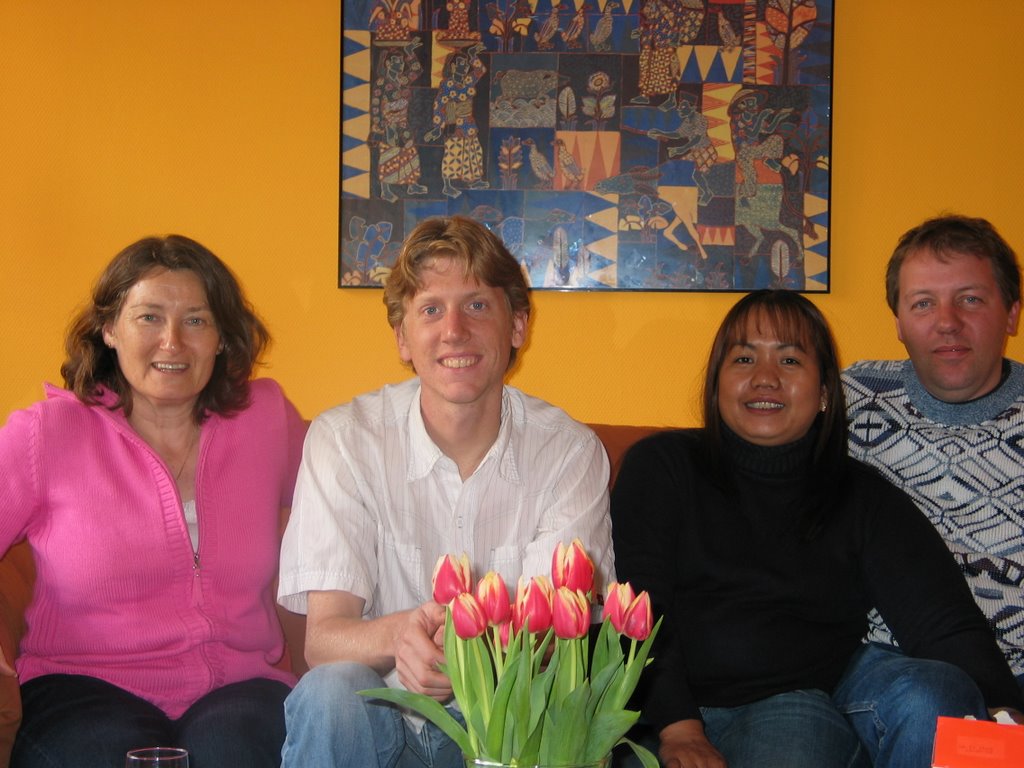
This is me with Hein (a Dutch student who was doing research in Rwanda last year), Rini and Walter.


I was fascinated by this old church tower which is obviously much older than the church it's attached to.


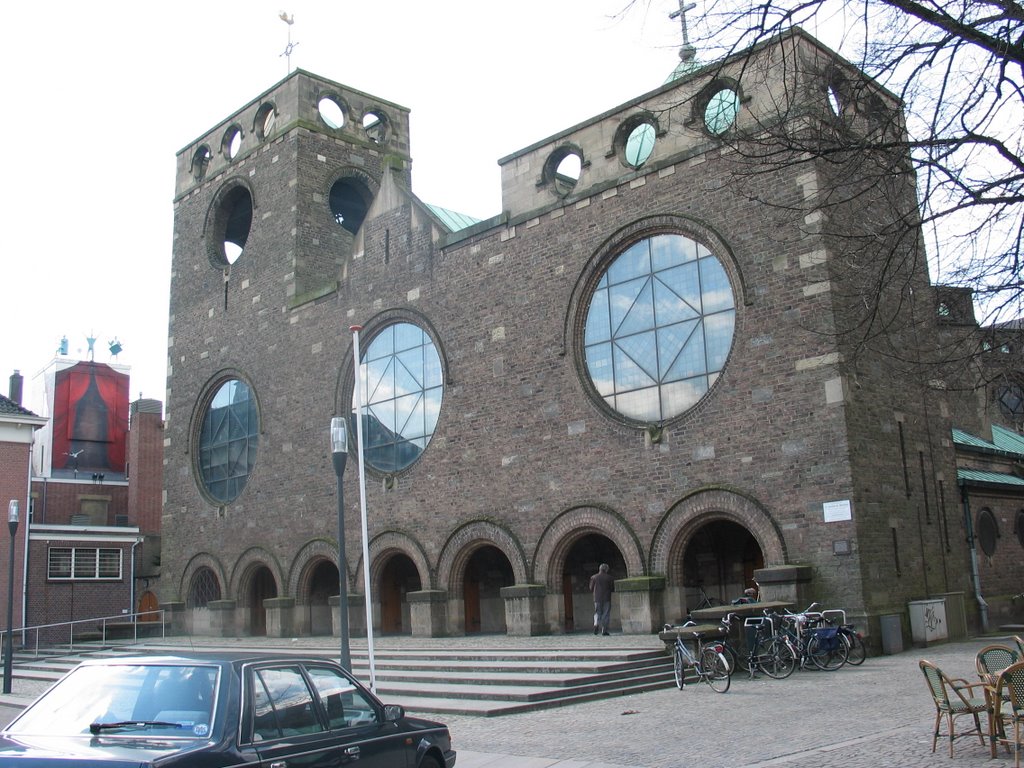
This was another fascinating church - I've never seen one that looked like this before - especially those amazing enormous round windows. Hope I'll be able to return one day and look inside.


The town theatre had lots of interesting characters clambering around the building!

Thursday, April 06, 2006

Those photos uploaded really fast, so I'll post a few more while I have the chance!!


The day I left my colleagues held a goodbye party for me at the office, and we took some photos. Here I am with some of the guys - I want to say how much I appreciated all my male colleagues: everyone of them was always friendly and generally went out of their way to help me. It was a real pleasure to work with so many great guys!


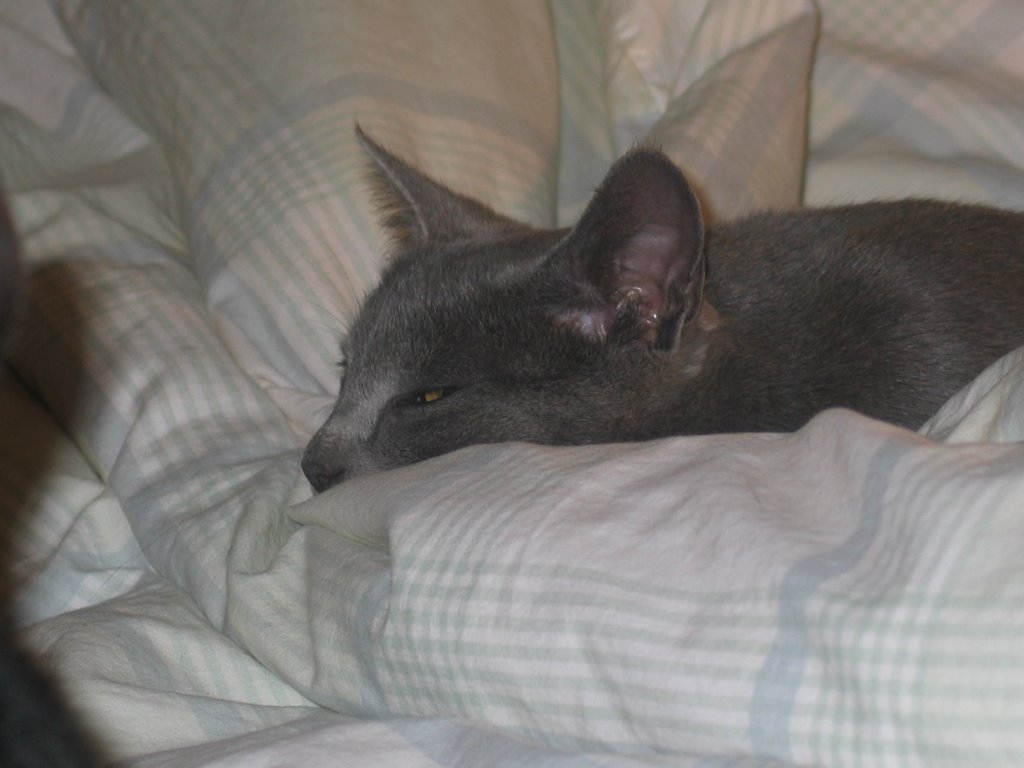
Sorry - have to add some more cat photos - I miss them so much!!!
Internet cafe with a difference

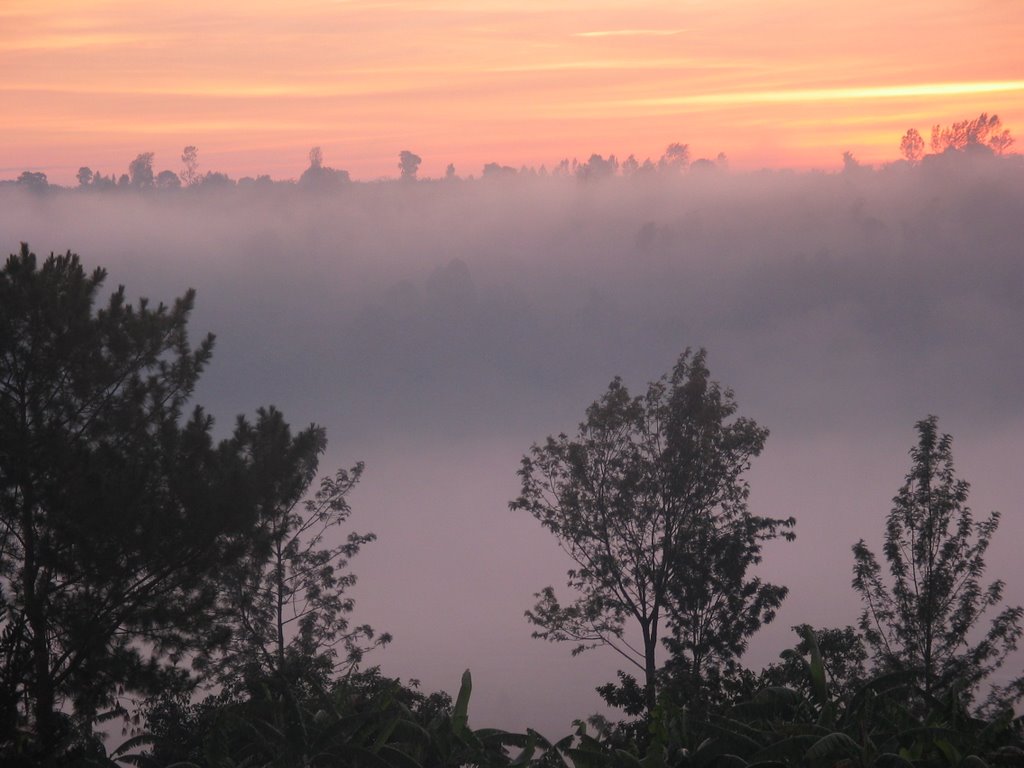
I'm sitting in this interesting cafe near the Leidseplein in Amsterdam. It's part of an old theatre, and the cafe is in what used to be the foyer. There's a wide wooden staircase and an ornate old-fashioned chandelier hanging from the ceiling. Everything is slightly shabby. The cafe has wireless internet access, so some people, like me, are sitting at tables with laptops surfing the net, although most are not. I think people come more for coffee or a drink (they also serve alcohol) than for the free internet access. I'm going to see how fast my photos upload, as there's quite a few from Rwanda that I still wanted to post. Here's a couple from a 6 am sunrise I caught the day before I left. I miss the view over the valley from my back deck...


Tuesday, April 04, 2006

Amsterdam

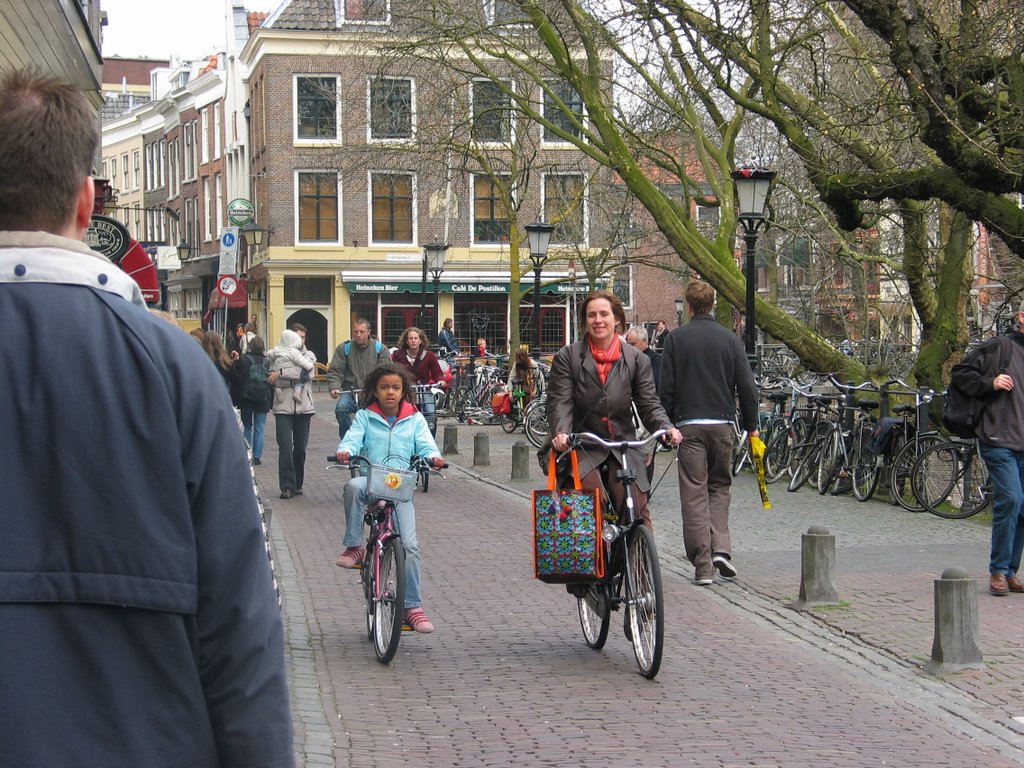
The weather here is a bit too cold for my liking, but the food is great! This is a wonderfully walk-able city, and the hotel is an interesting and pleasant 30 minute walk from the office. Sidewalks, roads, and bike paths tend to blend into each other and I'm constantly jumping out of the way of impatient cyclists. The old buildings lining the canals are full of character, each one a little different from the next, some leaning or crooked, some narrow, some wide and impressive.

The office is in one of these beautiful old canal-side buildings, open-plan inside, lots of light, very friendly. Dogs come with their owners to the office, cappucino and macchiato available (and very good) any time at the press of a button, and tubs of Ben and Jerry's "Peace of Cake" ice-cream also on offer! Large photographs of the children we work with, and campaign posters everywhere. Staff are remarkably helpful and friendly. A spare desk with internet access quickly provided for use when not in an orientation session. I'm busy most of the time - information sessions about policies and procedures, methodology training, health tests, and a three-day residential security training program coming up Thursday through Saturday which will include scenarios on dealing with weapons, aggression, and hostage-taking. Not that I expect any of that to happen, but being prepared is what it's all about!!

Thursday, March 30, 2006

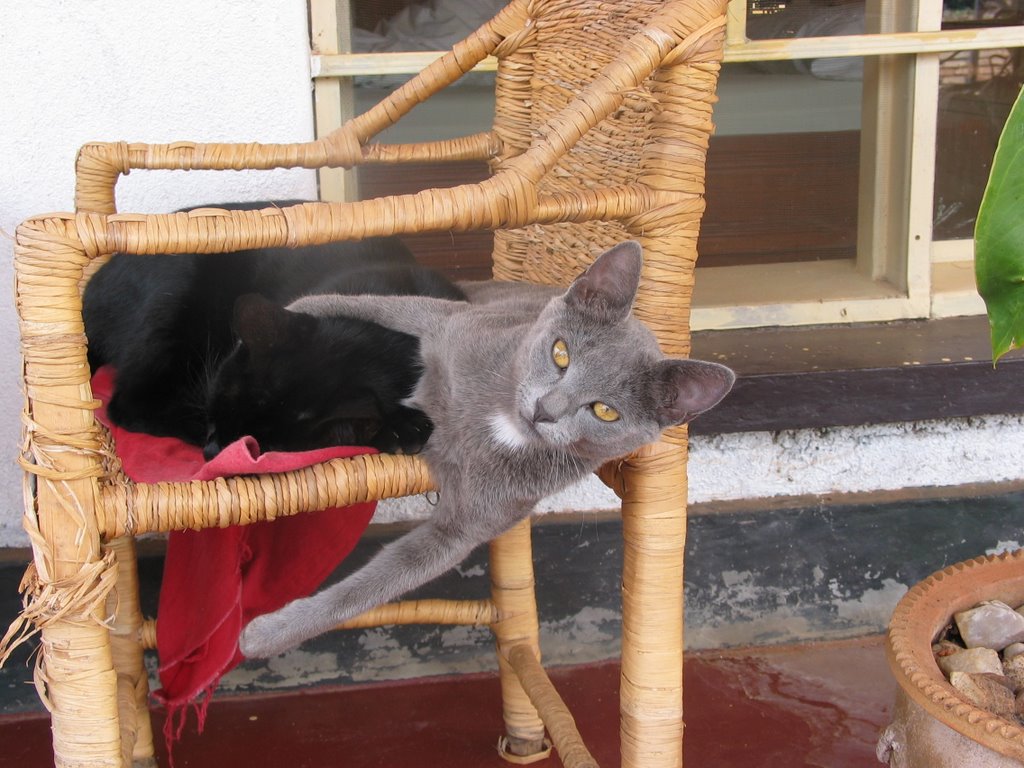
Only two days left. The more I pack, the more there still seems to be left. I have to say goodbye to my wonderful cats, Safi and Jolie:

Saturday, March 25, 2006

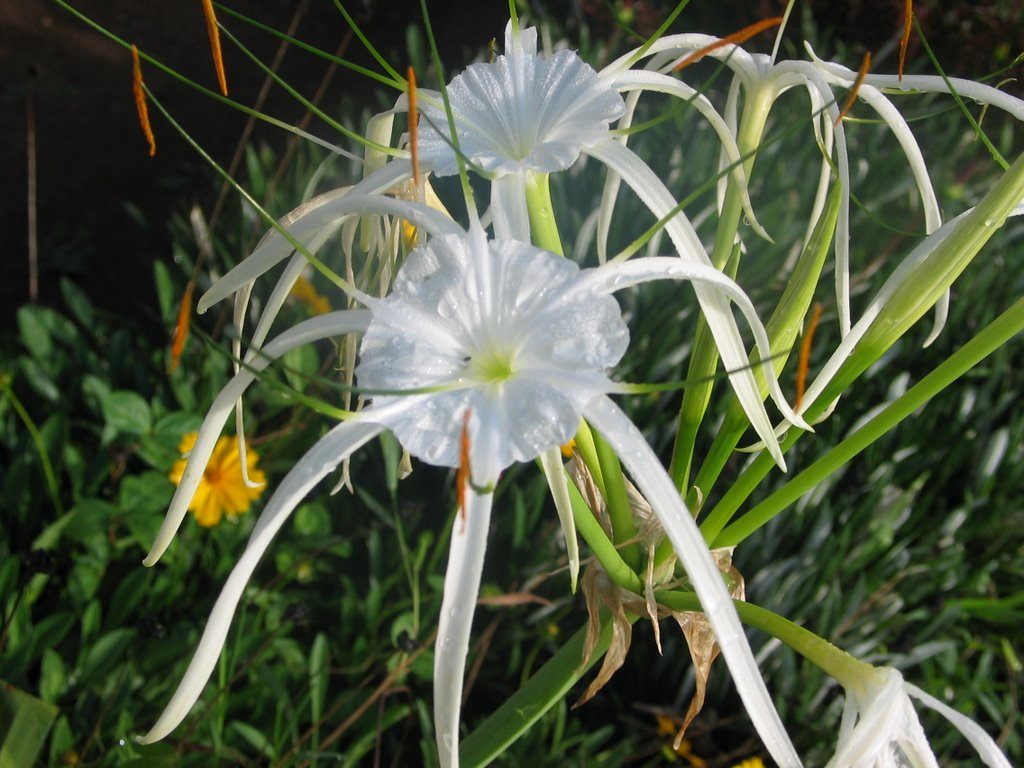
Flowers

Downloading photos is going exceptionally fast today, so I'll take this opportunity to post some more! Can anyone tell me the name of this flower? I love it - it's one of the most amazing and intricate flowers I've ever seen. To see a full, high quality image of any of my photos, just double click on it.


Packing

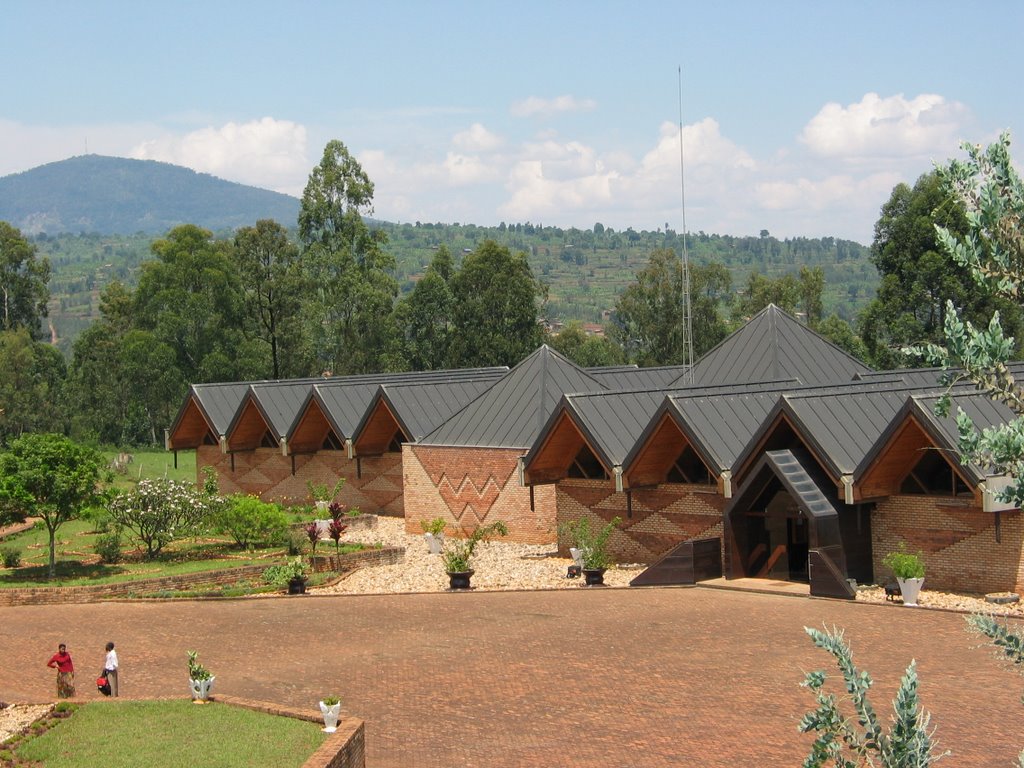
Today is the day I begin packing - that is, if I ever get around to it! I seem to have so much to do, and packing is not one of my favourite activities. I may go over to the National Museum later today with my housemate Rose, to pick up some Rwandan baskets to take with me. The museum is an easy 20 minute walk from here. It was built in the mid-80's and survived the war intact. It's a good, small museum with an interesting collection of artifacts and old photographs. Well worth a visit if you're in Rwanda. Rose, a medical doctor from the Philippines with 20 years of development experience, arrived in late January. I wish she'd come much sooner! We get on great, and she's a wonderful cook.


The National Museum of Rwanda, in Butare


My housemate Rose, demonstrating her cooking skills with a chicken

Tuesday, March 21, 2006

Bukavu


I just had to post this article from the New York Times - thanks so much to Ludovic in NYC for sending it to me!

A Real Getaway
By JAMES TRAUB
Published: March 19, 2006 (New York Times)
In the early hours of the morning, with the cool mountain breezes blowing, you can sit on a veranda in Bukavu and fancy that this seat of bloodshed and misery on the eastern border of Congo is, in fact, an Alpine retreat — and that Lake Kivu, a thoroughfare for smugglers and guerrillas, is, in fact, Lake Como. And once, in an unimaginably remote era, they were. The Belgians who colonized Congo called Bukavu the African Riviera, and in the steep green hills around Lake Kivu they built fine villas from which to watch the bathing hippos and the flamingos that thronged the shore.
The wildlife disappeared years ago, as did the tourists. Pretty much the only foreigners who now go to Bukavu are journalists like me or diplomats and aid workers trying to put an end to Congo's fratricidal wars and to palliate its misery. Today Bukavu is just another dusty Congolese provincial capital, an entrepôt through which smuggled timber and gold and coltan (a mineral from which cellphone chips are made) find their way to neighboring Rwanda. But it's still a fine thing to sit on a veranda with your beer — we are talking about evening here — and gaze out over Lake Kivu.
Bukavu has many bars and many vantage points over the lake, but to conjure up that vanished world, you must have your drink at Gerda's. You must stay there, too. A big, white, square building, formerly a private home, Gerda's is now a guesthouse that looks out on the lake; in front, an enormous gate protects it from the street. It has a well-stocked bar and a charming dining room, and there are nine guest rooms. Many of Bukavu's most eminent visitors, including Gen. Patrick Cammaert, the deputy force commander of the vast United Nations peacekeeping mission, will stay at no place but Gerda's. The resident foreign community, as well as the uppermost layer of Bukavan society, treats Gerda's as its canteen.
Gerda Dewitte, the owner of Gerda's and une femme d'un certain âge, is an exotic personage from the pages of Graham Greene — a dark-haired Belgian of voluptuous proportions, who sways along on high heels, the degree of oscillation increasing as the night draws on. Gerda cooks dinner — and she is an exceptional cook — but thereafter presides at the bar, where she is in her element. "Barman," she says imperiously. "Donnez-moi un verre." And the barman pours her another gin and tonic. Then, her necklace and bracelets glinting in the light, her ample poitrine perilously restrained, Gerda embarks upon a tale of woe, perhaps about how the local chaos has forced her to close her iron-roofing factory. The regulars drift back and forth between the bar and their companions. One night I saw a Frenchman bid farewell by joining Gerda behind the bar and giving her a tender slap on the bottom.
Gerda's has the feel of an immemorial establishment, but the truth is that it's only a year old. Gerda had been making a reputation for herself as the manager of the Welfare Club, the wonderfully named cafe-restaurant at the United Nations headquarters in Bukavu, when she decided to buy the house and bring her customers with her. As a hotelier, she is a novice, and while her put-upon staff does its best to keep things running, it is probably fair to say that the upstairs does not operate quite as smoothly as the dining room downstairs. When I arrived, there was no hot water in my room, and although Gerda graciously allowed me to use another room's shower, that hot water — indeed, all the water — ran out sometime between the soap and the shampoo. My room was quite satisfactory, even though its furnishings were limited to a king-size bed with a mosquito-net canopy and a little table pushed into a corner; the window looked out over a litter of yards and cottages and laundry lines to the shiny silver tray of the lake. At $60 or $70 a night, it was supremely reasonable.
Gerda's somewhat waspish disposition probably owes a good deal to the travails of her expatriate life. She and her husband, who is of Indian heritage, left Belgium for Rwanda in 1971, went to Congo six or seven years later and have lived there ever since. They have endured the kleptocratic regime of Mobutu Sese Seko, the almost nonstop civil war of 1996 to 2002 and the sacking of Bukavu by mutinous soldiers in 2004. Over the years, Gerda says, she has been looted "five or six times" — but she's always regrouped. The sense of lurking peril presumably accounts for Gerda's solicitude toward the authorities. She satisfied the local governor's demands for free food and drink until he was recalled to Kinshasa for corruption considered gross even by Congolese standards, and she counts the army's regional commander among her regular customers.
Virtually the best way to exit Bukavu, save by United Nations plane, is on a large boat, seating about 70 people, that makes a delightful two- to three-hour cruise up Lake Kivu to Goma, a larger city with commercial air connections. (The 60-mile drive over execrable roads is said to take five or six hours.) But when I went to buy a ticket for the boat one morning, I was told it had been sold out for days. I trooped back to Gerda's in despair. "Maybe," she said airily, "there is no boat tomorrow either, and you will stay one more night." Gerda seemed to think that I would take some solace in the fact that my loss would be her gain. I can't say that I did. But Gerda's heart, though hard, is by no means adamantine. Late that night, with the restaurant empty, the first hostess of Bukavu pointed to the mirrored shelves of the bar and said: "There are so many bottles that just sit here. Can I open one for you?" It was a noble gesture. I uncorked an Armagnac and decanted some into a snifter. Gerda, as I recall, drank another gin and tonic. We had a companionable chat. By next morning, it's true, I wanted nothing more than to leave Gerda's behind — and I did. But, like General Cammaert, I will never stay anywhere else in Bukavu.

Sunday, March 19, 2006

Saturday morning
(I wrote this yesterday, but then our internet connection went down for the day before I could finish)

I walked into town this morning with a couple of VSO friends, to take some material to the tailor to have a blouse made. I've only had the material sitting in a drawer for two years, so with two weeks left to go, I thought I'd better do something with it while I'm in a place with a recommended tailor. He'll also hem a pair of too-long jeans for me. All for a very reasonable price.

Walking home through the leafy suburb of Taba where I live, I spotted a large eagle-like bird clinging upside down to the top of a broken street lamp. It was manoeuvering to pull out pieces of grass that must have been placed there by another bird. I looked up the bird in my 'Field Guide to the Birds of East Africa' as soon as I arrived home and discovered it was an African Harrier-Hawk, recognizable by the white band across its black tail. According to the book, these birds "regularly steal young from cavity nests like those of swifts and weavers, using their long flexible legs to probe for and grab nestlings." So maybe that's what the bird was doing when I spotted it. The birds here are a wonderfully impressive sight, and I always enjoy watching them circling the sky in the afternoons. The large black and white crows, on the other hand, are nasty scavengers. One of them attacked my cat, Safi, when he was a kitten, so naturally I'm not very fond of them! They also jump up and down on the tin roof making a serious racket.

I wanted to post more photos today, but for some reason I can't upload them. Next time!

Tuesday, March 14, 2006

Talking about Bukavu

I woke up at 5:25 this morning - I wish I could do that every day! We have a pink streaked dawn, which means it will probably rain again today. I'm not complaining. Everyone needs the rain. Back in early February it was hot, hot, hot, with not a dark cloud in sight. Now I wear a thick fleece jacket to work. On 1st April I head back to Amsterdam, where it'll be even colder! Although I expect spring will be on its way. Since I've learned that I'll soon be moving to Bukavu it seems like almost everyone I talk to has a Bukavu connection; they've either visited, lived there, or have relatives there. I've been told that Bukavu is a bit cooler than here; I've also been told by just as many people that it's warmer than here. Yesterday I took a look at the BBC weather web site: for this week at least, Bukavu has more rain than here and is a couple of degrees cooler.

A week ago one of the best musicians in the world died: Ali Farka Toure from Mali. If you've never heard his divine music, now is the time to open your ears and take a listen! His music is well known and CDs easily available from amazon.com or many other places. I have the Talking Timbuktu album (thank you, Nicole!), and I've read an excellent review of the most recent one: In the Heart of the Moon.

Since I announced my move to Bukavu the messages have been flooding in. It's really wonderful to hear from you and catch up with what is going on in your life - thank you for writing!


These boys are collecting palm kernels along the street in Gisenyi next to Lake Kivu. Their mother will use the kernels in cooking a local dish. Bukavu lies on the other end of this long, narrow lake.

Thursday, March 02, 2006

Losing colleagues

It's always good to hear from those of you who actually read my blog; and your messages serve as a bit of a nudge to get me writing again! So today, thank you to Charles in Cameroon for giving me that incentive to get my hands moving again on the keyboard.

And for those of you who look to my blog for reading suggestions, this is what I'm enjoying right now: "Freakonomics: A Rogue Economist Explores the Hidden Side of Everything" by Steven D. Levitt and Stephen J. Dubner. It's been reviewed far and wide (well, in The Guardian Weekly, anyway!). Fascinating stuff. Easily as good as the murder mysteries I don't usually admit to reading.

And now to my heading for today. Tuesday this week was the last day at work for nine guards at our house and office here in Butare, and for around twenty guards based in Kigali. Some had worked in this job for eleven years, but they have lost their jobs to a private security company. So we now have guards wearing uniforms, carrying batons and walkie-talkies (but thankfully no weapons). It was sad to say goodbye to the guards who were colleagues, and who, inevitably, I had come to know. From those who speak French or English I had learned about their children, their aspirations, their hardships. Some have completed secondary school and will have a chance at finding other work; others have not, and in a country where maybe only 15% of the population has paid employment, the loss of this job will have a major impact on the well-being of their families. Our day guard at the house also doubled as our gardener, and, on a selfish note, he will be missed! Since I don't have the time to do all the work involved in taking care of my chickens, they were the first to go: given away. That means no more fresh, free range eggs. And if you want to know if you can taste the difference between a mass-produced egg and a fresh free-range egg, the answer is an unequivocal 'yes'!

Muchy sadder was the loss of a colleague from our Ruhengeri office, Tatien Dusabeyezu, who died recently of a brain tumour. He was friendly and outgoing with a great sense of humour. A former driver from the same office is now in hospital, also apparently with a brain tumour. And a Dutch friend and neighbour who recently returned to the Netherlands when feeling unwell, was also diagnosed with a brain tumour. I have to assume this is all a very sad coincidence.

The good news (I had to find something good to end this with!) is that it has been raining here for the past two weeks - just in time for people to begin planting seeds for this season. Now we pray that the rain will continue! For information on the food shortages affecting various areas of Africa, go to www.fews.net, a web site sponsored by USAID giving detailed information and maps.


Tatien Dusabeyezu giving a lively presentation at our September 2005 Programmes Meeting

Tuesday, February 21, 2006

Amsterdam and London

I'm now back at work in Butare after a week in Europe. It was such a treat to visit Amsterdam again, and to be back in England again - my first visit since I left in May 2004. It was especially fun because it was so unexpected!

In Amsterdam I interviewed with a Dutch NGO; their offices are located in an old building next to a canal right at the heart of the city. I loved seeing all the historic buildings and wandering the narrow streets. I was surprised at the crowds of tourists at this time of year, many of them British. The transport system is fantastically efficient and reasonably priced, so that getting from the airport to the city by train, and then to the hotel by tram, was easy and fast. I also enjoyed eating out in Indonesian restaurants together with a Dutch friend from my East Timor days!

Thanks to EasyJet, one of Europe's low-cost airlines, I was able to hop over to London for a few days - having booked my tickets via the internet while still in Rwanda (I love the internet!!). My main reason for going was to see my best friend from high school. We lost touch with each other when we attended different universities (polytechnics in those days!), and hadn't seen each other for almost thirty years. We reconnected via a UK website called Friends Reunited by total and happy coincidence just as I was asked to go to Amsterdam for the interview. It was a bit like finding a long lost twin sister, and we spent three days filling each other in on details of our lives, and unravelling mysteries of our youth. Helen has a delightful fifth floor flat in the heart of Notting Hill, surrounded by restaurants and delicatessens with devine food. I was thoroughly impressed with the quality of healthy food and delicious fresh fruit drinks available in London. I was also slightly stunned by the astronomically high prices of everything, especially the underground transport and trains. A few days in England is about all I can afford!
I also dashed down to Brighton for a short overnight stay to see another good friend. It was my first visit to Brighton as far as I could remember. I found the buildings along the sea-front particularly impressive; I thought the two surfers in the icy grey waveless sea rather crazy; the size of the city surprising and the traffic far worse than London (London traffic is enormously improved thanks to the congestion charge - an appreciable and pleasant difference). The weather was manageable; I missed the one and only hail storm while standing in line at the post office obtaining an international driving licence.

Wednesday, February 08, 2006

To my concerned friends!

The mystery illness was most probably caused by a spider bite. I'm a lot more wary of spiders now than I was before!
I spent a week in Cape Town convalescing, thanks to my employer, and to my cousin Adam. I am enormously grateful to both! The sunshine, hospitality, and excellent food speeded my recovery.

Now I'm in the process of interviewing for a new post, as my contract here ends in April. Life is hectic! I shall be in Amsterdam next week for an interview, and will freeze: I left all my winter clothes in Melbourne, never thinking that I might need them here!

There's much more that I would like to write, but it's already past my bedtime. Good night!

Friday, January 13, 2006

Mystery illness.

I have been sick since 26 December. I was in hospital here in Butare for a week, on a heavy cocktail of antibiotics. Now I'm at home, but still far from well - though feeling slightly better day by day. When I can read a book and write more than this on the computer without feeling nauseous (sp?), then I'll know I'm really getting better. Hope your start to 2006 has been much better than mine!