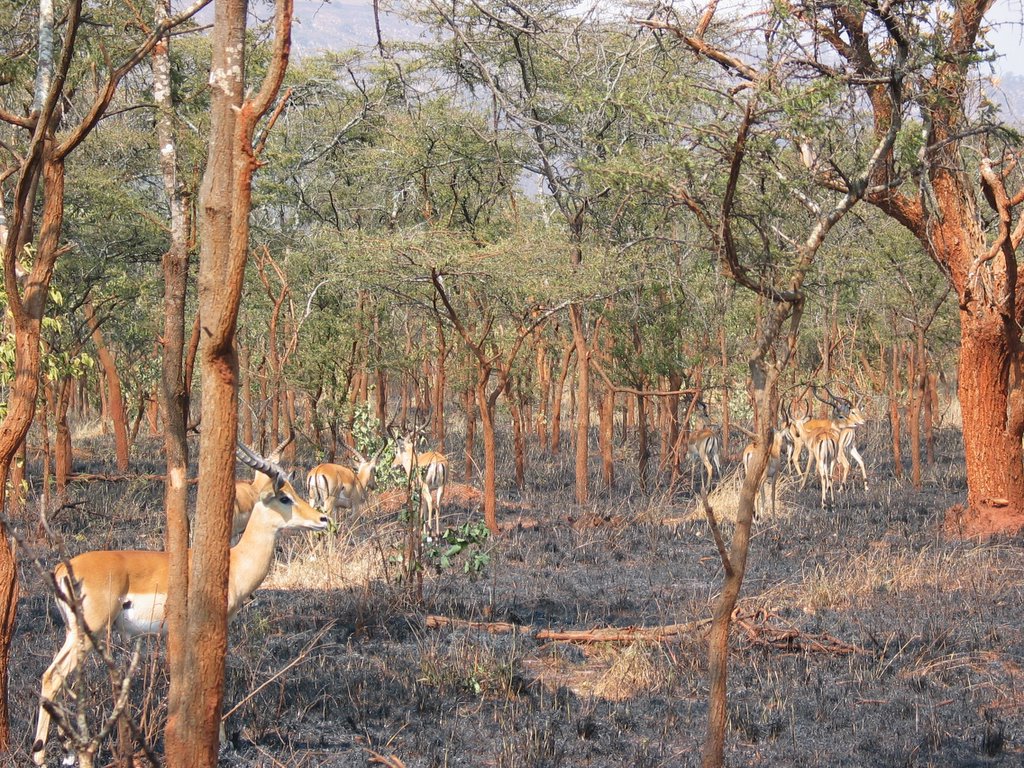
 These are impala in Akagera Park, in the eastern side of Rwanda on the border with Tanzania. The burnt grass is due to a large fire that burned for a couple of days the weekend I was there together with a group of colleagues last July (more details below). It's worth clicking on all the photos to get a better view! In the park we saw a good variety of animals, including hippopotamus, african buffalo, baboons, vervet monkeys, zebra, topi (aka tsessebe), and eland. There are three national parks in Rwanda, the other two being Volcanoes National Park (known for the gorillas) and Nyungwe Forest (known for Colobus monkeys and many other animals and birds).
Wednesday, December 14, 2005
These are impala in Akagera Park, in the eastern side of Rwanda on the border with Tanzania. The burnt grass is due to a large fire that burned for a couple of days the weekend I was there together with a group of colleagues last July (more details below). It's worth clicking on all the photos to get a better view! In the park we saw a good variety of animals, including hippopotamus, african buffalo, baboons, vervet monkeys, zebra, topi (aka tsessebe), and eland. There are three national parks in Rwanda, the other two being Volcanoes National Park (known for the gorillas) and Nyungwe Forest (known for Colobus monkeys and many other animals and birds).

 Some zebra in Akagera Park. The blackened ground is from the fire that was raging the weekend we were there (back in July). It came fairly close to our tents during the night, but the park rangers stayed up and kept an eye on things in order to warn us if it got too close. The fire provided quite a spectacular back drop, and reminded me of watching the hillsides burning in East Timor.
Tuesday, December 13, 2005
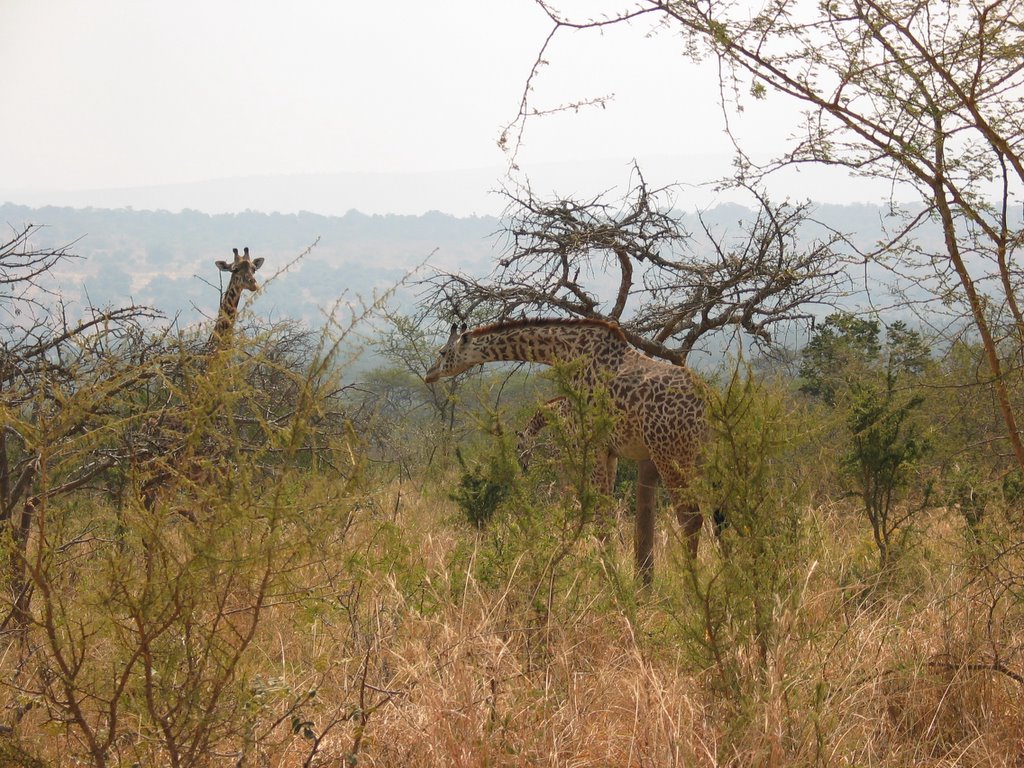 Some giraffe - taken in Akagera Park, one of Rwanda's three national parks, back in July this year (the dry season). A large group of us from work spent a weekend in the park, which was great fun. We camped on a hilltop with spectacular views of the lakes bordering Tanzania. The eastern side of Rwanda is more or less flat and dry, more similar to areas of Kenya and Tanzania than the rest of Rwanda with all its hills and mountains.
Sunday, December 11, 2005
 Butare province, Rwanda. Photo taken in early December. If you click on the photo to enlarge it, you'll get a better view of the typical pattern of housing in this area of Rwanda, i.e. individual houses on patches of land. In this hilly country, land is at a premium - this is the most densely populated country in Africa. Traditionally people feel most comfortable living on the patch of land that they farm. This is unlike many other countries where living in villages is more common. Noticable in this photograph is how dry it is, given that we are well into the rainy season. Rain has been sparse and sporadic since the season began in September, and in many places the beans (the staple food) are drying up and people expect to go hungry. Fortunately, the situation here is still far better than in other areas of southern Africa (notably Malawi and Zimbabwe) where there is now famine. For detailed information regarding the food situation in Africa, take a look at www.fews.net (famine early warning system), where there are details of rainfall and harvests. On the narrow valley floor in this photo are the rice fields. Valley floors are valuable land in the land of hills, and often stay wet and productive all year round (hence are known as 'marais' locally). Rice is not a traditional food here, but the government is encouraging production. The employment offered by the rice fields tempts some children to leave primary school.
 This is a typical primary school in a rural area. At the far end you can see some new classrooms under construction. Population growth is high, so there are always more children to be accommodated in school; now that primary school fees have been abolished and the government is pushing to achieve the millenium development goal of getting all children into primary school, there are even more children to find places for. The teacher: pupil ratio is well over 50:1, which greatly impacts the quality of education. Noticable features of the school include the few windows - windows are on one side of the building only, with wooden shutters, no glass (far too expensive, and gets broken quickly), making the classrooms dark; and lack of water, either for drinking or for use in the toilets. There are no pictures on the walls, few books, no other teaching materials, no electricity. And it is up to the parents to build new classrooms, even though the majority have no income, surviving on subsistence farming.
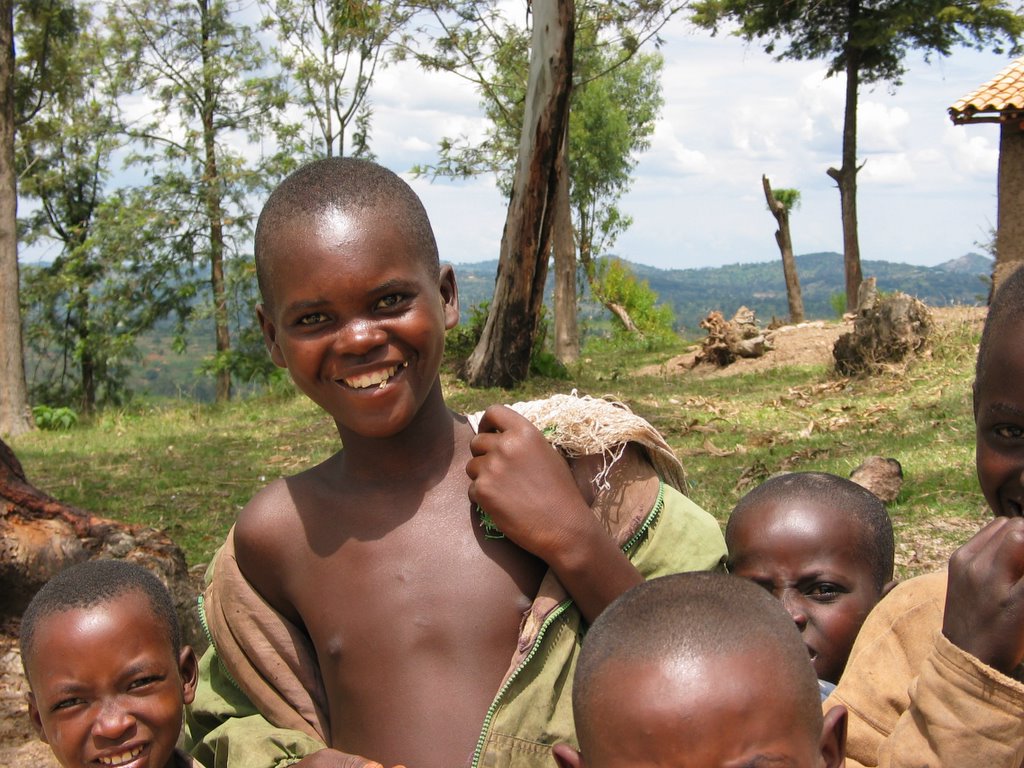 This young man was delighted to have his picture taken. I took several shots of him and the other boys with him, and then showed them the pictures on the small screen of my digital camera. That's one huge advantage of the digital - being able to show people the results immediately. Everyone gets a kick out of seeing their picture on that tiny screen, the children pointing, saying the names of their friends as they recognize their faces.

Saturday, December 10, 2005
 "Follow the leader!" Children in Africa, although often leading extremely harsh lives, also can have an enviable freedom in rural areas to play outside and roam at will. I've noticed here in rural areas that no matter how poor the children, there's strict gender division in clothing: girls wear dresses or skirts, boys wear shorts or trousers. Among better-off families in the towns the clothing divide is less strict.
Tuesday, December 06, 2005
Another one!
Yes, for anyone asking, I felt the earthquake this afternoon. For those interested, there's more information on the BBC website: http://news.bbc.co.uk/2/hi/africa/4499938.stm
Apparently the epicentre was in DR Congo, some distance south of here, with a magnitude of 6.8. Here it was a fairly gentle shake that seemed to go on for an awfully long time - long enough to make me a bit nervous!
Yes, for anyone asking, I felt the earthquake this afternoon. For those interested, there's more information on the BBC website: http://news.bbc.co.uk/2/hi/africa/4499938.stm
Apparently the epicentre was in DR Congo, some distance south of here, with a magnitude of 6.8. Here it was a fairly gentle shake that seemed to go on for an awfully long time - long enough to make me a bit nervous!
Monday, December 05, 2005
Sunday, December 04, 2005
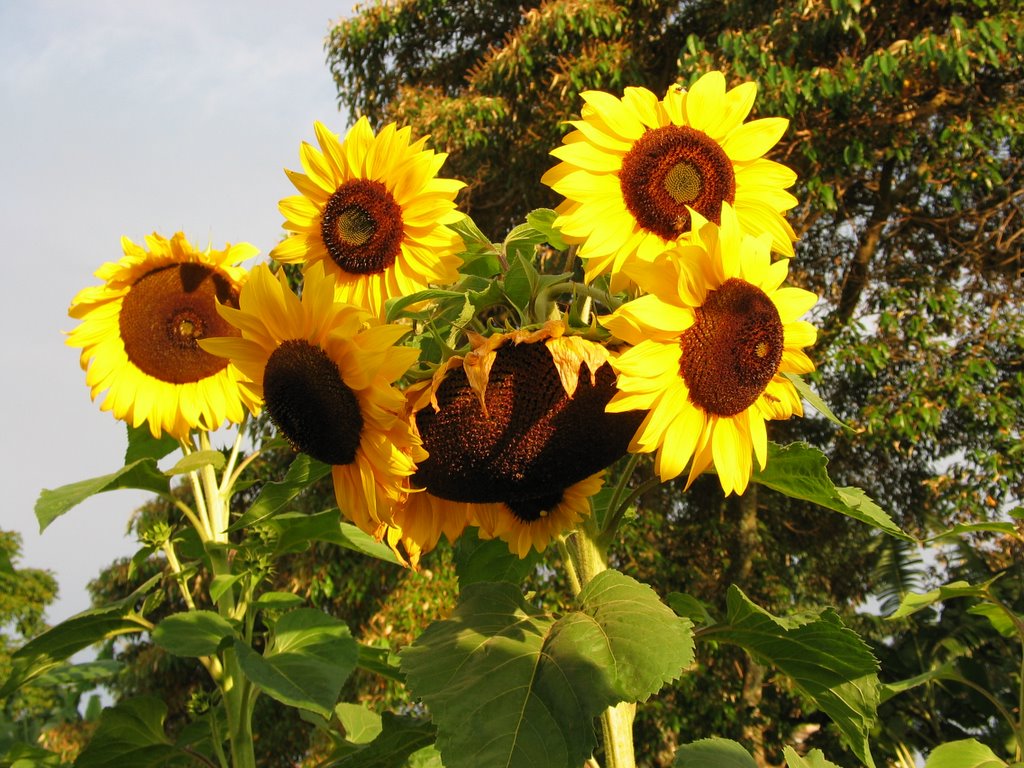 Sunflowers
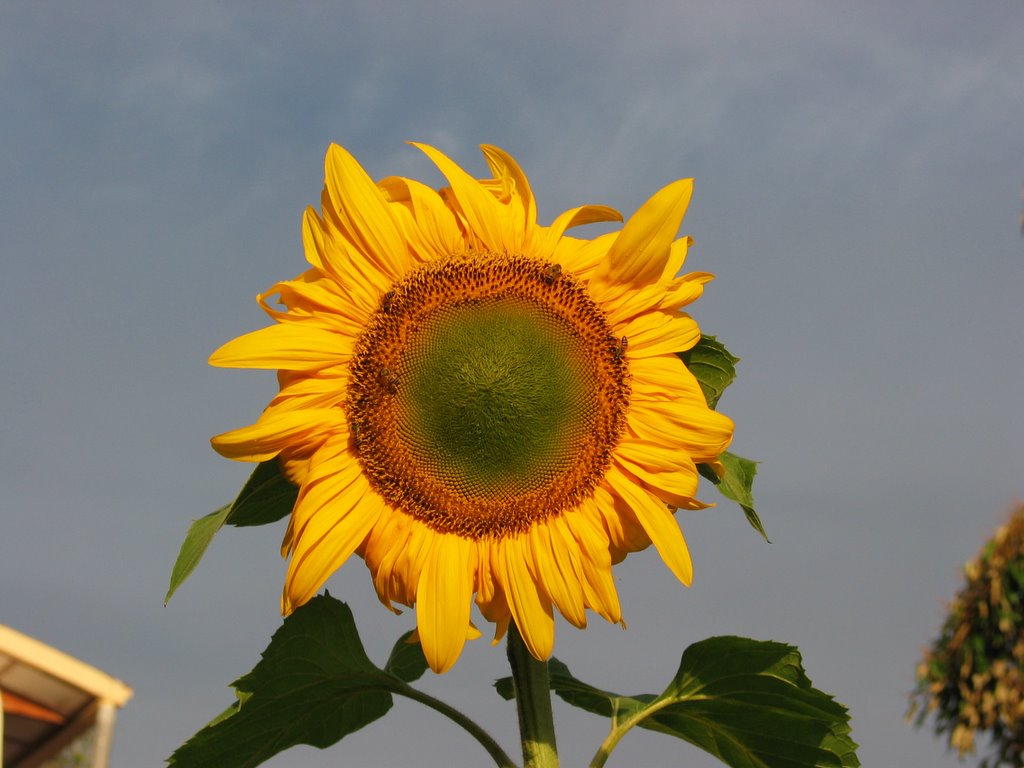
I’m growing sunflowers in the garden. Recently I realised how unique each one is. Some plants produce one single large flower, others may produce one large flower and several smaller ones, and some are a veritable bush with countless smaller buds. Some of the sunflowers grow only a couple of feet, yet others tower over me. I went out into the garden just after 6 am this morning and photographed some of them. I'd love to post a whole collage of sunflower photos, but unfortunately the speed of the connection doesn't allow that. Will have to limit myself!
Yesterday I was at a wedding, and a couple of weeks ago, a funeral. I’m writing these events up in my head (usually while doing my exercises or in the shower!) – getting them onto paper or electronic form takes a bit longer. In the meantime, life goes on. Our power supply is much improved since about two weeks ago, and we have power most days now. Nights are another matter, and most evenings we’re still in the dark. My generator broke down a week ago, so I’m cooking, reading, and eating by candlelight at the moment. It’s the rainy season, so my solar-powered lamp only gives a couple of hours light. In any case, all my exterior lights are not working, and the kitchen light has also gone (wiring problems, not bulbs). The fridge has also forgotten how to cool (though fortunately the small freezer section still functions), and my telephone can’t take incoming calls. At least there’s plenty of water, and thanks to all the day-time power I can take hot showers – always considered a luxury! A benefit of a dark night is the always amazing view of the stars. Orion lies on his side right outside my back door, and just over the front wall the new crescent moon shines, clearly framed in the shadow of the full moon.
Book of the day: I’m skimming through (it’s not heavy reading) “A Pirate Looks at Fifty” by Jimmy Buffett, left to me by an expat friend. Appropriate reading, with some light-hearted philosophy on getting through life this far. His goal in life is to have as much fun as possible, and he has some great quotes to back this up (“Only if we understand… can we conceive of the seemingly paradoxical phenomenon that people who are afraid of living are also especially frightened of death.”). For those of you who haven’t heard of him, Jimmy Buffett is mostly known in the States as a singer/songwriter. His most famous hit ‘Margaritaville’ was enormously popular in Aspen when I was there working the ’79-’80 ski season, and groups of us ‘locals’ used to down jugs of margaritas after work. ‘Rocky Mountain High’ was another favourite, and I remember seeing John Denver driving around town in his pick-up with a couple of Labrador retrievers in the back. Must be reading Buffett that takes me back!
If you haven’t looked at the blog for a while, the photographs below are from my recent one week holiday on the Kenyan coast.
Friday, December 02, 2005
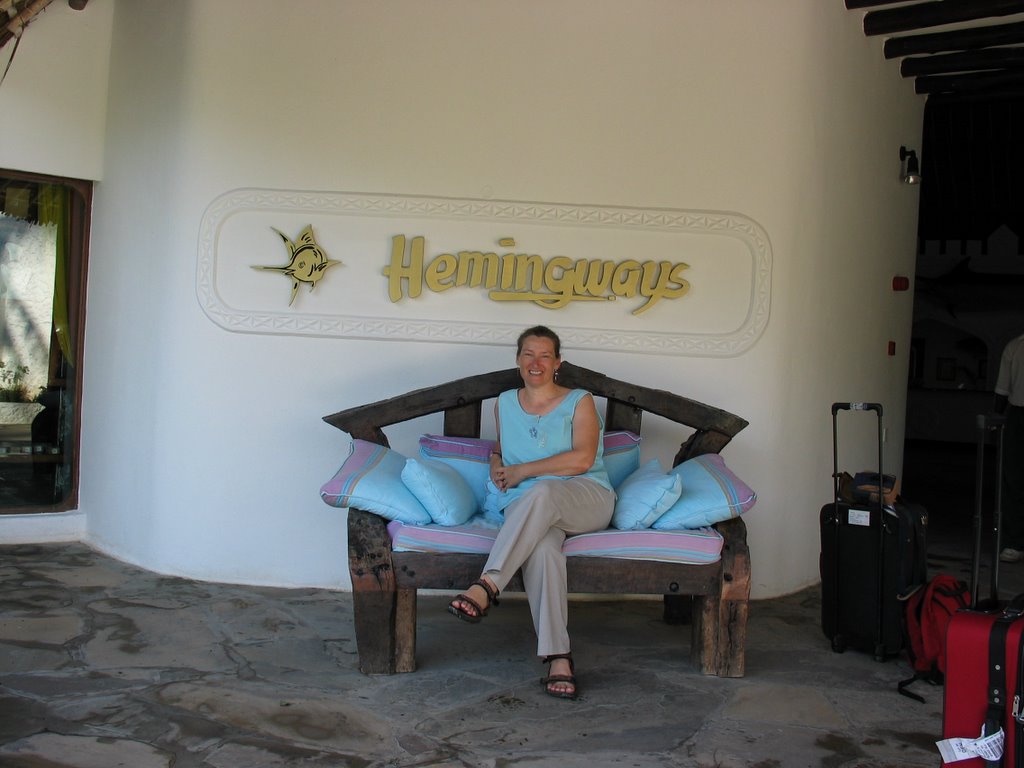
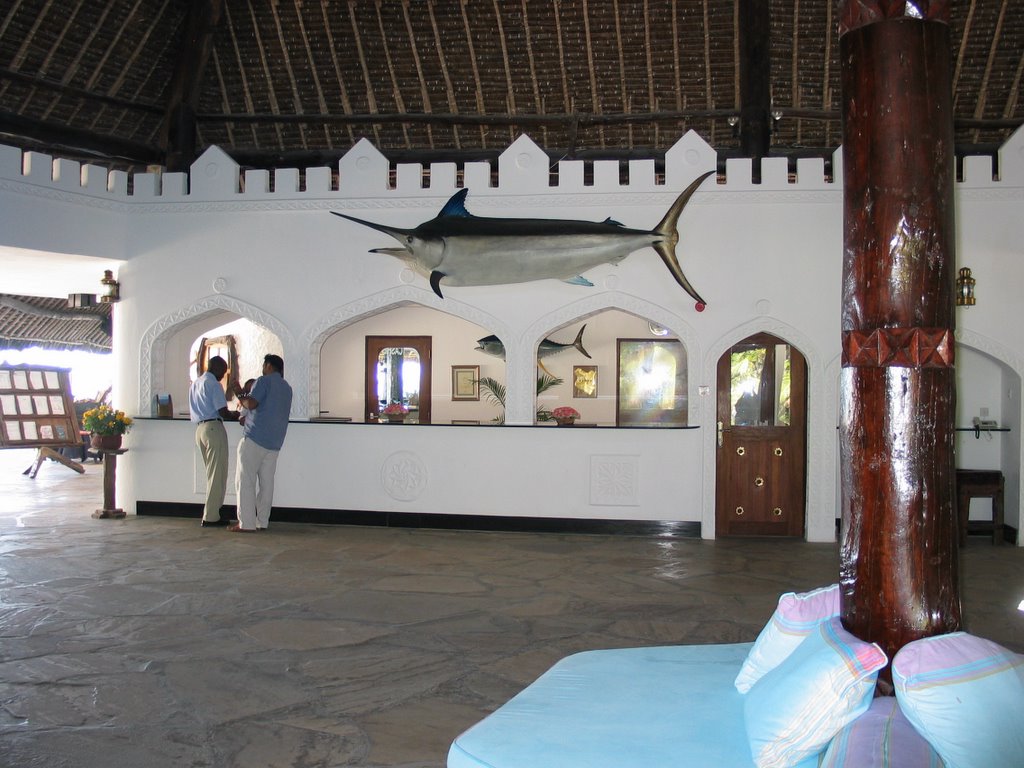 This is the reception area at Hemingways. On entry, this is one's first view of the hotel, and to the left of the reception desk the opening looks directly out across the terrace to the ocean - it's a delightful sight on arrival. The hotel staff are wonderfully friendly and relaxed, while maintaining high standards of service - a pleasant change from Rwanda, where staff training is still lacking. Note the Arabic influence in architectural style, and use of natural materials in the roof.
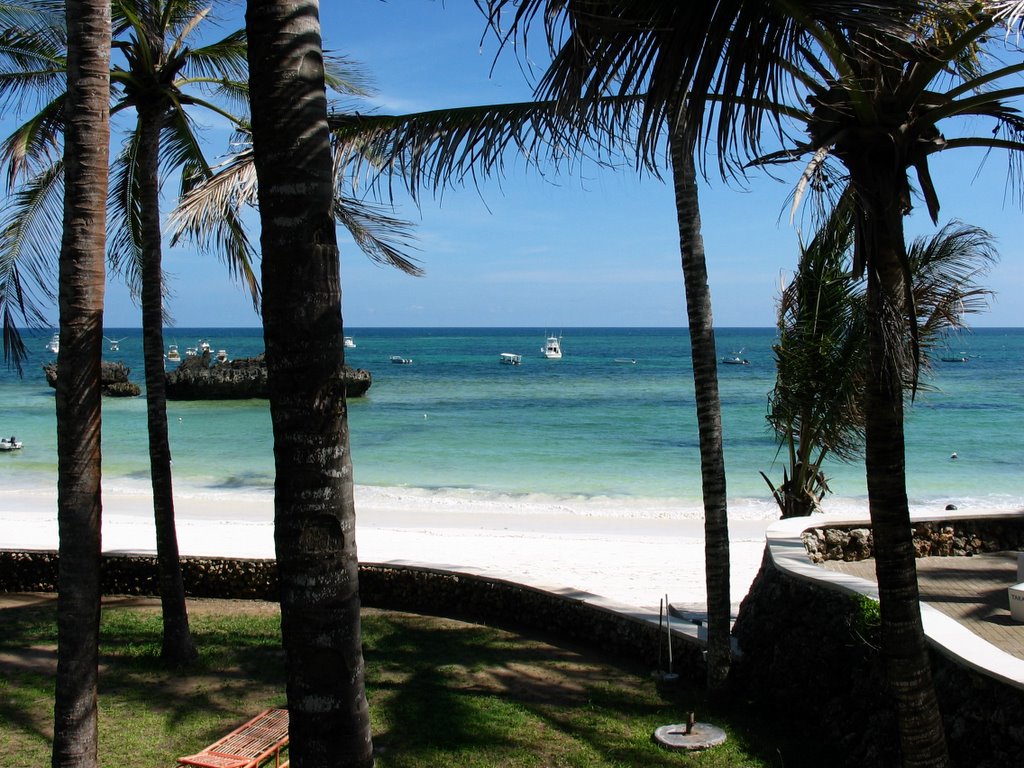
Thursday, December 01, 2005
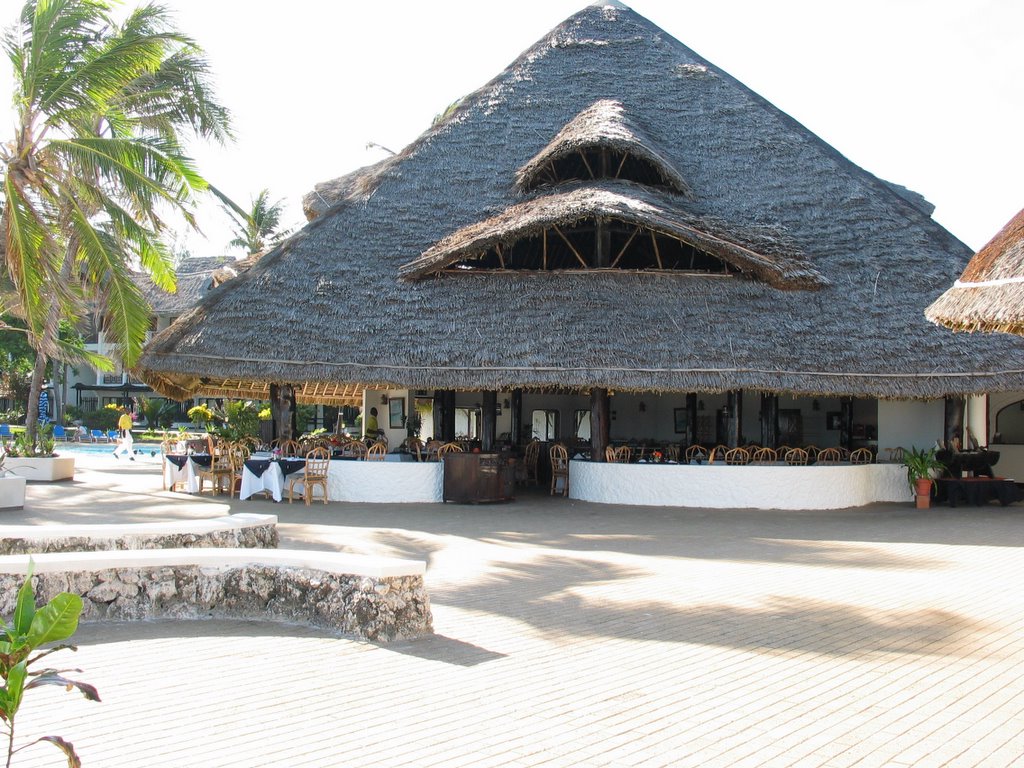 This is the hotel restaurant. During the winter months (May - October) there are walls (with windows) made from natural local materials, as the wind and high tides can bring water right up to this point. The walls were taken down the day after I arrived, marking the beginning of the high season. At night all the dining tables were set out on the terrace you see in front of the restaurant, and we dined by candle- and moon-light in the warm evening breeze. The food is excellent, with a speciality being the fresh ocean fish caught daily - I watched the boats coming in to shore and the fish being carried into the restaurant each afternoon.
Wednesday, November 30, 2005
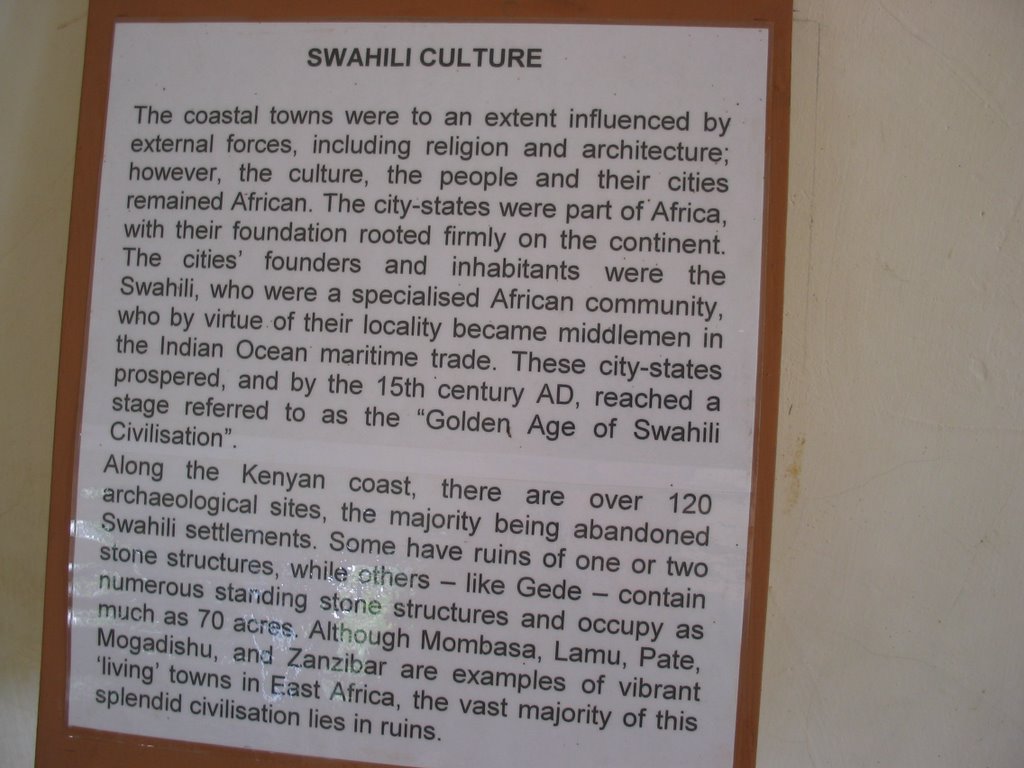
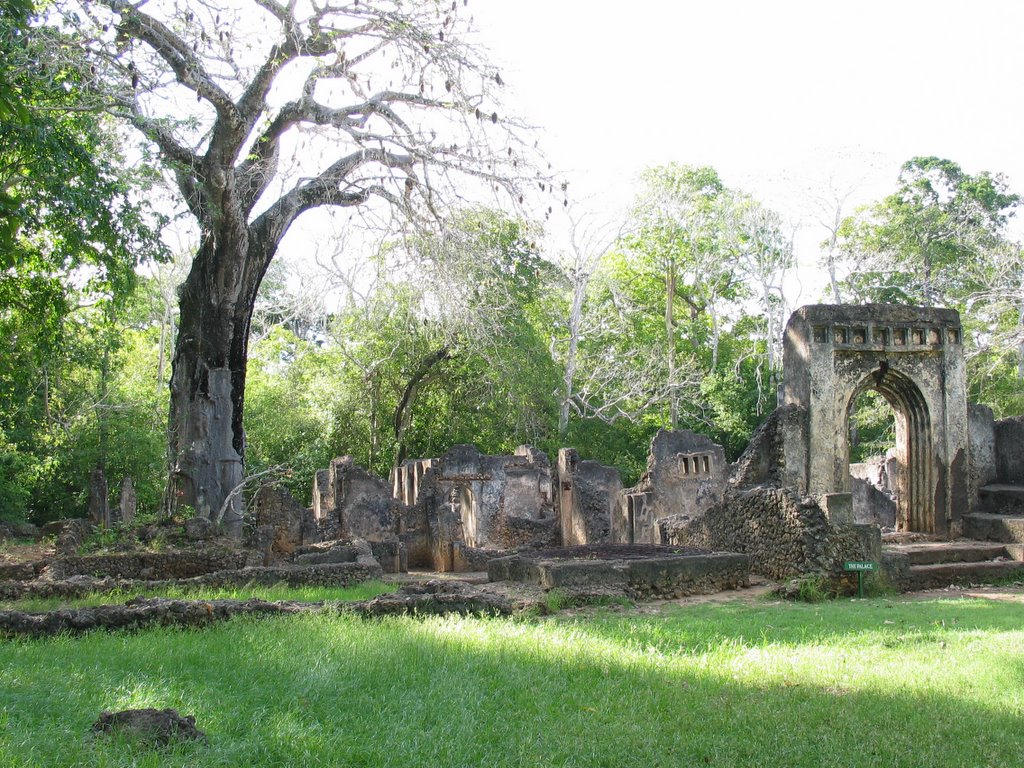 The town of Gede (aka Gedi), a few kilometres inland from Watamu, was inhabited from around the 12th or 13th century until approximately 600 years ago. The reason for abandonment is unknown, although speculation is either that the sea receded, or that a local river changed course, leaving the town (which has many deep wells) without water. Information on the 'net is hard to find, but the guidebooks to the area have more details. It's a beautiful site, and well worth visiting.
Tuesday, November 29, 2005

Monday, November 28, 2005
Sunday, November 27, 2005
November is almost gone…..
Are these blogs meant to be written daily?!! Before I forget everything that went on in November, here’s a quick update. The last week of October and first week of November were spent working intensively with an education specialist/consultant to the project. Every day was a workshop; our research data was pulled into focus, allowing us to work on future plans. It was intense and rewarding.
In mid-November I took a week off work to celebrate my birthday (one of those big round ones!) and went to the Kenya coast. On the flight from Nairobi to Mombasa I sat next to a woman travelling to celebrate her son’s birthday – the same day as mine! The first noticeable thing about Mombasa is that it’s an island. The second is how dirty the city is compared with Kigali. Rwanda is a veritable ‘Switzerland’ of cleanliness next to Kenya. Maybe the heat has something to do with it. Stepping off the plane, I felt the familiar breath of warm, moist, tropical air, and my eyes feasted on much-missed coconut palms. I stayed at the New Palm Tree hotel, not far from the old city. In the late afternoon, walking down to Fort Jesus, I was reminded of Malta with all its Arabic influence, old men sitting below the thick fort walls playing cards, young men playing a game of soccer in the warm shadows. The old town is a fascinating mixture of African, Arabic, and Indian cultures. Narrow streets become ever-narrower as one delves deeper, passing ornate wooden doors and balconies. I hope one day to also visit Zanzibar and Lamu, which have inherited similar cultures.
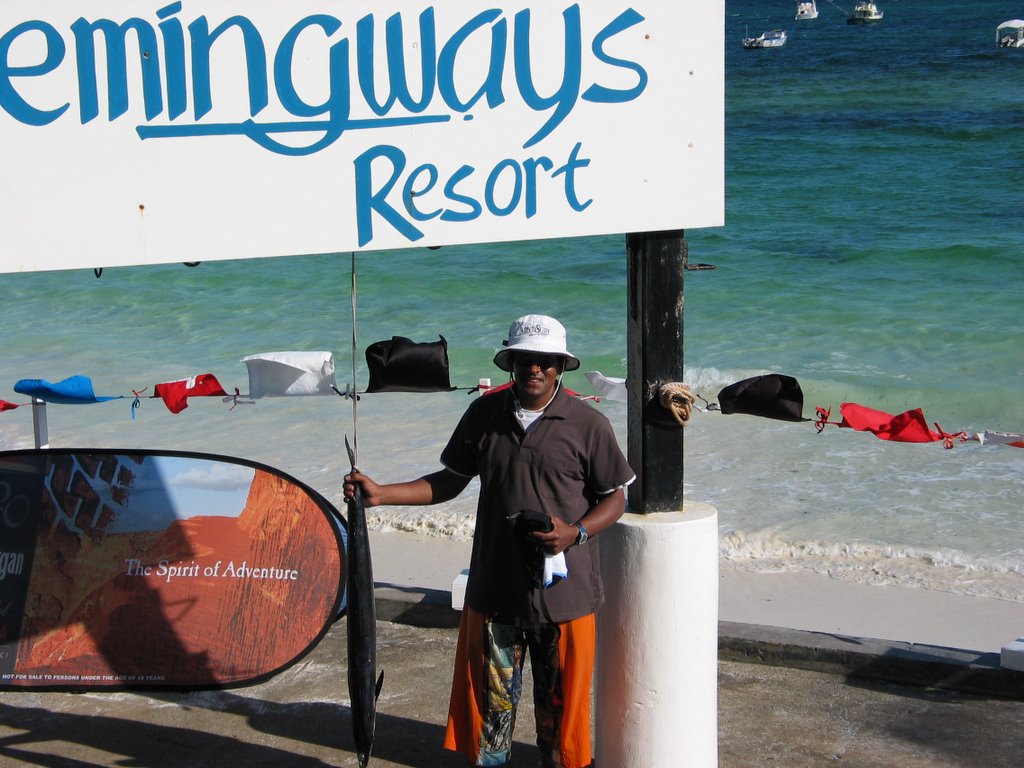
From Mombasa, a two-hour drive north by ‘matatu’ mini-bus (less frightening than I’d feared!), to Watamu, which is just south of Malindi, where I had booked a room at the wonderful Hemingways (www.hemingways.co.ke) as an extra special birthday treat. Apparently Bill Gates stayed here (I forgot to check the visitors book to confirm), and I know that Aidan Hartley stayed here, because the description in his book is unmistakable: “That night we propped up the bar under fibreglass black marlin trophies and old photos of Ernest Hemingway who had come here to go deep-sea fishing half a century before.” I enjoyed a drink in the bar on my last night with a group of new-found English friends, our only connection a week at Hemingways. Other guests included a large group of friendly South Africans here for a fishing tournament. The buzzing motors of the small boats taking them out to their flashy fishing fleet at six every morning roused me from sleep, and their return late afternoons marked time for tea (served by the pool, with delicate sandwiches and crêpes made on the spot).
Highlights from the week included a visit to near-by, fascinating, Gede, the ruins of an ancient Swahili town; and a morning out on a boat following pods of dolphins trying to get on with the task of feeding while we kept jumping into the deep water, masks, snorkels, and flippers securely on, trying to ‘swim with the dolphins’. They were too busy to have time for us, but it was a thrilling experience nevertheless! Hours gazing at the Indian Ocean watching the tide rise and fall, laps in the hotel pool, snorkelling on the reef, stretching in the gym, four-course gourmet dinners by candle-light on the terrace watched over by a full moon, and an inspiring book (The Kite Runner by Khaled Hosseini) from the hotel library…it all came to an end far too soon, and I would have happily stayed another week had work and budget allowed.
Back in Butare, my kitten, now named Jolie (because my driver kept saying ‘Elle est très jolie!), has grown and is softer and cuter than ever. Adrian Martin from UEA Norwich was in town and I enjoyed asking about all my UEA friends over dinner. My Indonesian friend, Rini, celebrated her 37th birthday last night with what must be the biggest, liveliest, party Butare has seen in a long time – a marquee in the garden, vast quantities of delicious Indonesian food, and an exceptionally divers group of guests from Rwanda, Kenya, Netherlands, Belgium, France, Sweden, England, and the USA. After my week on the coast I’d forgotten how cold it gets here at night – a Shetland sweater would have been a good idea – and when we returned to the car the condensation had to be wiped from the windows. I half-expected to see ice on the road. My fleece pyjamas were much appreciated last night!
Are these blogs meant to be written daily?!! Before I forget everything that went on in November, here’s a quick update. The last week of October and first week of November were spent working intensively with an education specialist/consultant to the project. Every day was a workshop; our research data was pulled into focus, allowing us to work on future plans. It was intense and rewarding.
In mid-November I took a week off work to celebrate my birthday (one of those big round ones!) and went to the Kenya coast. On the flight from Nairobi to Mombasa I sat next to a woman travelling to celebrate her son’s birthday – the same day as mine! The first noticeable thing about Mombasa is that it’s an island. The second is how dirty the city is compared with Kigali. Rwanda is a veritable ‘Switzerland’ of cleanliness next to Kenya. Maybe the heat has something to do with it. Stepping off the plane, I felt the familiar breath of warm, moist, tropical air, and my eyes feasted on much-missed coconut palms. I stayed at the New Palm Tree hotel, not far from the old city. In the late afternoon, walking down to Fort Jesus, I was reminded of Malta with all its Arabic influence, old men sitting below the thick fort walls playing cards, young men playing a game of soccer in the warm shadows. The old town is a fascinating mixture of African, Arabic, and Indian cultures. Narrow streets become ever-narrower as one delves deeper, passing ornate wooden doors and balconies. I hope one day to also visit Zanzibar and Lamu, which have inherited similar cultures.
From Mombasa, a two-hour drive north by ‘matatu’ mini-bus (less frightening than I’d feared!), to Watamu, which is just south of Malindi, where I had booked a room at the wonderful Hemingways (www.hemingways.co.ke) as an extra special birthday treat. Apparently Bill Gates stayed here (I forgot to check the visitors book to confirm), and I know that Aidan Hartley stayed here, because the description in his book is unmistakable: “That night we propped up the bar under fibreglass black marlin trophies and old photos of Ernest Hemingway who had come here to go deep-sea fishing half a century before.” I enjoyed a drink in the bar on my last night with a group of new-found English friends, our only connection a week at Hemingways. Other guests included a large group of friendly South Africans here for a fishing tournament. The buzzing motors of the small boats taking them out to their flashy fishing fleet at six every morning roused me from sleep, and their return late afternoons marked time for tea (served by the pool, with delicate sandwiches and crêpes made on the spot).
Highlights from the week included a visit to near-by, fascinating, Gede, the ruins of an ancient Swahili town; and a morning out on a boat following pods of dolphins trying to get on with the task of feeding while we kept jumping into the deep water, masks, snorkels, and flippers securely on, trying to ‘swim with the dolphins’. They were too busy to have time for us, but it was a thrilling experience nevertheless! Hours gazing at the Indian Ocean watching the tide rise and fall, laps in the hotel pool, snorkelling on the reef, stretching in the gym, four-course gourmet dinners by candle-light on the terrace watched over by a full moon, and an inspiring book (The Kite Runner by Khaled Hosseini) from the hotel library…it all came to an end far too soon, and I would have happily stayed another week had work and budget allowed.
Back in Butare, my kitten, now named Jolie (because my driver kept saying ‘Elle est très jolie!), has grown and is softer and cuter than ever. Adrian Martin from UEA Norwich was in town and I enjoyed asking about all my UEA friends over dinner. My Indonesian friend, Rini, celebrated her 37th birthday last night with what must be the biggest, liveliest, party Butare has seen in a long time – a marquee in the garden, vast quantities of delicious Indonesian food, and an exceptionally divers group of guests from Rwanda, Kenya, Netherlands, Belgium, France, Sweden, England, and the USA. After my week on the coast I’d forgotten how cold it gets here at night – a Shetland sweater would have been a good idea – and when we returned to the car the condensation had to be wiped from the windows. I half-expected to see ice on the road. My fleece pyjamas were much appreciated last night!
Subscribe to:
Posts (Atom)