Saturday, June 24, 2006


16 June 2006 Day of the African Child. Young advocate gets media attention.

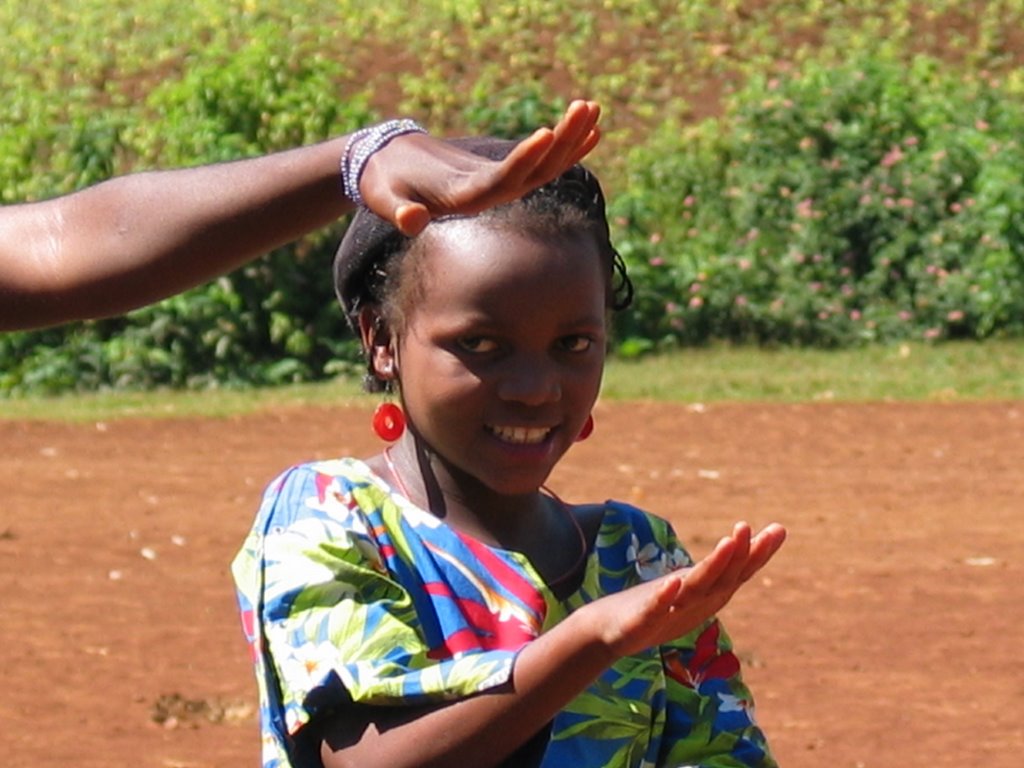
16 June 2006 Day of the African Child. Young advocates for children's Rights.

Wednesday, June 21, 2006


16 June 2006: Day of the African Child. T-shirt with a message: "children are counting on credible elections". (Presidential elections in DR Congo are scheduled for 30th July this year.)

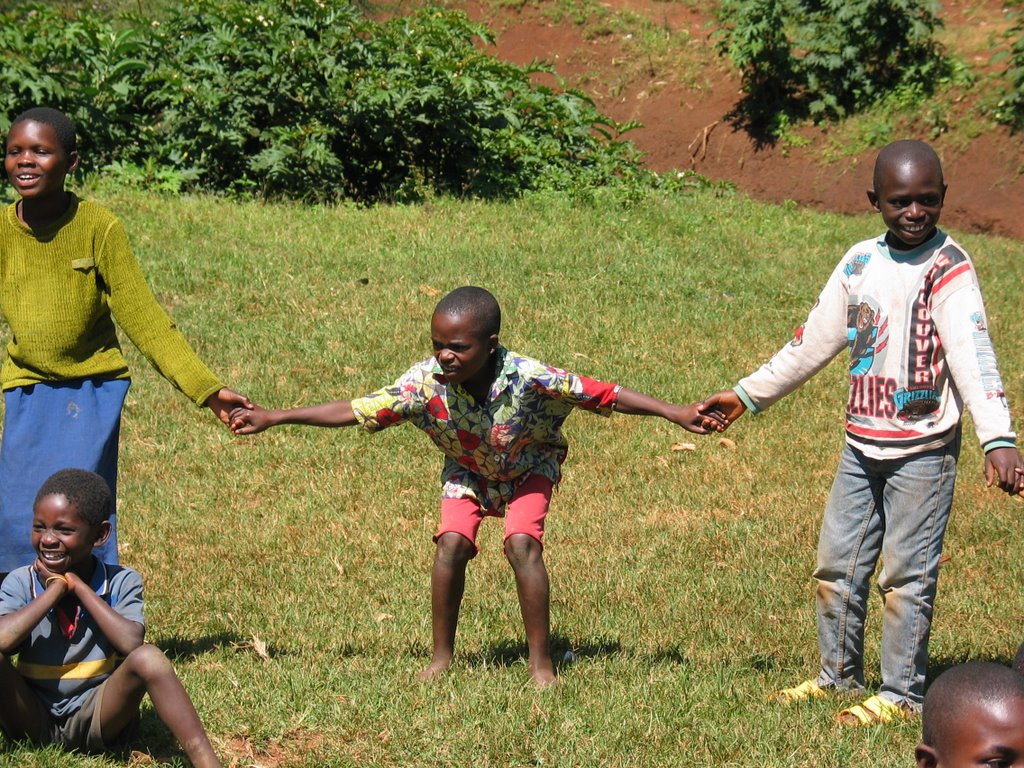
16 June 2006: Day of the African Child. Young traditional dancers await their turn to perform.

Tuesday, June 20, 2006


16 June 2006 Day of the African Child. Some members of the public watching the activities.

Sunday, June 18, 2006


16 June 2006: Day of the African Child. Former child soldiers in Bukavu. Their sign reads: "Pour un Congo sans enfant soldat" (for a Congo without child soldiers).

Wednesday, June 14, 2006


This young man was very keen to go back to town with us. He's at a center that assists orphans and former child soldiers about an hour's drive from the city. For more information on child soldiers, take a look at these web sites: http://hrw.org/campaigns/crp/index.htm
http://web.amnesty.org/pages/childsoldiers-index-eng
http://www.vachss.com/help_text/child_soldiers.html

Two former child soldiers.

A former child soldier learns wood working skills.

Monday, June 12, 2006

Weekend Adventure

The Rwandan border is a 30 minute walk from our office/home, but our driver gave me a ride down at 13:30 on Friday afternoon last week. I had been planning to take the 15:00h (3 o'clock) bus from Kamembe in Rwanda to Butare. At about 13:20 our driver, Emmanuel, came and said "I thought you were going to Butare". It turned out there was no 3 o'clock bus, but if I were lucky I might just get the last one at 2 o'clock. I shut down my computer, grabbed my back pack and jumped into the car. I tried my best not to look impatient while the DRC immigration officer took forever to write down my passport details by hand in his blue note book as he kept a running conversation going with other staff at the same time. As he finished, I grabbed my passport, walked down the hill between the DRC side and the bridge over the river that marks the Rwandan border. A form to fill on the Rwandan side, and then a quick look for transport for the 10 minute drive up the hill from Cyangugu to Kamembe. Nothing, not a mini-bus in sight. I tried asking an NGO car for a ride, but they were headed towards Burundi - wrong direction. I began walking up the hill, and realised I'd never make it in time. Finally I just decided to enjoy the scenery and the sudden peacefulness of the Rwandan countryside that constrasted so unexpectedly with the hustle and bustle just over the border in Congo. I walked up the hill to the Presbytarian Peace Guesthouse to see about getting a room for the night - full! I was ready to walk back down the hill and return to the office: it wouldn't take too long. Just before I headed back down, it occurred to me to call a former colleague, Samuel, who lives in Kamembe, not really expecting to find him home as I knew he was going for a working visit to Bangladesh. Miraculously he was just back, and immediately invited me to stay the night with his family. He came to find me. First we went to the hospital where his 7-month old son was recovering from pneumonia, and to meet his wife and eldest daughter who were there taking care of the baby. Then we slowly walked to his home, accompanied by his 7-year old twins, a boy and a girl, stopping to visit some neighbours on the way.

In the morning I was up at six, and caught the 7 am mini-bus headed for Kigali (via Butare). One of the things I like about Rwanda is that a 7 am bus pretty much leaves on time: we left at 7:10. When people don't arrive on time others don't have a lot of sympathy. So when, about ten minutes into our trip, the driver gets a call from the office saying that a passenger with a pre-paid ticket had showed up for the bus and we should stop and wait for him to catch up with us on a motorbike, the other passengers started mumbling and making comments among themselves. As we waited, the chorus of "tugende" ("let's go") got more insistent. About a second before the driver would have been persuaded to start off again, the missing passenger arrived on a motorbike and clambered aboard. I don't think he apologised.

Another good thing about the Rwandan buses is that 15-seater buses only carry 15 passengers - not the 25 or so that you'd find squeezed onto a bus across the border. For mini-buses that go directly between towns, the drivers are not obliged to pick up passengers en route, and usually (at least between Butare and Kigali) they won't. Cyangugu to Butare is another matter, as transport is far less frequent, and undoubtedly the drivers have some sympathy for people needing a ride along the way. On that morning we had a couple of seats to spare and the driver stopped at the start of Nyungwe forest to pick up two women with three small children between them. The 90-minute drive through the forest is marked by nasty twists and turns in the road, and Rwandans, not being good travellers on such roads, are frequently sick along the way. I prayed that the two young men on either side of me would not succumb, and I was lucky. The row immediately in front of me was another matter. The youngest baby of about eight or nine months was probably ill to begin with - he had a wizened face and screamed as loud as he was capable, while violently throwing his body around, sometimes hitting the other young boy with his hand or head. The boy of about six years bore it quietly, but also kept throwing up, a tear running down one cheek the only indication of his own misery as he was made to stand, no seat space being available for him. The other baby, a girl of maybe 12 months dressed in a frilly pink dress, was soon, thankfully, fast asleep. As the situation became more difficult, the thoughtful young man next to me offered to hold the baby girl, allowing her mother to help the other woman. The mother of the sick baby looked exhausted, thin, and probably very sick herself. I hoped they were headed for a hospital. The driver, in the meantime, was clearly regretting his decision to pick up the passengers, and kept looking back at them saying angry sounding things. Mercifully, as we left the forest, the sick baby and young boy both fell asleep, and the rest of the way to Butare was uneventful.

I arrived in Butare at 10:15 am, jumped out of the mini-bus, and headed for my former colleague's new house. It turned out she was at the office, so I stopped off and enjoyed tea and peanut butter cookies with Jessica and Antonia. It was such a pleasure to be back with good friends in Butare! But all too short. A whirl-wind 24 hours in which I met up with a friend from Kigali, had lunch with a friend from Niger - and enjoyed listening to the fascinating story of his childhood as the first person from his village to complete secondary school and then university - went to a small party, saw a couple more friends and former colleagues, and then at 11 am on Sunday morning hopped back onto the mini-bus to Kamembe/Cyangugu. The bus stops at Kamembe, and from there I took a "taxi velo" (bike taxi) down the hill to the border. There is something delightful about silently whizzing down a hill surrounded by the fresh scent of eucalyptus and a view of lake Kivu and the town of Bukavu in the not so far distance. Crossing back over the border on a Sunday afternoon was a relaxed affair. The same man wrote down my passport details all over again in his blue book. No one tried to ask for a bribe. And my colleague was able to come and meet me with the car, saving me the 30 minute walk.

It was wonderful to be back in Butare, but the lack of frequent transport, and the three+ hour drive really makes it just a bit too far to go for the weekend.

Thursday, June 01, 2006


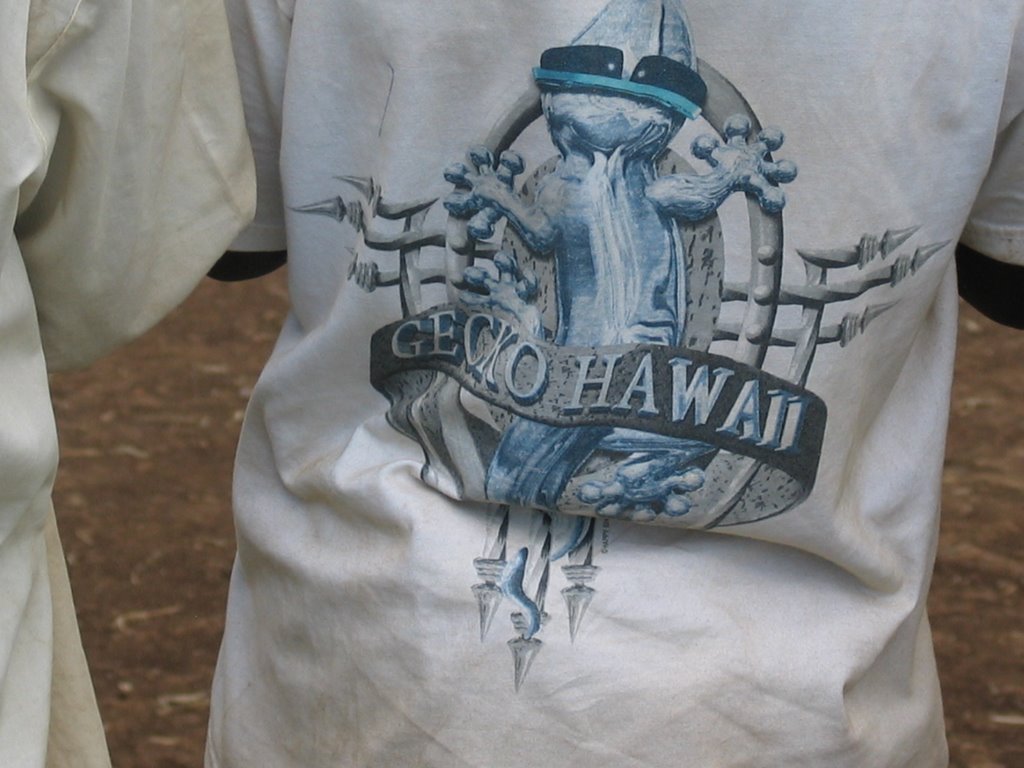
Thinking of Hawaii: spotted this t-shirt on one of the children this week. Probably donated to a Goodwill store by someone in Hawaii, and then sent over to East Africa, where the second hand clothes are sold (not given away!) in the markets. The large amount of second hand clothing that floods the market in East Africa has undermined local clothing manufacturers.

Sunday, May 28, 2006

Links

I'm having difficulty figuring out how to make the links on this page work. Until I do, I'd like to recommend the web sites of my friends, Katy and Bryan: katyincongo.blogspot.com and bgindrc.blogspot.com. I'd also like to recommend the "Women in Congo" photo gallery of the Malteser International organization, which is a branch of the Order of the Knights of St John of Malta - in existence since around 1050AD.
http://www.malteser.de/61.Malteser_International/en/default_en.htm

Saturday, May 27, 2006


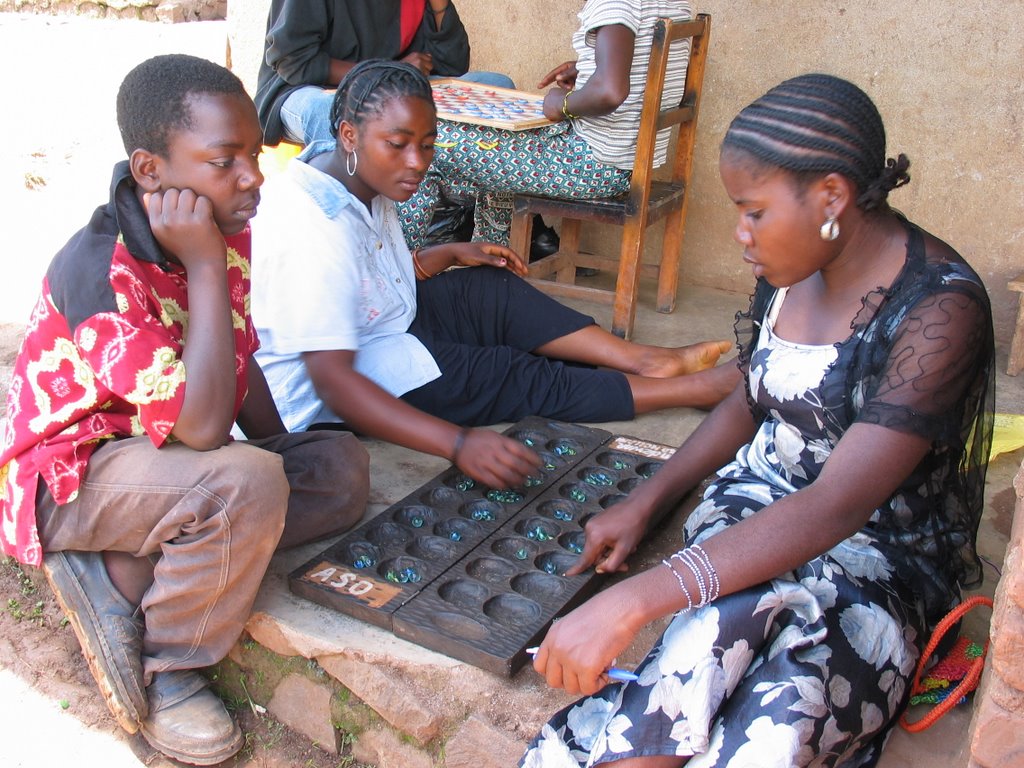
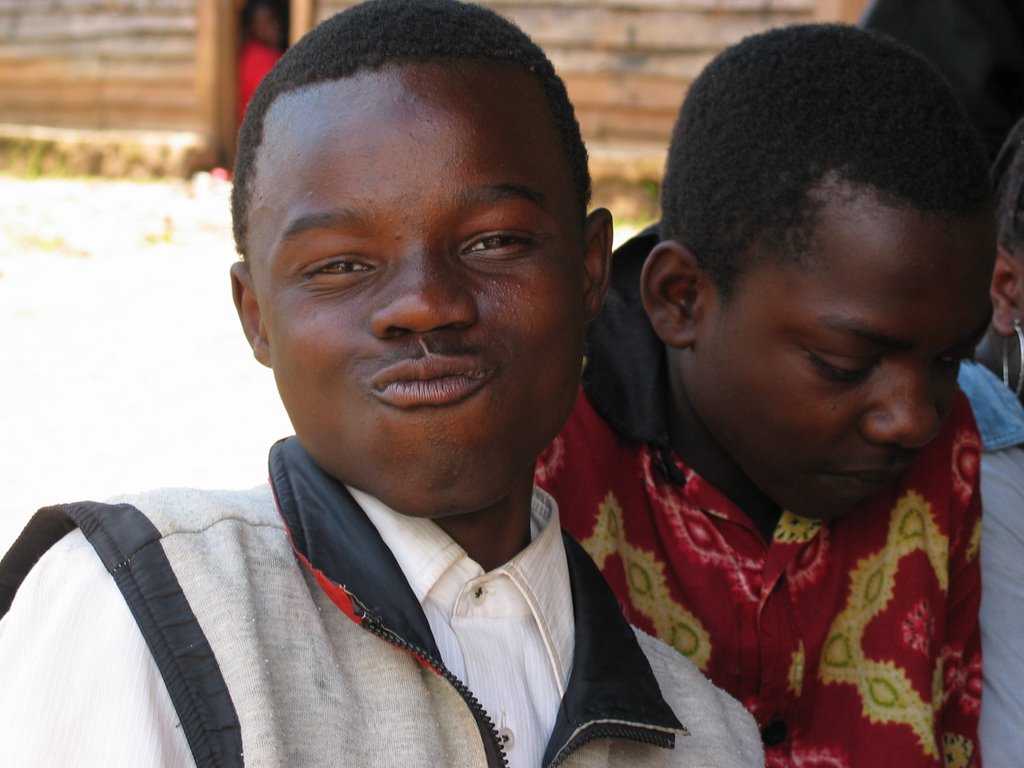
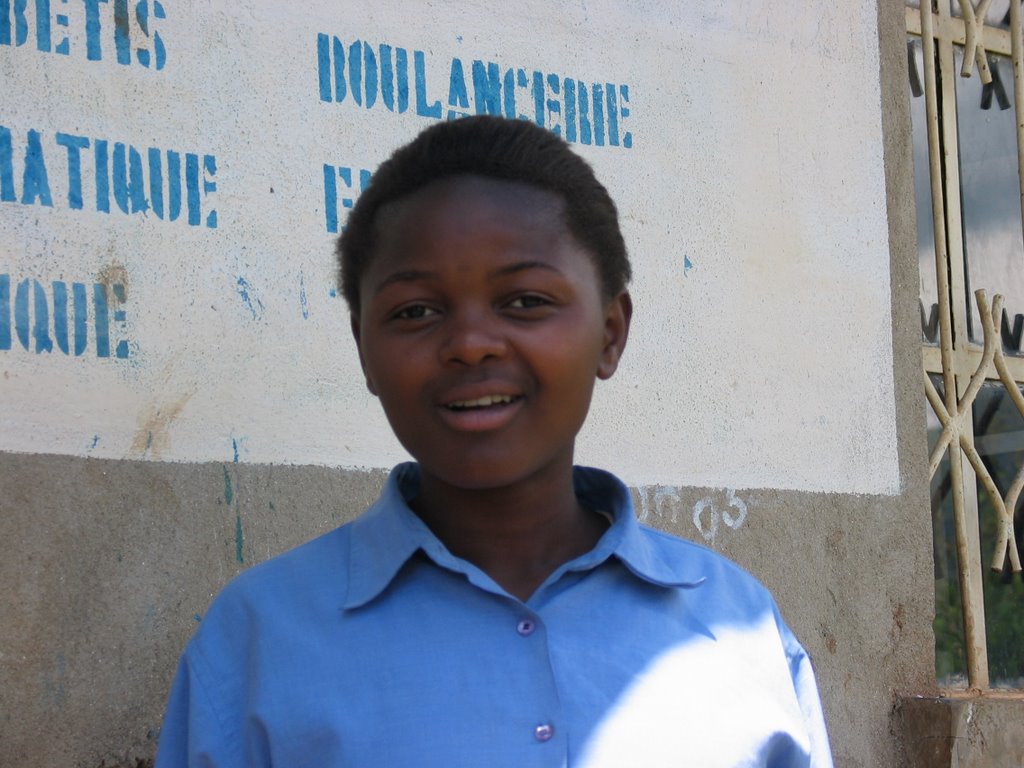
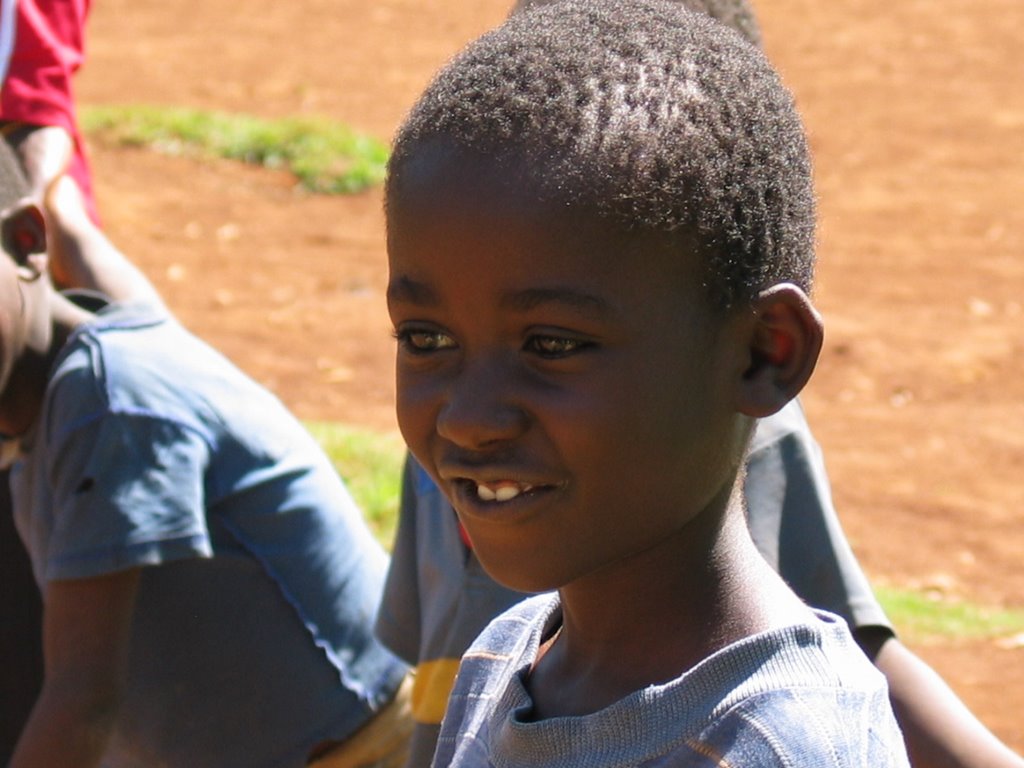
The photos above are of some young people who come to one of the centers where we provide training to the staff. They have all been victimized first by poverty and then by the war. They have very little education and speak almost no French, so it's difficult for me to communicate with them. I haven't yet (in spite of my over-ambitious good intentions) learnt any Swahili. At first they didn't want to be photographed, but after one young woman asked me to take her photo, the others were keen for their pictures to be taken too. The center provides them with skills in trades such as soap-making, tailoring, and wood work. The majority of people here in town are unemployed, so learning skills is essential in order to have a chance of making a living in the future.

Two support staff from a local NGO participate in a creative arts training session. We provide paints, brushes, and training to local associations who work with orphans and marginalised children. Creative activities help the children to express themselves and gain confidence.

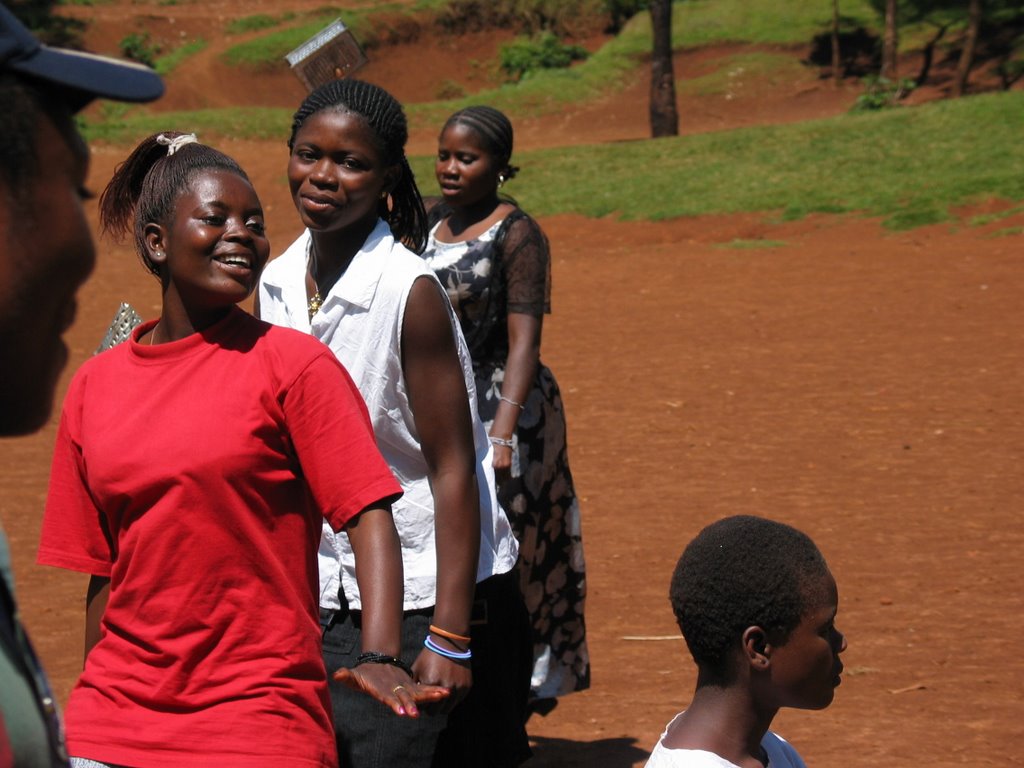
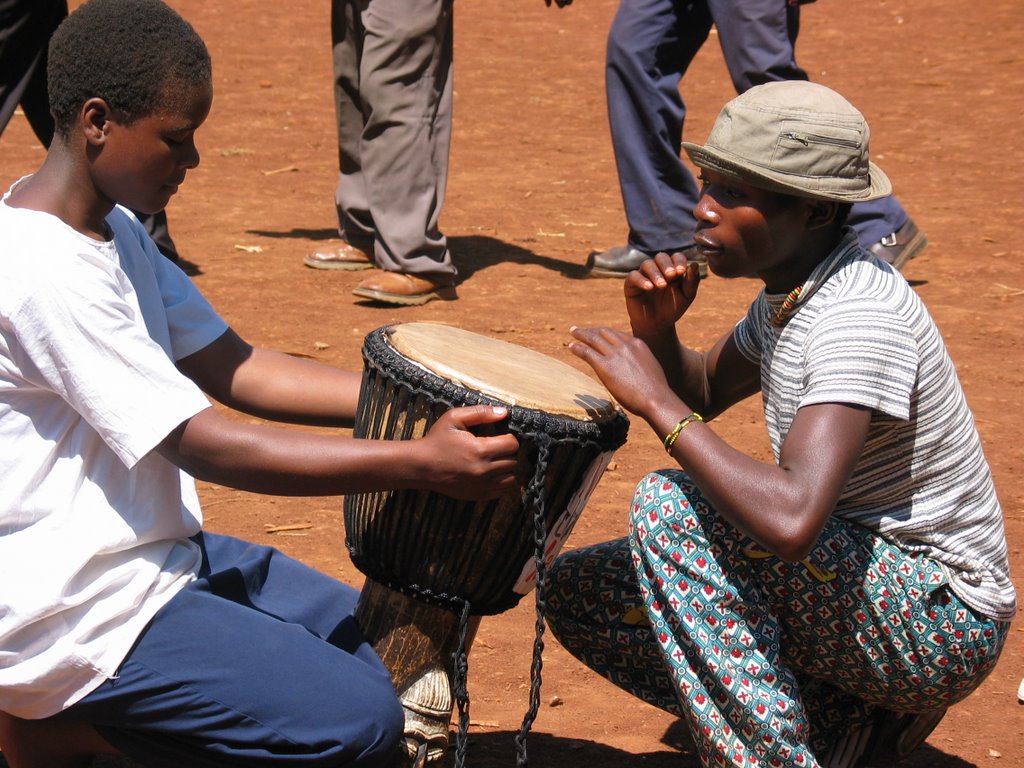
Music is a powerful tool in psychosocial support for young people. It helps them to feel good about themselves and each other. The young women here are dancing to the beat of a drum and music from shakers, or rattles, made locally from tin and filled with dried beans.

Young people on a hillside on the edge of town.

Tuesday, May 23, 2006

Shukuru

Today I visited a small private primary school in a relatively pleasant neighbourhood on the outskirts of town. The school building is a partially completed house that is provided to the community by the owner (I'm not sure if rent is paid, but likely it is). The walls are bare bricks, the floor is packed dirt which probably turns to mud in the rain. The windows have wooden slats nailed across them, with barely any light coming through. Small classrooms are separated from each other with plastic sheeting. There is no electricity, no running water, and the latrines are indescribable, and certainly not suitable for girls reaching the age where they need a bit more privacy. Many young girls in Africa drop out of school simply because there are no suitable toilets for them to use.

The young head teacher told me that they began the school year with 300 pupils, but were now down to 250; the others had been sent away for non-payment of fees. Pupils pay $2.50 a month. That is an enormous sum for a parent who has several children and may only earn a dollar a day. Those who do earn a dollar a day are actually pretty lucky - the vast majority are unemployed and earn nothing. They barely scrape by, and many children die before the age of five. School fees go towards paying the teachers, paying various taxes, and mandatory insurance. And you can be certain that it's all a scam - they receive nothing in return for the taxes, and no insurance monies are ever paid out. It's a parody of what an education system should be: where the state should be paying teachers' salaries and building schools, not stealing from them.

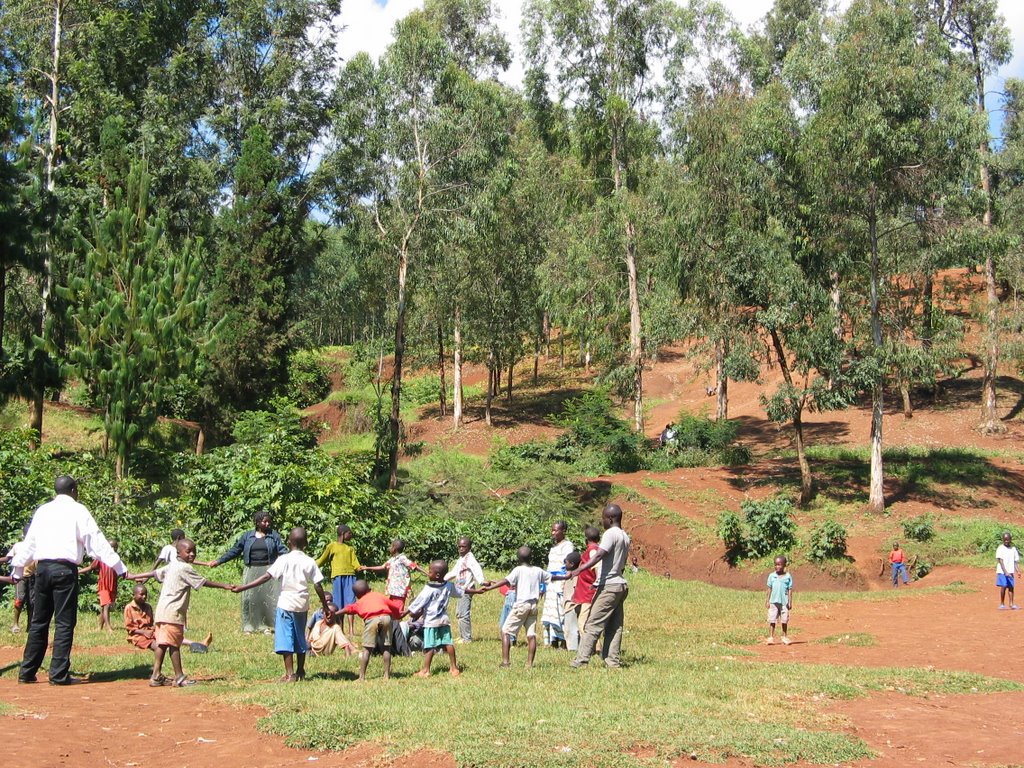
Our session at the school began outside in the sun, with our trainers coaching the teachers in four large circles of young pupils playing games that are designed to improve their concentration, coordination skills, and mutual acceptance of each other. While I watched, a few neighbourhood kids, no more than 3 or 4 years old, sidled up to me. After a while, one slid his tiny hand into mine. I wondered how much affection some of these children get at home, where there are usually too many children, and parents too hassled with the struggle just to feed them to give them individual attention. Is that just a western concept? Don't all children need attention and affection? And while I was watching and thinking about these things, a young boy was suddenly in front of me. "I've been chased out", he told me, looking like his world was coming to an end. He's 11 years old, with worn clothing and inappropriate badly fitting boots, but clean and bright looking. His name is Shukuru; he wants to study. And today his dream just came to an end because his father doesn't have work and there's just no way he can pay his school fees.
Sunday, May 21, 2006

Contrasts

Last night I sat down and uploaded several photos and wrote some text, and then when I hit the "publish" button it all disappeared into that black internet hole. A bit frustrating! There are so many photos already that I'd like to post.

I spent yesterday afternoon drinking tea, reading a book, and chatting with other expat workers on the terrace of a lovely small hotel/restaurant located 20 minutes walk from our office. The terrace has a spectacular view over the lake, nearby islands and the hotel's garden which is a cascade of bamboo, lime trees, torch ginger, bougainvillea, and many other tropcial flowers sloping down to the lake shore. It is beautiful, serene, peaceful; the lake tranquil. The calm belies the terror hidden in the surrounding countryside, where ordinary people and their children are suffering violence and dying at an astounding rate, all but ignored by the international community.

I work with a team of eight local staff. They go out every day and train primary school teachers and staff at orphanages and transition centres for marginalised children. Young women and children are the sorriest victims in this unseen and incomprehenisble war - a mishmash of soldiers, military groups, rebels, armed gangs, all fighting over land, minerals, resources, power. The children have been orphaned by the fighting, some seeing parents murdered before their eyes; they are orphaned by HIV/AIDS; they are dragged into the conflict as child soldiers (both girls and boys) or join willingly on the promise of food; they are raped and then shunned by society; they are accused of witch craft and expelled from families that cannot feed them. But they are still children and young people with the same rights, feelings, and hopes for the future as young people everywhere.


The narrow inlet of Lake Kivu around which most of Bukavu's expat community live; patrolled by MONUC - the UN mission in DR Congo.

Monday, May 01, 2006

First pictures from Bukavu

I arrived in Bukavu on Monday afternoon, after a 3 hour drive from Butare. We drove through Nyungwe Forest and saw a few black and white Colobus monkeys on the way. There are many differences here from my life in Butare. To begin with, this is a much larger town with many more people, and much more going on in the way of general commerce, markets, restaurants, and various offices and institutions. There's also a UN mission (MONUC) based here, with various MONUC buildings and other UN agencies around town. MONUC vehicles with armed soldiers regularly patrol the streets. A variety of police and other military groups are also frequently in evidence. The general population seem pretty relaxed about it all. The INGO expat staff are all linked into a security network with frequent radio checks (I have the two-way radio with me when at home, and carry it if I go out in the evening). All the INGOs are located in one small area of town close to the border with Rwanda, and the area is regularly patrolled by MONUC. I'm glad I had the security training while in Holland.
Work is very different from before. I'm with a much smaller organisation, with only two expats here. Some things are much more efficient: I had a new laptop immediately, and business cards within two days (they took almost two years on my last job - I received them just a few weeks before leaving!). On the other hand the office and living quarters are combined in a small house, and I find this a little strange. Our living room doubles as a meeting room, with my desk in a corner. The advantage is that I have internet access most of the time (unless it's down). Once we move to separate house and office (as planned, when we can find something suitable), then there'll be no internet access at home. For the time being my personal space consists of one bedroom, so I have yet to unpack most of my things. I had a large portion of a six-bedroom house to myself before, so this requires some adjustment! At least I still have a view, and from my desk I can gaze out the window and look across at the hillside which is Rwanda, just across the narrow inlet of lake that lies between our hillside and the opposite one.

A few other differences: people here are generally much friendlier and more easy-going than in Rwanda. Social events are far less formal, as evidenced by the leaving party held for a colleague here compared with the one held for me when I left Butare. And even though everyone in Butare seemed convinced that prices in Bukavu would be cheaper, everything here is much more expensive than in Rwanda - except, for some inexplicable reason, powdered milk, which is considerably cheaper. So far I've already been out to four different restaurants in town, out of which three were pretty good and one was just average. Service is faster than in Rwanda - thank goodness! Gerda's place (the subject of the New York Times travel article, posted earlier) is very good, with a modern, bright decor - all exotic flowers and plenty of the local carved figures which Congo is famous for.


The office/house with a volleyball net on the front lawn - a rare small piece of flat land on the slopes surrounding Lake Kivu.


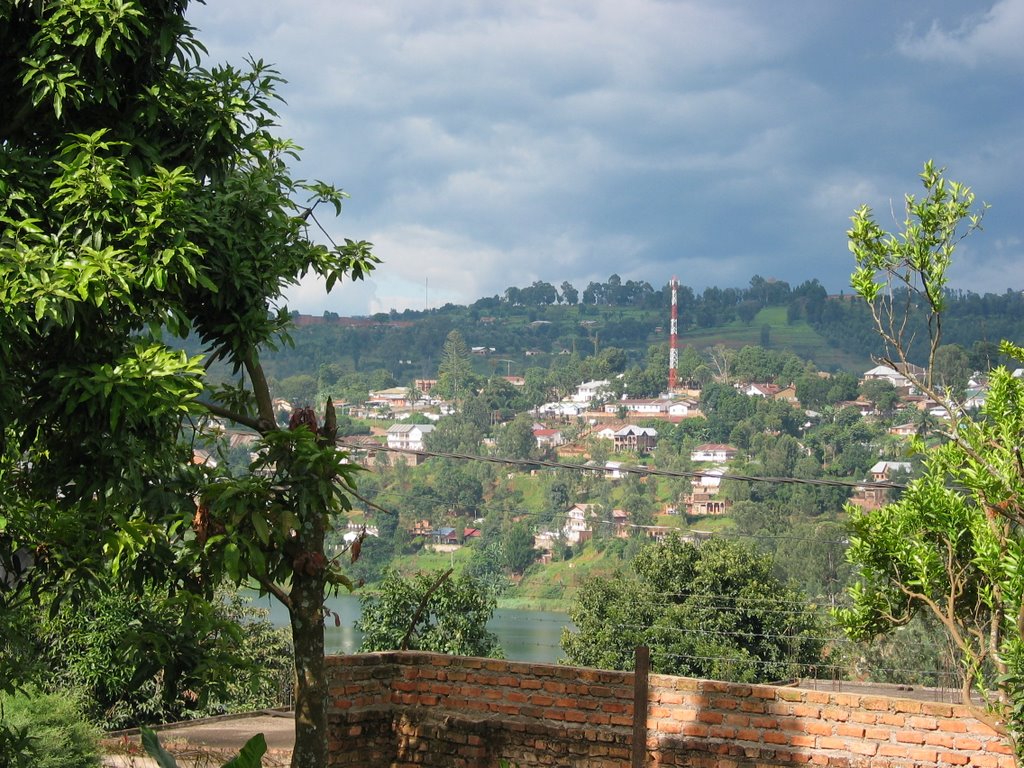
Looking across the inlet to Rwanda - the red and white antenna tower marks the border between Rwanda and DRC.

Monday, April 24, 2006

Back in Butare

I'm back in my old house in Butare before heading off to Bukavu in the morning. I've been gone three weeks. I had a wonderful Easter weekend in Utrecht and Amsterdam with friends Sophie (from Belgium) and Shirini (England) who drove up and flew over to join me. We all met at Schipol airport and then drove to Utrecht.


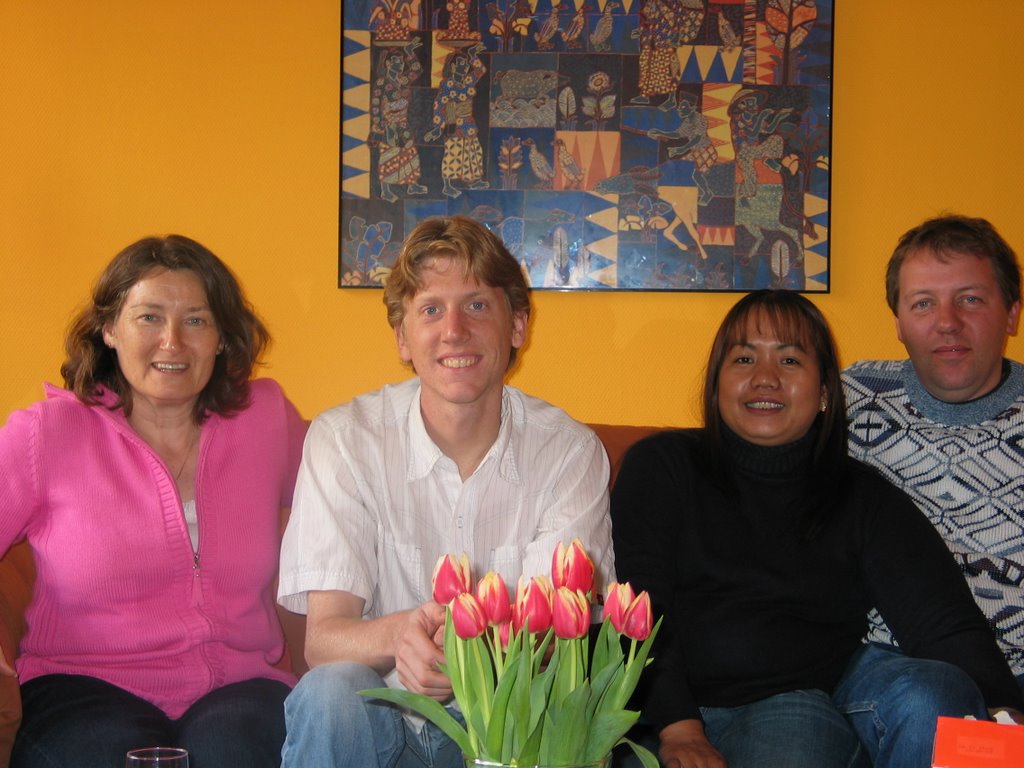
Nicky, Sophie, and Shirini at Schipol

From there I went over to England for a few days, first to Devon, to a rather remote cottage somewhere between South Molton and Barnstaple. The sun shone the afternoon we arrived, and after that it was nothing but cold rain for the next three days. Thank goodness the house had central heating!

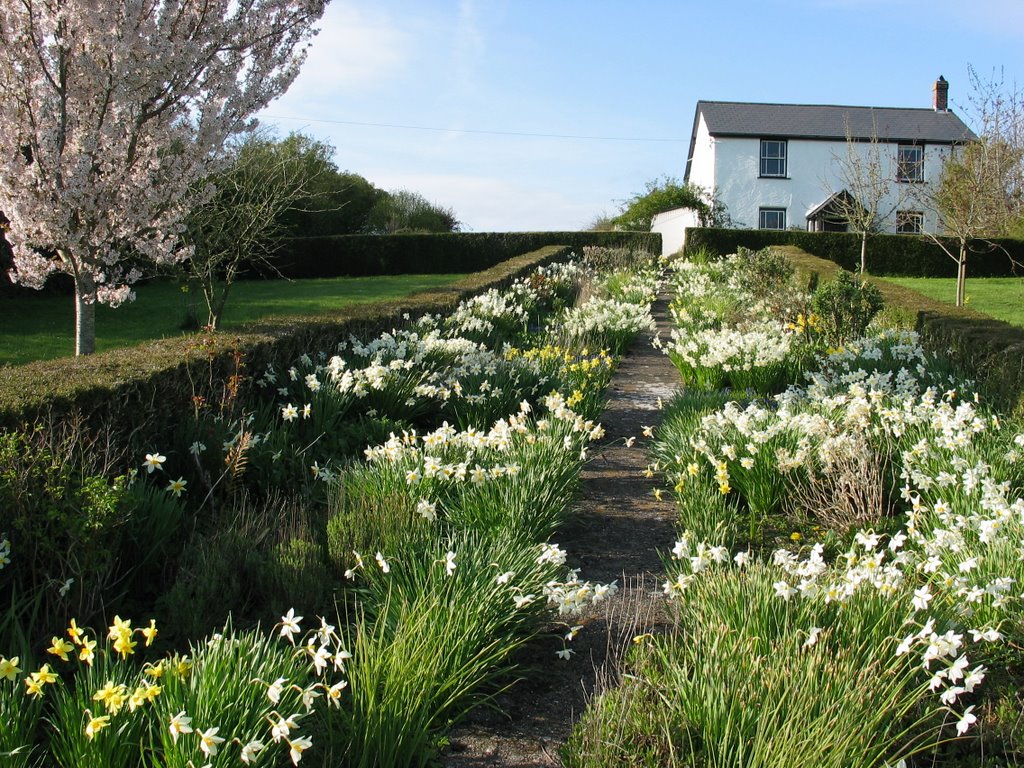
Remote cottage in Devon

Friday was a successful shopping day at Selfridges and John Lewis in central London thanks to my determined cousin Julia, and Saturday it was suddenly a warm sunny spring day with blossoms in abundance, and I enjoyed wandering around the shops in Muswell Hill basking in anonymity before catching the evening flight to Nairobi. On to Kigali this morning, and down to Butare this afternoon. My old rooms are very bare, and without the cats I feel very sad.

Internet access in Bukavu will be far less frequent, and apparently the gmail address is difficult to access - much better to use Yahoo. It looks like I won't be able to post photos very often - we shall see! I shall have to see about changing the name of the blog now, too.
Sunday, April 16, 2006

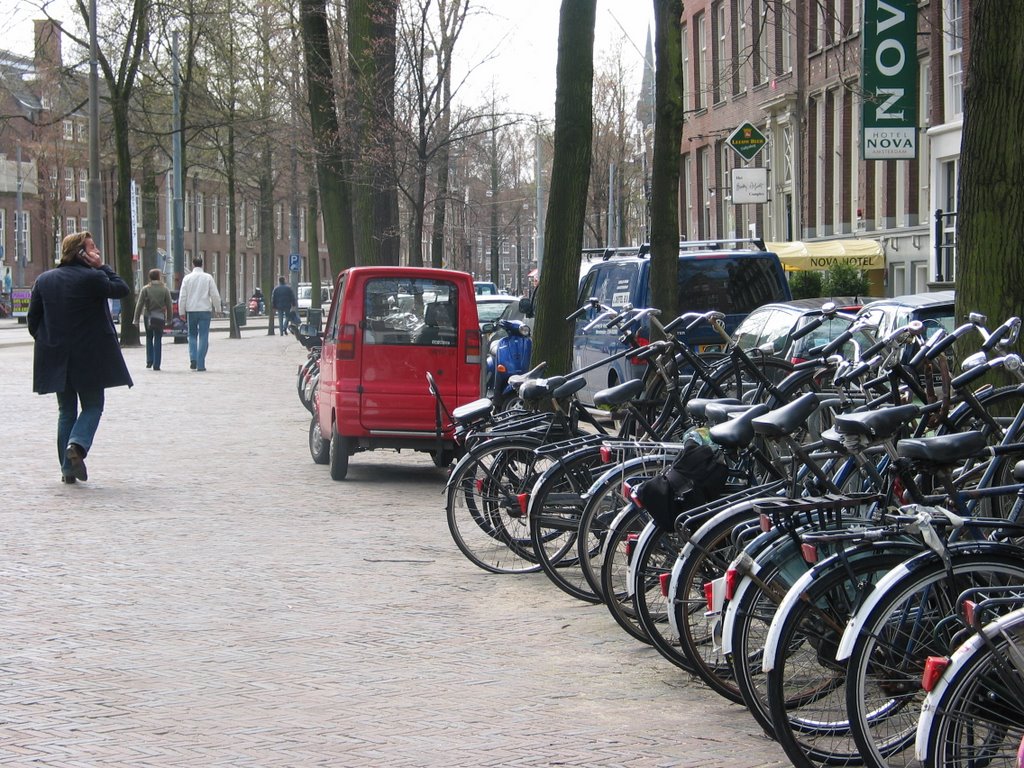
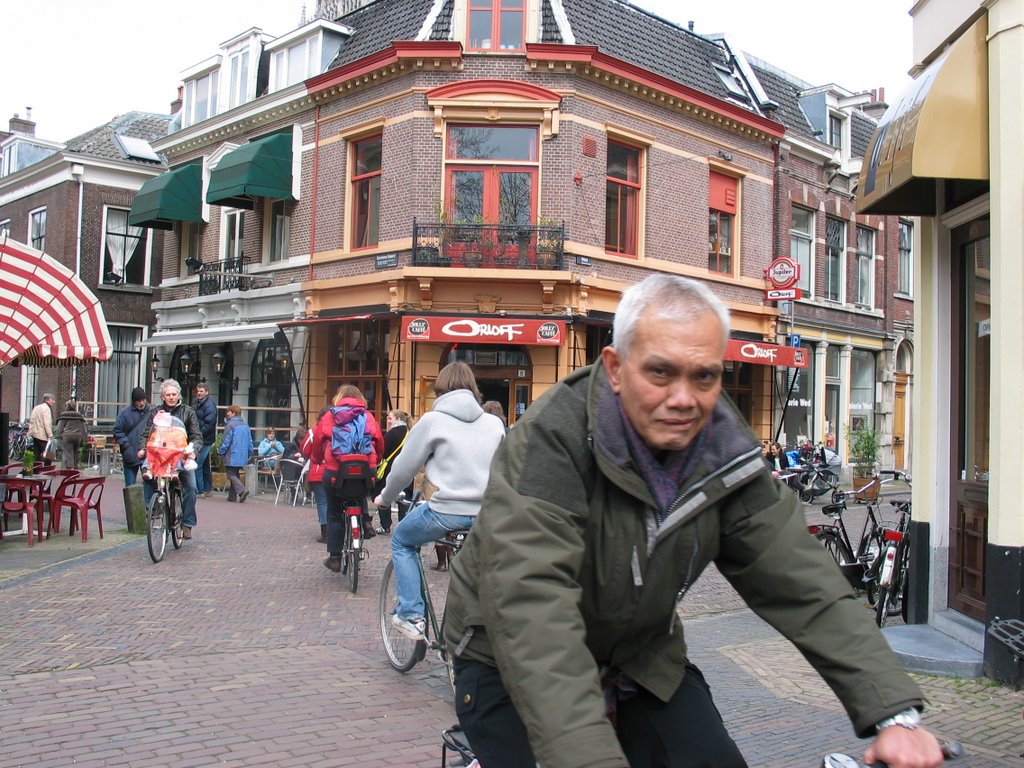
Bicycles (and a very small red car) in Amsterdam


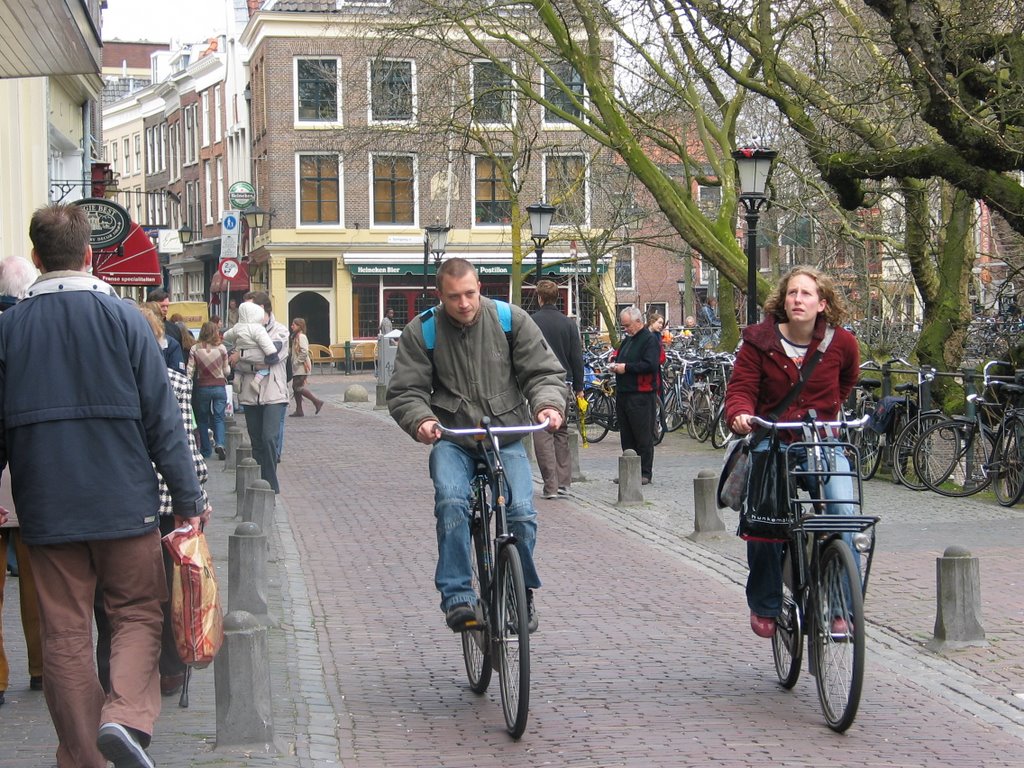
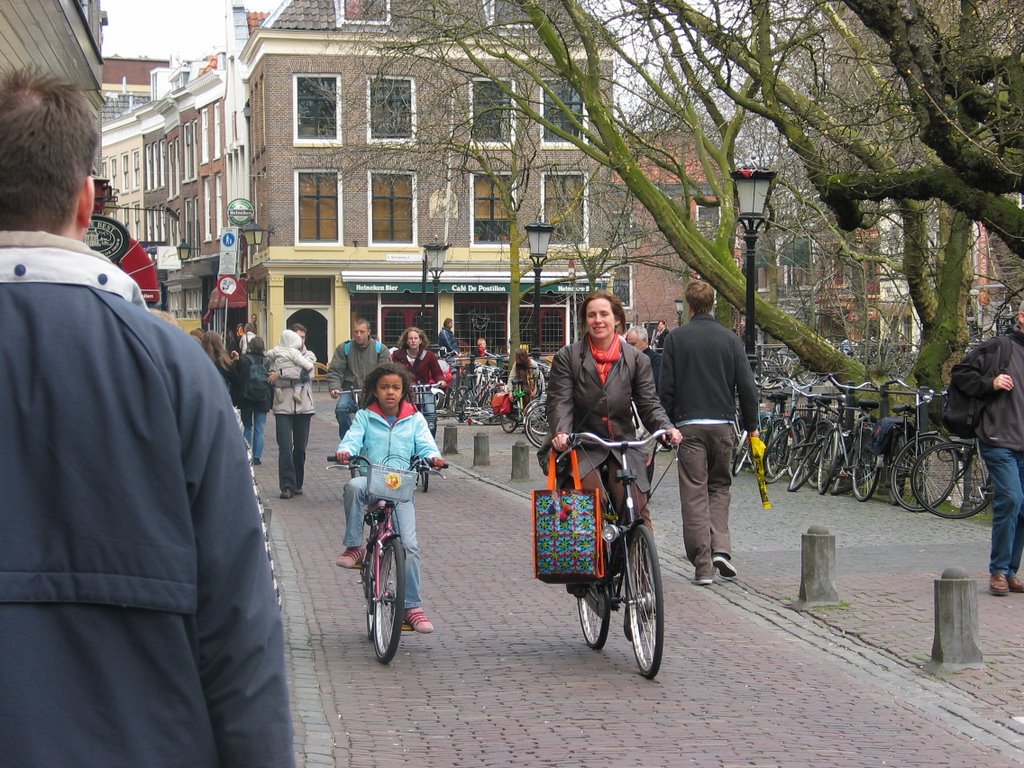
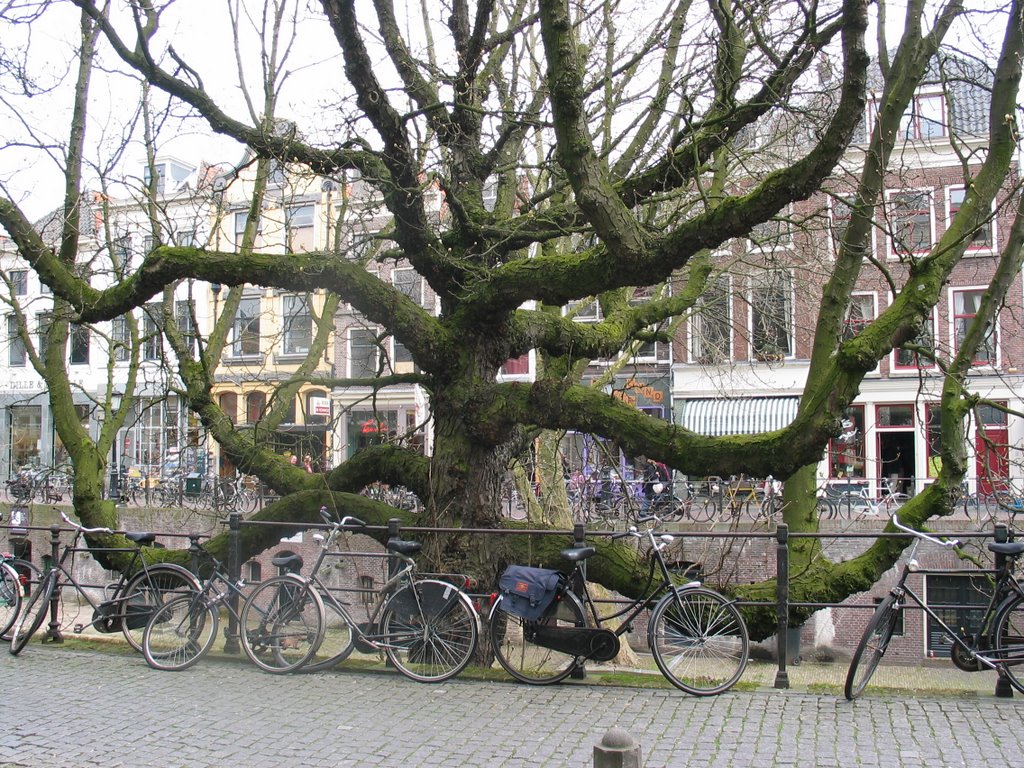
Bicycles in Utrecht


Tuesday, April 11, 2006

Enschede

Yesterday I took the train to the eastern side of the Netherlands, to Enschede, near the border with Germany, to visit my friends Rini and Walter - my former neighbours in Butare. Rini cooked some great Indonesian food, and we spent the afternoon catching up on stories about Rwanda. Their house is close to the centre of the town, and as we walked from the station I took photos of a couple of churches and other interesting items.


This is me with Hein (a Dutch student who was doing research in Rwanda last year), Rini and Walter.


I was fascinated by this old church tower which is obviously much older than the church it's attached to.


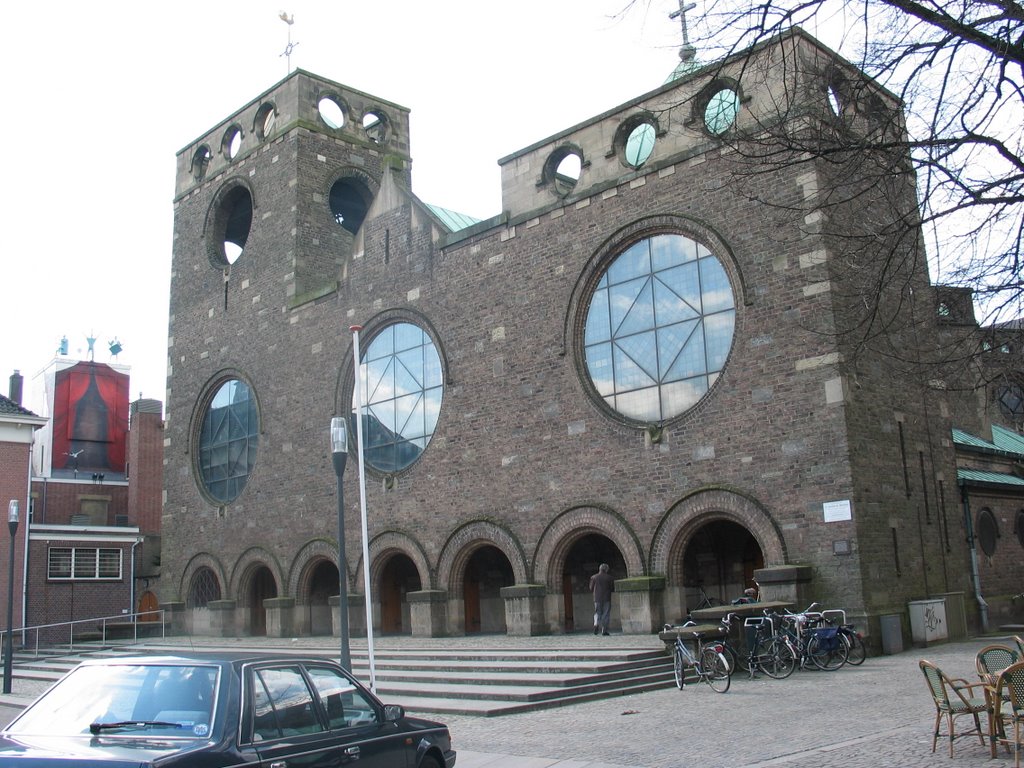
This was another fascinating church - I've never seen one that looked like this before - especially those amazing enormous round windows. Hope I'll be able to return one day and look inside.


The town theatre had lots of interesting characters clambering around the building!

Thursday, April 06, 2006

Those photos uploaded really fast, so I'll post a few more while I have the chance!!


The day I left my colleagues held a goodbye party for me at the office, and we took some photos. Here I am with some of the guys - I want to say how much I appreciated all my male colleagues: everyone of them was always friendly and generally went out of their way to help me. It was a real pleasure to work with so many great guys!


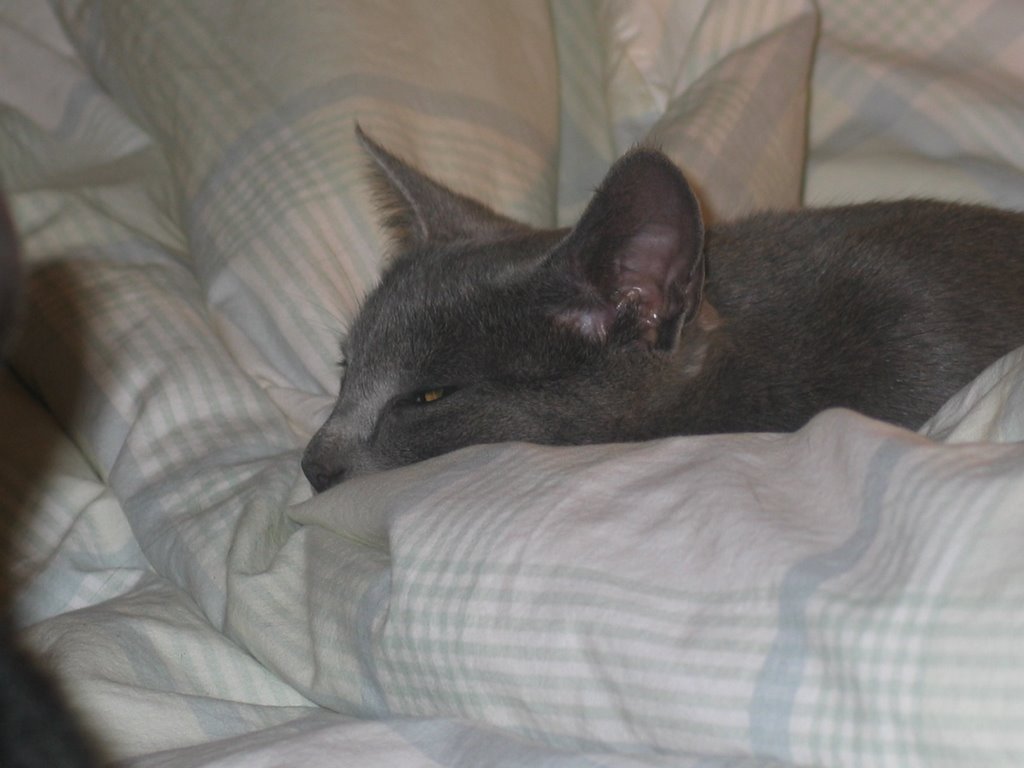
Sorry - have to add some more cat photos - I miss them so much!!!
Internet cafe with a difference

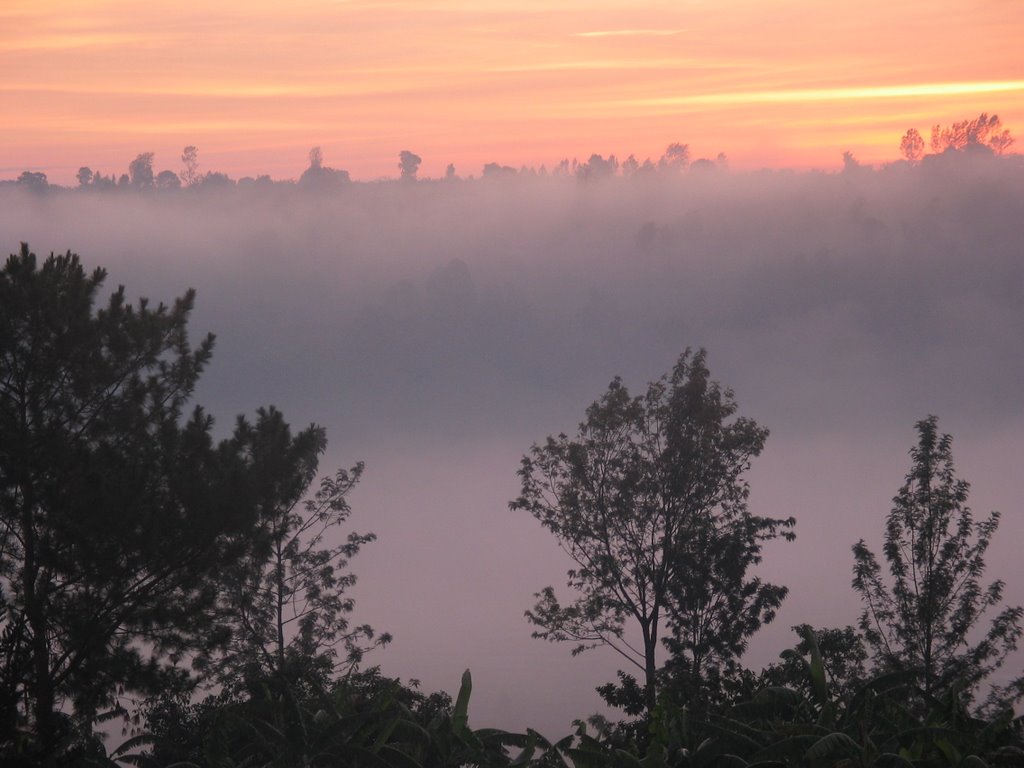
I'm sitting in this interesting cafe near the Leidseplein in Amsterdam. It's part of an old theatre, and the cafe is in what used to be the foyer. There's a wide wooden staircase and an ornate old-fashioned chandelier hanging from the ceiling. Everything is slightly shabby. The cafe has wireless internet access, so some people, like me, are sitting at tables with laptops surfing the net, although most are not. I think people come more for coffee or a drink (they also serve alcohol) than for the free internet access. I'm going to see how fast my photos upload, as there's quite a few from Rwanda that I still wanted to post. Here's a couple from a 6 am sunrise I caught the day before I left. I miss the view over the valley from my back deck...


Tuesday, April 04, 2006

Amsterdam

The weather here is a bit too cold for my liking, but the food is great! This is a wonderfully walk-able city, and the hotel is an interesting and pleasant 30 minute walk from the office. Sidewalks, roads, and bike paths tend to blend into each other and I'm constantly jumping out of the way of impatient cyclists. The old buildings lining the canals are full of character, each one a little different from the next, some leaning or crooked, some narrow, some wide and impressive.

The office is in one of these beautiful old canal-side buildings, open-plan inside, lots of light, very friendly. Dogs come with their owners to the office, cappucino and macchiato available (and very good) any time at the press of a button, and tubs of Ben and Jerry's "Peace of Cake" ice-cream also on offer! Large photographs of the children we work with, and campaign posters everywhere. Staff are remarkably helpful and friendly. A spare desk with internet access quickly provided for use when not in an orientation session. I'm busy most of the time - information sessions about policies and procedures, methodology training, health tests, and a three-day residential security training program coming up Thursday through Saturday which will include scenarios on dealing with weapons, aggression, and hostage-taking. Not that I expect any of that to happen, but being prepared is what it's all about!!